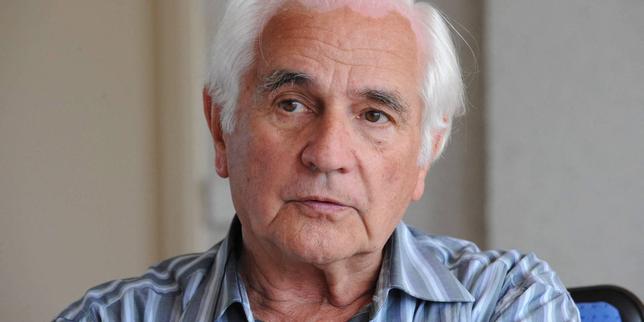
History doesn't always demand grand gestures. Sometimes, it simply asks ordinary people to look at an ugly truth and refuse to stay quiet. Stanislas Hutin did just that. When he passed away at the age of ninety-five, the world lost one of its last steadfast moral compasses from a dark era.
If you aren't familiar with his name, you should be. Hutin was an ordinary conscript sent into the teeth of the Algerian War. What he witnessed there changed the trajectory of his life, turning a standard soldier into a relentless whistleblower against state-sanctioned brutality.
The Shock of Conscience in North Africa
Conscripted into a conflict most of metropolitan France preferred to ignore or romanticize, Hutin encountered reality face-to-face. It wasn't just abstract geopolitics. It was human wreckage.
While serving, he captured photographic evidence and bore witness to horrors that military authorities wanted swept under the rug. One specific memory stands out from his accounts: encountering a young boy, barely fourteen years old, who had been brutalized by interrogation techniques. Instead of looking away like many around him, Hutin let moral outrage override self-preservation.
He documented what he saw. He spoke out. In an environment where institutional pressure demanded absolute conformity and silence, his dissent carried immense personal risk.
Why Conscience Matters When Institutions Fail
We love to imagine that if we were placed in a historical crisis, we would automatically stand on the right side. History tells a different story. Most people fold. Compliance is comfortable.
Hutin's legacy through groups like the 4ACG (Association des Anciens Appelés en Algérie et leurs Amis Contre la Guerre) wasn't just about reopening old wounds. It was about historical accountability. He spent decades reminding France of a truth it tried hard to forget: torture was systemic, and ordinary citizens in uniform were forced to choose between complicity and integrity.
His testimony punched holes in the official narratives. Governments hate being exposed, and military hierarchies despise insubordination. Hutin didn't care about institutional comfort. He cared about truth.
Lessons from a Life of Resistance
You don't have to live through mid-century military conflicts to face moments requiring moral backbone. We encounter smaller versions of these choices every day in workplaces, social circles, and public life. Do you stay silent to keep the peace, or do you speak up when something is fundamentally wrong?
Stanislas Hutin's life offers a blunt answer. Silence makes you an accomplice.
Remember his name not just as a footnote in encyclopedias, but as a standard for what human integrity actually looks like when everything is stacked against you. The generation of witnesses is fading fast, but the weight of what they tried to teach us remains entirely intact.