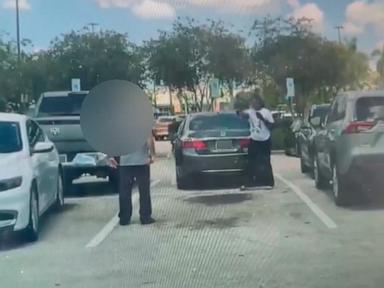
Mainstream news outlets follow a predictable, lazy script every time violence erupts in a big-box parking lot. They focus on the flashpoint. They blame the heat, the loss of human civility, or a petty dispute over a asphalt grid line. When a man is fatally shot in a Walmart parking lot after a dispute over a parking space, the media rushes to frame it as a freak anomaly—a tragic case of "parking lot rage."
They are looking at the wrong map.
The "parking lot rage" narrative is a convenient shield for multi-billion-dollar retail corporations. It treats the suburban parking lot as a lawless, unpredictable wild west where companies bear no responsibility for the chaos. The brutal reality is that these tragedies are the logical, statistical consequence of a deliberate corporate strategy: the systematic defunding of physical retail environments.
By shrinking store footprints, slashing floor staff, and treated the perimeter of the store as a no-man's-land, major retailers have turned their corporate real estate into high-friction zones. We do not have a parking space problem. We have a corporate liability and spatial design problem that executives refuse to acknowledge.
The Illusion of the "Random" Dispute
Ask any traditional security consultant about parking lot violence, and they will give you the standard checklist: add more cameras, improve the lighting, hire a private security guard to drive around in a golf cart with a flashing amber light.
This approach is security theater. It aims to soothe anxious shoppers rather than stop a crisis.
When a dispute escalates to homicide over a 9x18-foot patch of painted concrete, the catalyst is rarely the parking space itself. The real culprit is the compounding friction of the modern retail experience. Over the last decade, major big-box retailers have aggressively optimized for digital fulfillment at the expense of the in-person shopper.
Consider the design bottle-necks. Retailers have carved up substantial portions of their premier parking real estate to accommodate curbside pickup lanes, delivery drivers, and online order staging areas. A lot originally designed to handle standard consumer traffic is now a high-stakes obstacle course where stressed gig workers, hurried parents, and massive delivery vans compete for shrinking territory.
Data from the non-profit National Security Institute reveals that parking lots and garages are the third most common location for violent crime in the United States, accounting for over 7% of all violent crimes. Yet, corporate budget allocations for exterior loss prevention and physical security have steadily declined over the same period, replaced by investments in digital asset protection—like software designed to catch self-checkout fraud.
Corporate boards have decided that losing merchandise hurts the bottom line, while the occasional violent outburst in the parking lot is just the cost of doing business, shielded by standard legal disclaimers of "unforeseeable third-party criminal acts."
The Math Behind Spatial Friction
To understand why these tragedies happen, you have to look at the mechanics of environmental criminology. The Broken Windows Theory is frequently cited by law enforcement, but the retail sector suffers from a different ailment: Spatial Friction Theory.
When you crowd too many competing variables into an unmonitored space, human aggression rises predictably.
Imagine a scenario where a store cuts its internal staff by 40% to hit quarterly earnings targets. Customers spend more time waiting in lines, hunting down locked display cases, and navigating broken self-checkout machines. By the time that customer exits the sliding glass doors into the humid air of a suburban afternoon, their baseline stress level is already elevated.
They are entering a parking lot that has been structurally neglected. The security guards are gone, replaced by a single, static camera mounted on a pole that only records evidence after a crime has occurred. There is no visible authority, no active deterrence, and a design layout that forces drivers into bottlenecked conflict points.
[Retail Friction Loop]
Internal Understaffing -> Customer Frustration -> High-Density Bottle-necked Parking -> Zero Visible Deterrence -> Flashpoint Escalation
I have spent years analyzing corporate risk management frameworks. Companies routinely spend millions on algorithmic pricing tools while treating physical property management as a pure cost center. They view the parking lot as a passive asset rather than an active operational risk.
When a shooting occurs, the corporate public relations machine deploys the standard script: "We are deeply saddened by this isolated incident and are cooperating with local law enforcement."
Calling these incidents "isolated" is a statistical lie. When a pattern repeats across thousands of stores nationwide, it is not an anomaly; it is an architectural and operational feature.
Dismantling the Corporate Defenses
When victims' families attempt to hold big-box retailers accountable through negligent security lawsuits, corporate legal teams rely on a well-worn defense: legal foreseeability. They argue that because a business cannot predict the exact moment an individual will lose their mind over a parking spot, the business cannot be held liable.
This defense is built on a flawed premise. While a retailer cannot predict a specific individual’s actions, they absolutely can predict the probability of violence based on local crime data and property neglect.
Courts are beginning to see through this corporate dodge. High-profile premises liability cases have increasingly penalized retailers who ignore a history of property crimes, carjackings, and assaults on their premises. If a store sits in a zip code with rising violent crime rates, and management refuses to deploy visible, armed physical security to patrol the exterior, they are making a conscious financial choice to accept the risk of human casualty to preserve their profit margins.
The pushback against this contrarian view is predictable. Retail executives will argue that turning parking lots into heavily guarded zones creates a hostile shopping environment that drives away customers. They will claim that the cost of comprehensive exterior security is prohibitively expensive in a low-margin industry.
This argument falls apart under scrutiny. The financial fallout from a single fatal shooting—including plummeting foot traffic, brand erosion, property devaluation, and multi-million-dollar legal settlements—dwarfs the annual cost of robust, active perimeter management. The industry is not protecting its margins; it is hiding behind a wall of short-term thinking.
Fix the Environment, Not the Symptoms
The mainstream media will continue to fixate on the individual actors in these tragedies. They will dissect the criminal history of the shooter and the tragic loss of the victim. They will debate gun control, road rage, and the breakdown of societal values.
They will completely ignore the corporate boardrooms where the decisions that shaped that environment were made.
Stop asking how we can teach drivers to be more patient in retail parking lots. Start demanding that the corporations generating billions of dollars from these communities invest in the basic physical infrastructure required to keep those communities safe.
Fixing this does not mean adding more passive cameras or pasting warning signs on the light poles. It means completely redesigning the spatial flow of big-box retail.
- Separate commercial delivery and gig-worker traffic entirely from consumer parking.
- Mandate visible, active human patrols in high-density retail zones during peak operational hours.
- Re-staff store interiors to reduce the baseline psychological friction of the shopping experience before customers ever step foot back outside.
If a retail giant cannot guarantee basic physical safety on the property it owns and operates, it has no business operating there at all. The parking lot is not a public street. It is a commercial asset. It is time we start treating it like one.
Stop looking at the crime tape. Look at the balance sheet.