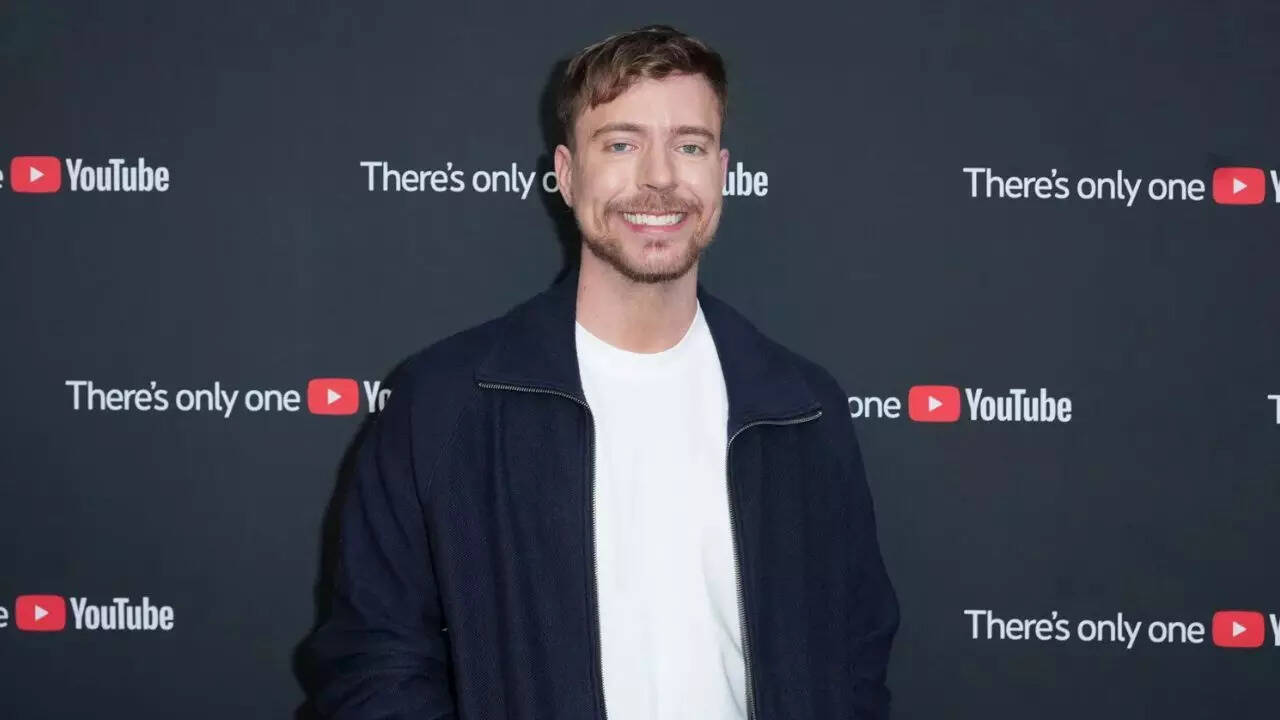
The Myth of the Heartfelt Connection
The industry is currently swooning over a narrative that is as sweet as it is commercially hollow. You’ve seen the headlines. Jimmy Donaldson—MrBeast—stops for a photo, shares a "heartfelt" moment, and the press treats it like a modern-day canonization. The narrative suggests these encounters are the soul of the brand. They tell you that "giving back" to the fan in a 30-second selfie window is what builds an empire.
They are lying to you. Or, more accurately, they are romanticizing a high-velocity business transaction.
Fan encounters aren't about "heart." They are about retention mechanics and brand insurance. When a creator of that scale interacts with a fan, they aren't just being a nice person; they are managing a volatile asset. The moment you stop being "the guy who cares," the parasocial debt you’ve spent years building comes due.
I’ve watched creators burn out trying to maintain this "man of the people" persona. It is an unsustainable tax on the most finite resource any business owner has: mental bandwidth. The "heartfelt" perspective isn't a philosophy; it’s a PR shield against the inevitable accusations of being an out-of-touch mogul.
The Math of Parasocial Debt
Let’s talk about the numbers that actually matter. In any other industry, we understand the concept of Customer Acquisition Cost (CAC). In the creator economy, we have Emotional Acquisition Cost (EAC).
When a creator like MrBeast validates a fan’s obsession through a physical encounter, he isn't just making a memory. He is reinforcing a parasocial contract. The fan now feels they "own" a piece of the creator. This is great for engagement, but it’s lethal for the creator’s long-term autonomy.
- The Scaling Problem: You can’t scale a handshake. If you have 200 million subscribers, meeting 1,000 people a year—an exhausting feat—reaches $0.0005%$ of your audience. It is mathematically irrelevant to your growth.
- The Entitlement Loop: Every "heartfelt" story published by the media creates a blueprint for how the next million fans expect to be treated. It raises the baseline of expectation.
- The Risk Profile: Every encounter is a potential PR nightmare. One bad day, one missed smile, or one misinterpreted word becomes a "Why I Hate This Creator" thread that garners 50 million views.
The industry praises these encounters because they want to believe the internet is still a small, cozy neighborhood. It’s not. It’s a global gladiatorial arena where "authenticity" is the most expensive weapon you can buy.
The Efficiency of the Digital Wall
The "status quo" argues that being accessible makes you more successful.
Look at the titans who actually built generational wealth and influence. They didn’t do it by being accessible; they did it by being available only on their own terms.
Imagine a scenario where a CEO spent four hours a day responding to individual customer complaints in a retail store. We wouldn’t call that "heartfelt." We would call that a failure of leadership. We would say they are neglecting the strategy required to keep the company solvent. Yet, when a YouTuber does the equivalent, we applaud it.
The most successful creators I know—the ones who aren't on the verge of a clinical breakdown—understand a hard truth: The content is the relationship.
The video is the gift. The production value is the respect. The 120-hour work weeks spent in the edit suite are the "heartfelt perspective." Expecting a creator to then perform emotional labor in the streets is a double tax that leads to the "Creator Paradox."
The Creator Paradox: The more you give to the audience to make them love you, the less of "you" there is left to actually create the thing they love.
Stop Humanizing the Algorithm
We need to dismantle the idea that these encounters "truly matter" for the reasons the media claims. They don't matter because of "human connection." They matter because they provide Social Proof Collateral.
A photo of MrBeast with a crying fan is a high-value marketing asset. It’s a "Proof of Work" (PoW) token for his brand’s altruism. It’s the lubricant that allows his business interests—Feastables, Beast Philanthropy, and the main channel—to operate without being labeled as a soulless corporate machine.
If you want to build a real business in this space, stop trying to win hearts one by one. It’s a trap for the ego.
- Don't mistake fan service for brand building. One is a dopamine hit; the other is infrastructure.
- Price your time accurately. If your hourly rate is $50,000 based on your ad revenue, a 10-minute fan encounter just cost you $8,333. Was it worth it?
- Prioritize the silent majority. The 99.9% of your fans who will never meet you deserve a better video more than the 0.1% deserve a selfie.
The Brutal Reality of "Giving Back"
The competitor article wants you to feel warm and fuzzy. It wants to demote a sophisticated media operation into a neighborhood bake sale.
But here is the reality from the inside: The "heartfelt" perspective is a defensive crouch. When you are at the top, the only way to stay there is to remain unassailable. By being "the nice guy," you make it socially expensive for people to criticize your business practices, your tax structures, or your content's impact on culture.
It’s a brilliant strategy. It’s a masterclass in brand protection. But let’s call it what it is. It’s not a perspective on "why fans matter." It’s a perspective on how to survive the crushing weight of public scrutiny.
The next time you see a headline about a creator "winning hearts" through a random encounter, don't look at the fan. Look at the camera. Look at the timing. Look at the narrative being reinforced.
You aren't watching a moment of connection. You are watching a high-stakes maintenance check on a multi-billion dollar engine.
Stop trying to be everyone's friend. Start being a professional. The audience doesn't need your "heart"; they need your best work. Give them that and keep the rest for yourself. Anything else is just a slow-motion identity theft marketed as a virtue.
Build the wall. Protect the craft. Kill the "nice guy" before it kills the creator.