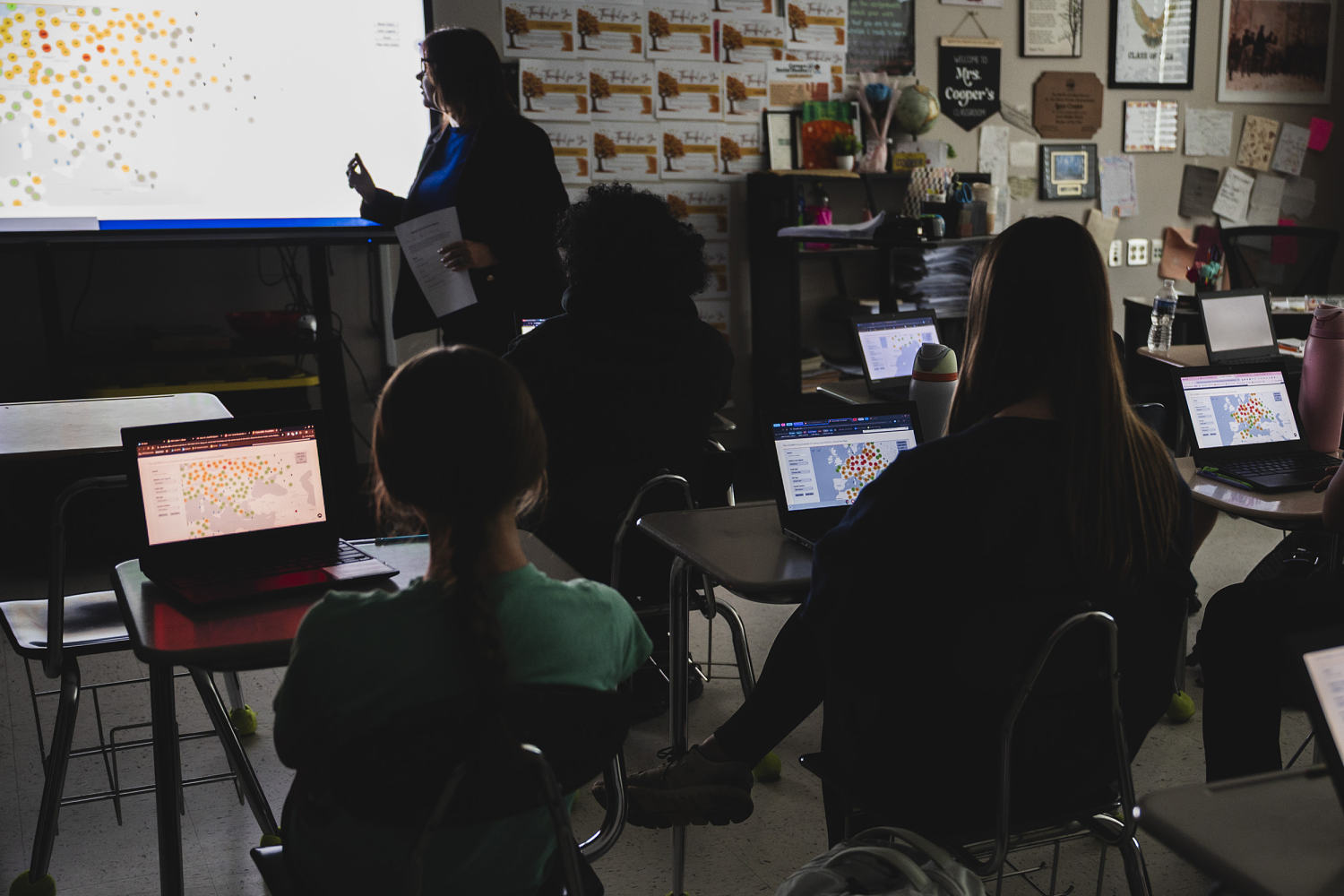
Every time a new cognitive tool arrives, the adult world panics that children are about to forget how to think. When the pocket calculator hit classrooms in the late nineteen-seventies, educators swore basic arithmetic would die. When Wikipedia became the default homework shortcut, pundits warned that memory was obsolete. Now, the public is foaming at the mouth because large language models can write a five-paragraph essay about To Kill a Mockingbird in four seconds. Public sentiment surveys show a knee-jerk panic, with most Americans convinced artificial intelligence is doing more harm than good in schools.
They are wrong. Not just slightly mistaken, but catastrophically backwards.
The panic over generative technology in education is not a defense of academic rigor. It is a defense of an industrial factory model that has failed students for a century. The traditional classroom is built on a simple premise: assign repetitive tasks, grade compliance, and mistake memorization for mastery. When software can clear those low hurdles instantly, the system breaks. Instead of admitting the hurdles were useless, society is blaming the tool that exposed them.
I have spent the last five years inside ed-tech boardrooms and experimental campus labs watching institutions scramble. I have seen administrators spend millions of dollars on software locks that try to turn the internet back into a walled garden, fighting a losing war against proxy servers and personal devices. The refusal to adapt is staggering.
Let us dismantle the core falsehood driving the panic: the notion that academic cheating is a new crisis engineered by silicon chips.
For decades, the standard high school writing assignment has been an exercise in performative compliance. Students regurgitate teacher preferences, stringing together predictable thesis statements and manufactured evidence. It is a ritual designed to produce predictable outputs for grading machines, not to forge independent thinkers. If an algorithm can pass your final exam without breaking a sweat, your final exam was never testing intelligence in the first place. It was testing pattern replication.
The Myth of the Stolen Mind
The primary anxiety voiced by anxious parents and conservative school boards is that children will outsource their cognitive development to algorithms. The logic goes like this: if you do not struggle to factor a quadratic equation or stumble through drafting an introductory paragraph by hand, your brain atrophies.
This argument misunderstands how human capability evolves. We do not mourn the loss of mental math required to compute long division by hand every time we use a spreadsheet, because we understand that freeing up working memory allows us to tackle higher-order abstraction. The same principle applies here.
When a student uses an LLM as an interactive Socratic sparring partner—interrogating its biases, demanding counter-arguments, and testing the structural integrity of an argument—they are engaging in a level of critical thinking that traditional classrooms rarely demand. Traditional instruction forces a student to sit passively while a lecturer dispenses dogma. AI forces the student to become the director of the inquiry.
Of course, there is a dark side to lazy adoption. If a student plugs an assignment prompt into a black box, copies the output, and submits it without reading it, they learn nothing. But here is the dirty secret of education: students have always found ways to do nothing. They used Cliff Notes, copied homework from the smart kid on the bus, and hired ghostwriters for college applications long before neural networks existed. The difference is that the old shortcuts were hoarded by privilege. Wealthy families bought private tutors who wrote college essays from scratch; working-class kids got caught using cheap plagiarism sites.
Democratized access to advanced cognitive scaffolding levels the playing field. The affluent kid still has advantages, but the raw intellectual leverage is now available to anyone with an internet connection. That terrifies the gatekeepers who rely on artificial scarcity to validate academic hierarchies.
Why Banning the Future is a Losing Strategy
School districts rushing to block AI portals on their local networks are engaging in administrative theater. They believe that by cutting off access on school property, they are preserving purity. By three o'clock in the afternoon, those same students go home, open their personal devices, and use the exact same tools to complete their work, research complex science topics, or debug code.
When institutions try to outlaw reality, students simply learn to lie to the institution. They develop covert workarounds, treating school not as a place of authentic learning, but as a hostile obstacle course to be bypassed with maximum efficiency. This dynamic destroys the last remaining thread of trust between teachers and learners.
Imagine a scenario where a high school history teacher treats an LLM not as a cheating device, but as an adversarial simulation. Instead of asking students to write an essay about the causes of the First World War, the teacher has them prompt the model to adopt the persona of a German diplomat in July nineteen-fourteen, forcing the students to cross-examine the machine's historical justifications in real time. The assignment shifts from passive regurgitation to active forensic analysis.
That is not a futuristic dream. It is happening right now in forward-thinking classrooms run by instructors who have abandoned the fantasy of total control.
The resistance we see today stems from a deep, systemic addiction to standardization. Standardized tests, standardized curricula, and standardized grading scales require standardized answers. Algorithms shatter standardization because they generate infinite variations of thought. They make mass personalization possible, which threatens an educational bureaucracy designed for assembly-line processing.
The Brutal Truth About Classroom Reality
To maintain intellectual honesty, we must acknowledge the legitimate hazards of this transition. My contrarian stance does not mean the technology is an unblemished savior.
First, algorithmic hallucinations are real and dangerous. Large models lie with absolute confidence. If students accept output as infallible truth without cross-referencing primary sources, literacy rates will plummet, replaced by a new kind of gullibility. Schools must teach source verification with the aggression once reserved for driver education.
Second, over-reliance on conversational interfaces risks eroding deep reading stamina. Sustained attention spans are already in freefall. If a student never forces themselves to push through the dense, boring prose of an eighteenth-century philosopher or a complex scientific paper, their capacity for deep concentration shrinks. Technology should supplement friction, not eliminate every obstacle that builds cognitive endurance.
Third, data privacy in classrooms is an unmitigated disaster. Ed-tech vendors harvest telemetry data from minors, turning public education into a data-mining operation for venture capitalists. Schools trading student privacy for slick user interfaces are committing a slow-motion institutional crime.
Yet these risks are operational challenges to be managed, not existential reasons to drag the anchor.
The End of the Compliance Trap
The public obsession with the harm of artificial intelligence in schools is a displacement strategy. It allows society to blame a software vendor for the rot in an educational system that was already failing to prepare young people for a complex, automated economy.
We do not need more firewalls. We do not need more honor codes that treat teenagers like criminals for using modern tools. We need a complete reconstruction of why we herd children into brick buildings for twelve years.
If school is merely a holding pen designed to issue credentials based on compliance and rote memorization, then yes, artificial intelligence is an existential threat. It makes the entire enterprise obsolete.
If school is meant to teach human beings how to think, question, and build agency in a world overflowing with synthetic information, then this technology is the most powerful lever we have ever been handed. Stop protecting the system that is failing your children. Start teaching them how to master the tools that will shape their century.
The bell has rung. Stop hiding under the desk.