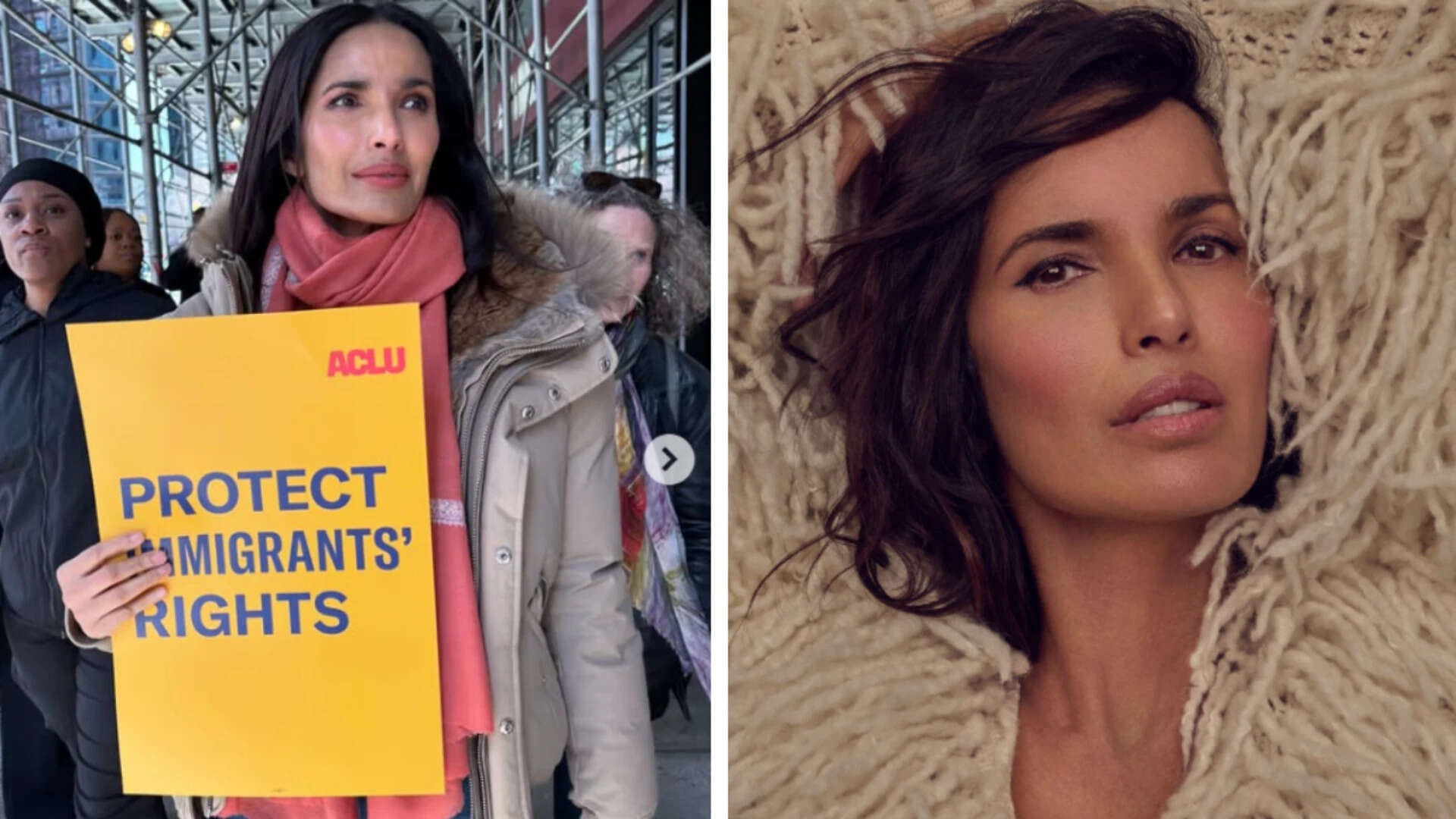
The intersection of celebrity and high-stakes political activism has shifted from simple red-carpet endorsements to organized, grassroots mobilization. Padma Lakshmi, the long-time host of Top Chef and a prominent Indian-American author, recently stepped into the center of this shift by throwing her weight behind the "No Kings" protests. This movement focuses specifically on opposing the expansive executive powers and policies associated with Donald Trump. By aligning herself with this cause, Lakshmi is not just making a social media statement; she is leveraging her specific identity as an immigrant and a visible minority to challenge the legal and ethical boundaries of the American presidency.
The Shift from Culinary Icon to Political Lightning Rod
For years, Padma Lakshmi was defined by the controlled environment of a television kitchen. However, her evolution into a fierce advocate for immigrant rights and civil liberties has been building for over a decade. Her support for the "No Kings" initiative is a direct response to the Supreme Court's rulings on presidential immunity and the subsequent policy proposals that many critics argue would centralize power within the executive branch to an unprecedented degree.
She isn't acting in a vacuum. The "No Kings" movement is rooted in the fundamental American principle that no individual, regardless of office, stands above the law. For Lakshmi, this is personal. As an immigrant from India who has built a massive platform in the United States, she views the erosion of democratic checks and balances as a direct threat to the very system that allowed her to succeed. She often speaks of the "American Dream" not as a cliché, but as a fragile agreement between the state and its people that can be revoked if the rule of law is replaced by the whim of a ruler.
Dissecting the No Kings Mandate
What exactly are these protesters demanding? The movement is primarily a reaction to the 2024 Supreme Court decision in Trump v. United States, which granted a significant level of immunity for "official acts" performed while in office. This legal shift sent shockwaves through the legal community and sparked the current wave of activism.
Protesters are pushing for several concrete legislative and constitutional changes:
- The No Kings Act: A proposed piece of legislation designed to clarify that presidents do not have immunity for criminal acts, effectively attempting to legislatively bypass the Supreme Court's broader interpretations.
- Executive Constraint: Demands for Congress to reassert its authority over federal agencies, preventing a "unitary executive" model where the president has total control over every arm of the government.
- Judicial Reform: Advocacy for term limits or an enforceable code of ethics for Supreme Court justices to ensure that the bench remains impartial.
Lakshmi’s involvement brings these dense, often dry legal concepts to a much wider audience. She translates constitutional anxiety into a language of human rights and cultural preservation. When she speaks at a rally or shares a detailed breakdown of a bill, she bridges the gap between the ivory tower of legal academia and the kitchen tables of everyday Americans.
The Strategy of the Indian American Diaspora
The political weight of the Indian-American community has never been higher. With figures like Kamala Harris, Usha Vance, and Nikki Haley occupying central roles in the national conversation, the diaspora is no longer a peripheral voting block. Lakshmi represents a specific segment of this demographic: the progressive, urban professional who views secularism and legal equality as non-negotiable.
Her participation in "No Kings" serves as a counter-narrative to the idea that all successful immigrants eventually lean toward conservative, "law and order" platforms. Instead, she argues that true order comes from the stability of the law, not the strength of a leader. This creates a friction point within the community itself, sparking debates in community centers and on WhatsApp groups about the future of the American experiment.
Why This Movement Faces an Uphill Battle
Despite the star power of advocates like Lakshmi, the "No Kings" movement faces massive structural hurdles. The current political climate is deeply polarized, and the mechanisms required to "fix" the issues they identify—such as constitutional amendments or major judicial overhauls—are notoriously difficult to achieve.
Critics of the movement argue that these protests are merely partisan reactions to a leader the activists dislike. They claim that the Supreme Court's ruling was a necessary protection to ensure that presidents can make difficult decisions without the constant fear of politically motivated prosecutions once they leave office. This tension is the core of the current American crisis. One side sees the protection of the office; the other sees the creation of a monarch.
Furthermore, the "No Kings" movement must contend with "outrage fatigue." In a news cycle that moves at a staggering pace, sustaining a protest movement centered on complex legal theories is a Herculean task. This is where Lakshmi’s role becomes vital. She has the staying power and the media savvy to keep the conversation alive long after the initial news cycle has faded.
The Economic Implications of Centralized Power
While much of the rhetoric around "No Kings" focuses on civil rights and legal theory, there is a significant, often overlooked economic component. Investors and global markets generally favor stability and the predictable application of law. If a presidency becomes untethered from legislative and judicial oversight, it introduces a level of volatility that can spook markets.
If executive orders can unilaterally upend trade agreements, tax codes, or regulatory frameworks without any recourse, the cost of doing business in the United States increases. Lakshmi has touched on this indirectly by highlighting how Trump-era policies, such as the targeting of specific immigrant groups, disrupted the hospitality and agricultural industries—sectors she knows intimately. The "No Kings" stance is, in a way, a pro-market stance that demands a return to the "rules-based order" that has historically underpinned American economic dominance.
Beyond the Ballot Box
Lakshmi is pushing for a form of engagement that goes beyond voting every four years. She is advocating for a sustained, civic presence. This involves:
- Direct Lobbying: Using her platform to encourage followers to contact their representatives regarding the No Kings Act.
- Cultural Storytelling: Using her shows and books to highlight the diversity that is threatened by nationalist policies.
- Legal Support: Raising funds for organizations that provide pro-bono legal counsel to those impacted by executive overreach.
This isn't just about one man. It's about the office. Even if Trump were not the candidate, the precedent set by recent judicial decisions would remain. The "No Kings" movement is an attempt to close a door that has been kicked wide open, regardless of who might try to walk through it next.
The High Stakes of Celebrity Advocacy
There is always a risk for a public figure when they dive into such contentious waters. Boycotts, loss of sponsorships, and targeted harassment are the standard price of entry. Lakshmi has already faced significant backlash from conservative circles, who accuse her of being "out of touch" or "elitist."
Yet, the "No Kings" protests seem to have struck a different chord. Unlike previous celebrity-led movements that felt like hollow vanity projects, this one is anchored in specific legal grievances. Lakshmi isn't just saying she doesn't like the policy; she is arguing that the mechanism of the policy itself is a threat to the Republic.
The reality of the American legal system is that it is built on traditions and "norms" as much as it is on written laws. Once those norms are shattered, they are incredibly difficult to piece back together. The "No Kings" movement is a desperate, public attempt to glue those pieces back into place before the heat of the next election cycle melts them entirely.
Power has a way of concentrating itself. Without constant, friction-filled pushback from the public and their most visible representatives, the slide toward an imperial presidency becomes not just possible, but inevitable. The presence of a cultural figure like Padma Lakshmi at the front lines of this debate ensures that the legal arguments aren't just buried in court filings, but are discussed in the streets and across the digital world where the actual battle for public opinion is won or lost.
The move away from a system of checks and balances doesn't happen with a single decree; it happens through the gradual acceptance of the unacceptable. Protests like "No Kings" are the alarm bells. Whether the rest of the country wakes up to the sound remains the defining question of this political era.