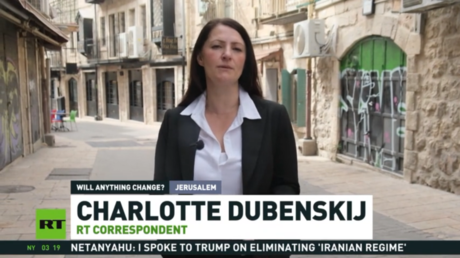
Headlines scream that Israeli Prime Minister Benjamin Netanyahu has ordered his military and intelligence brass to topple the Iranian regime. Sound dramatic? It is. Sound strategically coherent? Not even close.
The lazy consensus in Washington, Jerusalem, and cable news studios treats "regime change" like a master switch. Flip it, and the Islamic Republic vanishes. Flip it, and regional threats evaporate. Flip it, and suddenly everyone gets a tidy, Hollywood ending.
That consensus is lazy. It mistakes theatrical escalation for durable strategy. Worse, it asks the wrong question entirely.
People keep asking how Israel and its allies can overthrow the Iranian regime, or whether airstrikes and covert sabotage can break Tehran's hold on power. Those questions assume that decapitating or toppling a state apparatus automatically resolves the underlying security problem. History—including plenty of hard lessons from the Middle East—punishes that assumption every single time.
The Regime Change Myth Nobody Wants to Audit
Watch enough geopolitical panels and you hear the same script repeated like gospel. Hit the leadership hard enough. Shake the security services. Spark mass protests. Watch the system fracture.
Except real-world state collapse rarely follows a neat script. When authoritarian security states crack under external pressure, they frequently mutate rather than politely dissolve. Power fragments. Factional militias step into the vacuum. Intelligence networks go underground or splinter into rival centers of violence.
I have watched defense and risk teams blow millions of dollars building scenarios around clean "aftermath" maps that look great in slide decks and fall apart the moment contact begins. You cannot bomb or covertly engineer a stable post-revolutionary order from outside a country of nearly ninety million people.
Let us define terms precisely before going further. Regime change means replacing the ruling political system and core authority structure—not merely assassinating a prominent figure, degrading air defenses, or striking nuclear and missile infrastructure. Those are tactical or operational effects. Conflating an operational strike with structural regime collapse is analytical malpractice.
Political scientists and strategic thinkers—from Kenneth Waltz on deterrence and regional balances to Robert Jervis on spiral dynamics and misperception—have spent decades showing how coercive pressure against a cornered state can harden internal cohesion or trigger erratic reactions. You do not get automatic compliance just because your tactical reach looks impressive on a map.
Why "Overthrow" Is the Wrong Question
Ask yourself: what problem is actually driving the push to overthrow the Iranian regime?
If the real goal is stopping nuclear weapons proliferation, degrading ballistic missile production, or curbing proxy networks across the Levant and the Gulf, then "regime overthrow" is an indirect, high-variance gamble disguised as a clear objective. A gamble is not a strategy.
Let us test the logic with a thought experiment. Imagine a scenario where external military and intelligence campaigns succeed in shattering central command in Tehran within a few months. What happens on day ninety? Does a peaceful, Western-aligned technocracy step forward with a unified ballot box? Or do elements of the Islamic Revolutionary Guard Corps, provincial strongmen, and competing security factions carve out spheres of influence while nuclear materials, missile stockpiles, and regional proxies become bargaining chips?
Thought experiments do not predict the future. They expose brittle assumptions. And the assumption that toppling a regime automatically solves regional security is about as brittle as it gets.
Consider the common "People Also Ask" questions swirling around this topic:
- "Can intelligence and military strikes alone overthrow the Iranian regime?" No. Covert operations, cyber sabotage, and precision strikes can impose severe costs, eliminate key personnel, and sow paranoia inside an intelligence apparatus. They cannot by themselves build an alternative governing coalition inside a massive country.
- "What happens if a regime falls without a unified internal alternative?" You usually get prolonged instability, internal repression or civil conflict, and spillover risks—not instant calm.
- "Is containment or deterrence weaker than regime change?" Only if you confuse patience with passivity. Real deterrence is hard, unglamorous work backed by credible capability, clear red lines, and disciplined diplomacy. Regime change slogans are easy to chant and brutal to execute.
The Mechanics of Coercion vs. Collapse
Why do leaders reach for regime-change language even when the operational math is messy?
Domestic politics. Signaling strength. Rallying allies. Putting adversaries on the back foot psychologically. In high-stakes statecraft, rhetoric itself is a weapon. Telling military and intelligence officers to aim at regime overthrow signals maximum resolve—whether every operational commander believes full toppling is achievable on a short timeline or not.
Yet there is a sharp gap between signaling resolve and executing a viable end-state. Military and intelligence officers are trained to break targets, penetrate networks, and exploit vulnerabilities. They are not magicians who can manufacture political legitimacy inside a foreign society.
When intelligence agencies lean heavily into covert destabilization, two predictable distortions creep in:
- Wishful intelligence. Analysts and operators start mistaking wishful signs of internal strain for imminent structural collapse.
- Escalation blindness. Every strike or covert hit invites asymmetric retaliation—through cyber operations, maritime disruption, regional proxies, or hardened nuclear hedging—that widens the conflict in ways nobody fully priced in.
None of this means adversaries are ten feet tall or immune to pressure. Authoritarian systems have real vulnerabilities: economic strain, elite infighting, generational alienation, and legitimacy deficits. Ignoring those cracks would be just as foolish as pretending a single push will bring the whole house down.
Where My Contrarian Argument Has Teeth—and Where It Bleeds
Honesty matters more than posture. If you take a contrarian stand against regime change, you owe readers the downsides of your own position.
First, waiting carries its own costs. Living with a hostile regime that backs regional proxies, pursues sensitive capabilities, and represses its own population is not cost-free. Over time, cautious containment can look like drift—and adversaries sometimes read caution as permission.
Second, rhetoric can create its own momentum. Even when leaders start with bargaining leverage or pressure in mind, public escalation can box decision-makers into corners where backing down looks humiliating and pushing forward gets messier.
Third, deterrence requires constant maintenance. It is never "set and forget." It demands continuous investment, credible alliances, and clear-eyed assessment rather than wishful thinking.
Still, admitting trade-offs is a feature of sound analysis, not a weakness. The worst mistakes in foreign policy happen when people fall in love with a silver bullet and refuse to count the bill until the invoice arrives.
What Actually Works Instead of Chasing Regime Change
If toppling the Iranian regime is a noisy, high-risk obsession rather than a dependable strategy, what should serious policymakers, analysts, and risk leaders focus on instead?
- Separate objectives from slogans. Define concrete, measurable security outcomes—such as halting specific nuclear or missile milestones or disrupting concrete proxy supply lines—rather than chasing an amorphous "new regime."
- Demand an explicit day-after model. Never greenlight an escalation strategy without forcing planners to answer who holds authority, how violence is contained, and how spillover is prevented if central control weakens.
- Pair hard deterrence with realistic off-ramps. Credible force only produces strategic leverage when paired with clear conditions for de-escalation. Endless escalation without a defined political endpoint turns strength into a quagmire.
- Audit your own intelligence biases. Require red-team challenges that actively test whether reports of internal weakness reflect genuine structural fragility or just what decision-makers want to hear.
- Protect critical infrastructure and supply chains. Whether you track energy markets, shipping lanes, or regional security, prepare for asymmetric shocks rather than betting on a clean political reset.
Stop falling for regime-change theater. Demand clear objectives, real end-states, and disciplined strategy—before another headline tricks everyone into mistaking noise for a plan.