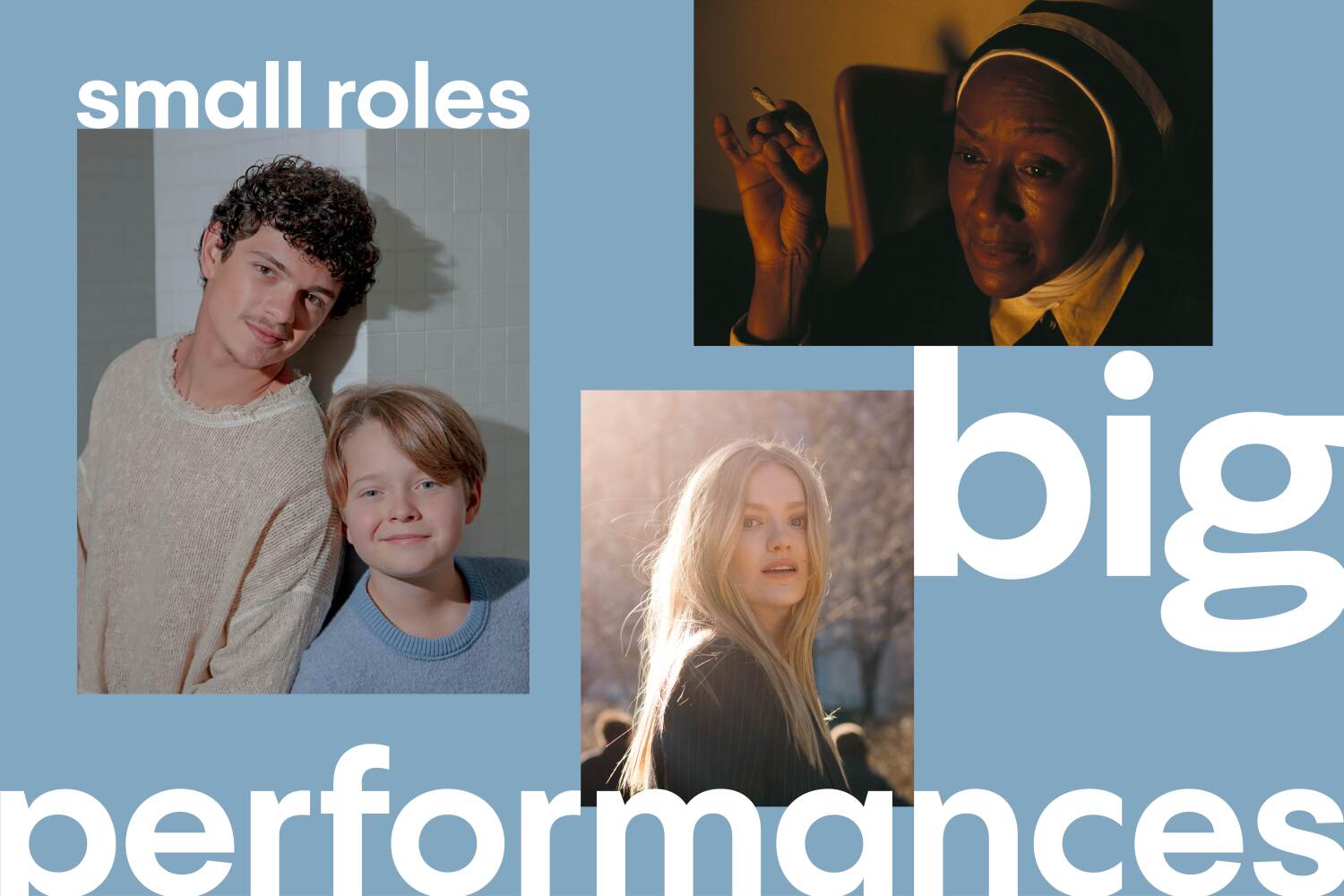
You’ve seen the posters. You’ve heard the Oscar buzz for the names at the top of the marquee. But the most electrifying moments in cinema over the last year didn’t always come from the actors with the biggest trailers. Sometimes, the best part of a two-hour movie is a ten-minute lightning strike from a supporting player.
Casting directors call it "filling the frame." I call it doing the heavy lifting while the stars get the glory. We’re talking about those specific performances that linger in your brain long after the credits roll. They’re under-the-radar standouts. They’re the actors who walk into a scene, grab the audience by the throat, and refuse to let go. Don't miss our previous article on this related article.
If you’re tired of the same three A-listers rotating through every blockbuster, it’s time to look at the performers who actually defined the last twelve months of film.
Why Small Roles Matter More Than You Think
Movies are fragile. A weak supporting cast can make even a $200 million epic feel hollow. Conversely, a brilliant bit part can elevate a mediocre script into something memorable. Think about Beatrice Straight in Network. She was on screen for five minutes and walked away with an Academy Award. If you want more about the history of this, GQ offers an in-depth breakdown.
In the last year, we’ve seen a massive shift in how audiences consume stories. With the rise of "prestige" streaming and the return of mid-budget theatrical dramas, the "character actor" is having a moment. People want texture. They want faces that look like they’ve actually lived a life.
It’s easy to look good when you have 120 pages of dialogue to develop a character. It’s significantly harder to create a soul in three scenes. These are the four performances from the past year that achieved the impossible.
1. The Quiet Gravity of Hong Chau in Kinds of Kindness
Yorgos Lanthimos makes weird movies. We know this. But his latest triptych, Kinds of Kindness, relies entirely on the ability of his ensemble to play multiple, vastly different characters within the same film. While Emma Stone and Jesse Plemons took the brunt of the attention, Hong Chau was the secret weapon.
Chau has spent the last few years becoming the most reliable performer in Hollywood. Whether she’s the steely assistant in The Menu or the grieving nurse in The Whale, she possesses a specific type of stillness. In Kinds of Kindness, she plays characters that feel like they’re holding back a tidal wave of information.
The Power of What Isn't Said
In her segments, Chau doesn't need a monologue. She uses her eyes to convey a sense of cultish devotion or chilling indifference. It’s a masterclass in economy. Most actors try to "win" a scene by doing the most. Chau wins by doing the least. She anchors the surrealism of Lanthimos’s world in a way that makes the absurdity feel terrifyingly real.
If you missed this one because the runtime scared you off, go back and watch it just for her. She provides the emotional glue that keeps the experimental structure from falling apart.
2. The Electric Chaos of Mike Faist in Challengers
Okay, Challengers was a hit. People talked about the tennis. They talked about the "tashi duncan" of it all. But while Zendaya was the sun around which the film orbited, Mike Faist was the one providing the heat.
Faist plays Art Donaldson, a champion on the decline. It’s a role that could have easily been a boring, "straight man" archetype compared to Josh O’Connor’s flamboyant Patrick Zweig. Instead, Faist turned Art into a vibrating wire of anxiety and resentment.
Physicality as Storytelling
Watch the way Faist moves in that movie. He’s a former dancer, and it shows. Every slouch, every aggressive serve, and every exhausted sigh tells you more about Art’s marriage than the dialogue ever could.
He captures the specific sadness of an elite athlete who knows his body is failing him. It’s a "small" performance in the sense that it’s internal, but it’s a big performance because it changes the chemistry of every scene he’s in. He didn't just play a tennis player; he played a man who was haunted by his own success.
3. The Scene Stealing Brilliance of Carol Kane in Between the Temples
Nathan Silver’s Between the Temples is a chaotic, grainy, Jewish screwball comedy that feels like it was unearthed from a time capsule in 1975. Jason Schwartzman is great as a grieving cantor who can’t sing anymore, but Carol Kane is the heart, soul, and funny bone of the entire project.
Kane plays Carla, a woman who decides she wants a Bat Mitzvah in her 70s. This isn't just "quirky old lady" acting. It’s something much more profound.
Breaking the Typecast
We’ve seen Carol Kane be funny for decades. She’s an icon for a reason. But here, she brings a vulnerability that feels raw. She and Schwartzman have a chemistry that defies the "student and teacher" trope.
She makes the movie feel alive. When she’s on screen, the camera seems to struggle to keep up with her energy. It’s a reminder that age in Hollywood is often treated as a limitation, but for an actor like Kane, it’s a superpower. She’s doing some of the best work of her career right now, and if you haven’t seen this indie gem, you’re doing yourself a disservice.
4. The Chilling Precision of Stephen McKinley Henderson in Civil War
Alex Garland’s Civil War was one of the most polarizing films of the year. Some hated the politics; some loved the tension. But nobody could deny the power of Stephen McKinley Henderson as Sammy, the veteran journalist who has seen too much.
Henderson is a legend of the stage, a frequent collaborator with August Wilson during his lifetime. In Civil War, he serves as the moral compass in a world that has lost its North Star.
The Weight of Experience
Sammy is a role that could have been a cliché—the wise old mentor who dies to give the protagonist motivation. Henderson refuses that. He plays Sammy with a weary dignity. He’s slow because he’s old, but his mind is faster than everyone else in the van.
His final scene in the film is one of the most harrowing sequences in modern cinema. It’s not about the action; it’s about the look on his face as he realizes the world he knew is gone. Henderson brings a gravity to the movie that elevates it from a mere thriller to a genuine tragedy. He is the anchor. Without him, the movie drifts into pure spectacle.
The Art of Noticing
We live in an era of "content" where movies are often treated like background noise. We check our phones during the slow parts and wait for the explosions. But when you start paying attention to the supporting players, the experience changes.
You start to see the craft. You see how a great actor can take a two-page scene and turn it into the highlight of the film. These four performers didn't just show up for a paycheck. They showed up to create something real.
Next time you’re scrolling through a streaming service, don't just look for the big names. Look for the names you recognize from "that one thing." Look for the Hong Chaus and the Stephen McKinley Hendersons. Those are the people actually keeping the art of acting alive.
Go watch Between the Temples for a lesson in comedic timing. Put on Civil War and watch Henderson’s face during the quiet moments. Buy a ticket for the weird indie film with the great character actor you love. Support the performers who don't always get the magazine covers but always deliver the goods.