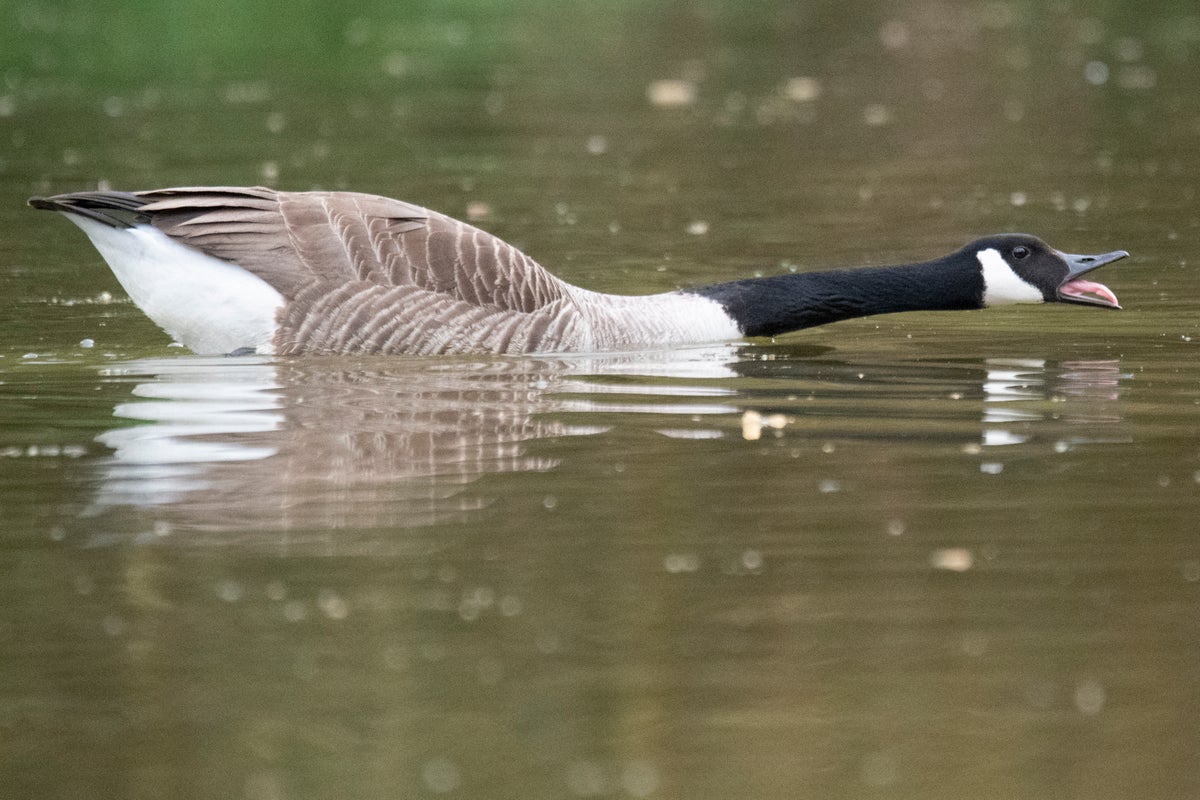
The internet loves a good villain, and a local homeowners association voting to euthanize geese is prime outrage bait. When news broke that an Alabama HOA secured a federal permit to cull Canada geese, the public reaction followed a predictable, lazy script. Animal rights activists wept. Neighbors signed petitions. Media outlets ran heartbreaking headlines about "federally protected" birds being slaughtered.
It is a touching narrative. It is also completely detached from ecological and economic reality.
The outrage machine misses the point entirely. Suburban Canada geese are not wild, majestic symbols of pristine nature. They are an invasive, human-created environmental hazard. Protecting them out of misguided sentimentality does not preserve nature; it destroys local ecosystems and creates genuine public health crises.
Let's dismantle the emotional theater and look at the cold, hard science of wildlife management.
The Myth of the Wild Canada Goose
The foundational error of the backlash rests on a misunderstanding of what these birds actually are. People hear "federally protected under the Migratory Bird Treaty Act" and assume these geese are a vulnerable species traversing the continent.
They aren't.
Wildlife biologists divide Canada geese into two distinct groups: migratory populations and resident populations. The geese clogging your local golf course, defecating on boat docks, and aggressive-walking toward toddlers are resident geese. They do not migrate. They were introduced by humans decades ago through restocking programs, and they realized that suburban America is a predator-free paradise with an endless buffet of manicured lawns.
According to data from the U.S. Department of Agriculture (USDA) Animal and Plant Health Inspection Service, resident Canada goose populations have exploded over the last forty years. They have no natural predators in a gated community. The local coyote isn't taking down a twelve-pound gander when there are easier meals around.
When a population has infinite food, zero predators, and a complete lack of natural checks, it stops being a balanced part of an ecosystem. It becomes a biological monoculture.
The Toxic Reality of Suburban Geese
Let’s talk about poop.
An average adult Canada goose consumes up to four pounds of grass per day. In return, it deposits up to two pounds of feces every single day. Multiply that by a flock of two hundred resident geese, and you are looking after four hundred pounds of waste daily, dropped directly into a concentrated suburban area.
This is not harmless fertilizer. Goose feces is loaded with fecal coliform bacteria, including E. coli, Salmonella, and Campylobacter. It also contains parasites like Cryptosporidium and Giardia. When it rains, this massive biological load washes straight into the neighborhood retention ponds and local lakes.
The very people crying cruelty because the HOA wants to cull the flock are often the same parents wondering why the neighborhood lake is suddenly choked with toxic algae blooms and closed to swimming. The high nitrogen and phosphorus content in goose waste accelerates eutrophication—a process that strips oxygen from the water, suffocating native fish, turtles, and beneficial aquatic plants.
By demanding the absolute protection of an overpopulated, non-native flock, activists are actively voting for the destruction of every other aquatic species in their zip code.
Non-Lethal Management is an Expensive Lie
The loudest critics always offer the same standard playbook of alternatives: "Why can't we just use border collies? What about fake owls? Why not add addle eggs or use chemical repellents?"
I have advised property managers and municipalities dealing with wildlife conflicts for over a decade. I have seen organizations sink tens of thousands of dollars into these exact tactics, only to watch them fail miserably.
Here is why non-lethal management is a multi-million dollar hustle:
- Habituation: Geese are highly intelligent birds. A plastic owl works for exactly forty-eight hours until a gander realizes the owl hasn't moved an inch or tried to eat him. Then, the geese sit on the owl's head.
- The Relocation Shell Game: Relocating resident geese sounds humane, but it is ecologically irresponsible. You are simply taking a nuisance population and dumping them into someone else’s backyard or an already stressed public park. Furthermore, because geese possess incredibly strong homing instincts, they often fly right back to the original site within weeks.
- Egg Addling Limitations: Shaking eggs or coating them in corn oil stops them from hatching. It is a solid long-term population stabilization tool, but it does absolutely nothing to address a current, critical overpopulation crisis. If you have three hundred geese destroying a pond today, addling eggs means you will still have three hundred geese destroying the pond all summer.
When a resident goose population crosses a specific density threshold, lethal control is not just the most cost-effective option—it is the only statistically viable way to reset the ecological balance.
The Federal Guardrails Activists Ignore
The media coverage loves to paint HOAs as rogue bands of suburban tyrants operating in the dark. The reality is that executing a lethal cull of Canada geese requires jumping through massive regulatory hoops.
The Migratory Bird Treaty Act means you cannot just buy a shotgun and clear out a pond. The Alabama HOA had to apply for a federal permit through the U.S. Fish and Wildlife Service, usually in coordination with USDA Wildlife Services.
These agencies do not hand out lethal take permits like candy. To secure one, a property owner must document extensive property damage, demonstrate that non-lethal mitigation methods have been tried and have failed, and prove a legitimate threat to public health and safety.
When a permit is granted, it means federal wildlife biologists have reviewed the data and agreed that the population density is unsustainable. The cull is carried out humanely, often during the summer molting season when the birds are temporarily flightless, and the meat is frequently processed and donated to local food banks.
Calling this a "slaughter" ignores the highly regulated, scientific framework that governs modern wildlife management.
Redefining the Wildlife Question
The public outcry surrounding this issue stems from a fundamentally flawed question: "How do we protect these animals from humans?"
That is the wrong question for the modern world. The correct question is: "How do we manage human-altered landscapes to ensure broad ecological health?"
Suburbia is an artificial construct. By building sprawling lawns right next to retention ponds, humans inadvertently engineered the perfect ecosystem incubator for Canada geese. We created this mess. To pretend that stepping back and letting nature "take its course" will fix it is a delusion. Nature isn't taking its course; an unchecked, subsidized population is exploiting an artificial environment at the expense of every other local species.
The downside to lethal culling is obvious: it is bad public relations. It upsets people who prefer their environmentalism clean, comfortable, and viewable through a window. It forces us to confront the uncomfortable reality that managing an environment sometimes requires making hard, lethal choices.
But the downside of inaction is worse. It means degraded waterways, public health risks, eroded shorelines, and the collapse of local biodiversity.
Stop treating every wildlife management decision like an emotional morality play. The Alabama HOA didn't vote out of malice; they voted for math, science, and the long-term health of their local environment. It is time to grow up, look past the feathers, and accept that culling is conservation.