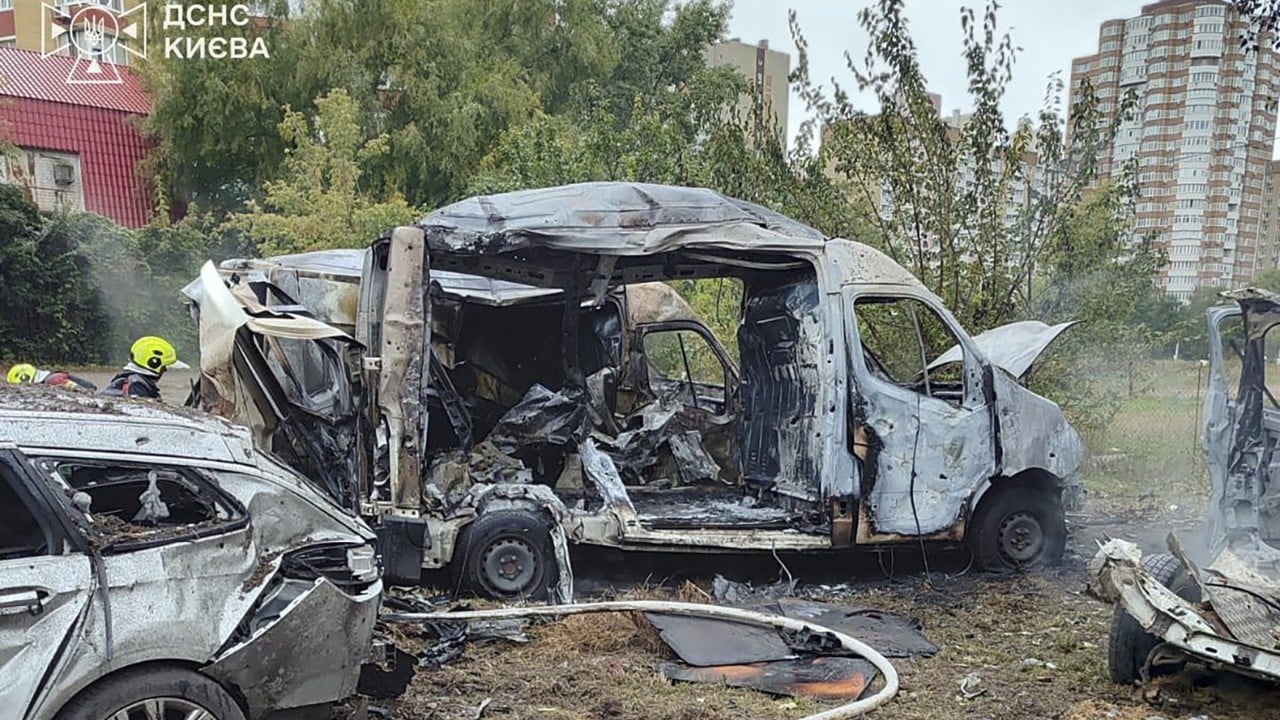
Another headline drops. Another maternity clinic is struck. Another casualty count sparks the usual 24-hour cycle of digital wringing of hands, performative grief, and diplomatic theater. Everyone reads the flash report, fires off their designated hashtag, and retreats deeper into their ideological trenches.
Stop.
The standard media narrative surrounding these strikes is not just lazy; it is actively engineered to obscure the mechanical reality of attrition warfare. When a hospital or a civilian hub takes a warhead, the civilized world screams about war crimes while completely ignoring the brutal mathematical incentives driving both sides of this grinding stalemate. Every time we reduce a multi-year geopolitical catastrophe to a reactive shock-value news bite, we misdiagnose the disease.
Let us look past the smoke and dismantle the consensus.
The Comforting Illusion of the Senseless Attack
The mainstream press wants you to believe that high-casualty strikes on civilian infrastructure are aberrations—irrational acts of malice born from desperation or pure brutality. That framework makes people feel morally superior, but it is strategically illiterate.
In a war of attrition, infrastructure is not separate from the military apparatus; it is the lifeblood of the war machine. When power grids, logistics hubs, and urban centers take hits, the operational goal is not necessarily to terrorize grandmothers in maternity wards, though that is the inevitable, horrific collateral. The goal is friction. It is the systematic degradation of state capacity, forcing the adversary to expend precious air defense assets, divert economic resources, and manage internal displacement instead of prosecuting an offensive.
To call these actions senseless is to misunderstand modern high-intensity conflict. They make grim, cold-blooded sense to the strategists drawing up the coordinates. Until we stop viewing total war through the lens of a court of law and start viewing it as a physics problem of resource exhaustion, our outrage will remain entirely useless.
The Moral Hazard of Endless Escalation Management
Look at how the West responds. The playbook never changes: condemn the specific strike, pledge a marginal bump in military hardware, wring hands over escalation thresholds, and repeat. This incrementalism is a slow bleed disguised as support.
By refusing to define a clear victory condition and instead feeding weapons into a defensive holding pattern, outside powers have created a bizarre perverse incentive structure. One side is locked into an existential struggle for territorial integrity, while the other is betting that democratic patience will eventually fracture under the weight of inflation, fatigue, and donor fatigue.
Every time a major urban strike occurs, the predictable chorus demands more of the exact same medicine. More defensive interceptors that cost a million dollars a pop to shoot down cheap loitering munitions. More diplomatic notes of stern disapproval. We are treating a structural systemic failure with outpatient band-aids because admitting the limits of our current strategy requires a level of political courage that modern capitals simply do not possess.
The Information Loop That Serves No One
Let us talk about the information ecosystem. The moment a bomb lands on a civilian structure, the fog of war instantly thickens with competing propaganda feeds. Unverified casualty figures are treated as gospel by one side and dismissed as staged fabrications by the other, depending entirely on which cable news network you have playing in the background.
This is where the public gets entirely hoodwinked. The media cycle demands instant certainty in an environment defined by chaos. Journalists racing to break the story rely on local telegram channels, unvetted social media clips, and official military spokespersons who have a vested interest in framing every event to maximize domestic morale or international sympathy.
By the time the actual forensic reality of a strike comes to light weeks later, the news cycle has already moved on to the next atrocity. We are left living in a permanent state of reactionary amnesia, outraged by today's headline and entirely forgetful of yesterday's.
The Uncomfortable Truth About Attrition
If you want the real story behind these strikes, look at the factories turning out guidance chips, the steel mills, and the demographic cliffs facing both nations. Wars of this scale are not won by viral outrage or moral indignation. They are won by mass, logistics, and the sheer endurance of human capital.
Every high-profile casualty event hardens resolve on one side while cementing the belief on the other that there can be no compromise short of total subjugation. The tragedy of modern warfare is that suffering does not break political will nearly as often as it hardens it into concrete.
The next time a devastating headline flashes across your screen, resist the urge to perform your grief for an online audience. Look past the emotional trigger and examine the grinding machinery underneath. Until we stop treating war as a moral drama and start treating it as the systemic catastrophe it is, these clinics will keep getting hit, the numbers will keep climbing, and the world will keep acting surprised by gravity.


