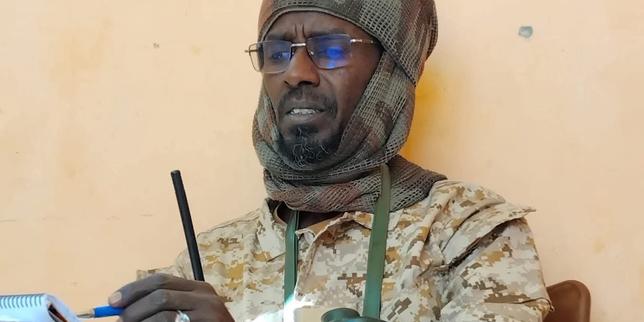
When power is maintained through absolute force, grief rarely stays quiet. It organizes. It crosses borders. It finds new weapons in unexpected places. Ousmane Dillo understands this better than anyone else currently testing the foundations of the Chadian military junta. While most political exiles limit their resistance to press releases and hotel lobby diplomacy, Dillo is waging a two-front war. One front is built on international jurisprudence inside the legislative chambers of Europe. The other is forged in the volatile, smoke-filled borderlands of war-torn Sudan.
To understand why N'Djamena is sweating over his movements, you have to look past the official press statements coming out of the capital. You have to look at what happens when a regime makes the fatal error of creating an unforgivable personal enemy.
The Unhealed Wound of February 2024
Politics in Chad has always operated under brutal rules, but the killing of Yaya Dillo Djérou in February 2024 crossed a threshold that cannot be uncrossed. Yaya Dillo, leader of the Socialist Party Without Borders and a formidable political challenger, was cornered and killed when military blindés smashed into his party's headquarters in N'Djamena. The government claimed self-defense. Everyone on the ground knew it was an execution designed to eliminate political competition before an election.
For the ruling junta led by Mahamat Idriss Déby, eliminating Yaya Dillo was supposed to end a headache. Instead, it birthed a much bigger nightmare. Ousmane Dillo, Yaya's brother, stepped directly into the leadership vacuum. But he didn't just inherit a political party. He inherited an absolute mandate for retribution.
Most observers expected the opposition to fracture or accept the inevitable payouts that usually accompany political assassinations in the region. Regimes like the one in N'Djamena have long relied on a time-tested playbook: offer financial compensation, known locally as the diya, sweep the violence under the carpet, and force grieving families to sign away their rights to justice.
Ousmane Dillo tore that playbook to shreds.
Taking the Fight to Paris Courtrooms
In September 2026, Dillo walked into the French National Assembly. He didn't come to beg for charity. He came to weaponize European law against the men who ordered his brother's death. Standing alongside French politicians like Aurélien Taché, representatives of Kimia Avocats, and various civil society leaders, Dillo laid out the extensive legal dossiers filed with French prosecutors and United Nations bodies.
This legal strategy infuriates the junta because it hits them where it hurts most: international legitimacy and mobility. Critics often dismiss foreign lawsuits in European capitals as toothless theater. They argue that universal jurisdiction rarely drags sitting dictators into handcuffs. They are missing the forest for the trees.
When European parquet offices open preliminary investigations, the operational reality for regime officials changes overnight. Red carpets get rolled up. Bank accounts face extra scrutiny. Travel itineraries shrink. By refusing the diya, Dillo strips the Chadian government of any plausible deniability. He is forcing Western diplomats who want to pretend stability in Chad is more important than human rights to look directly at state-sponsored murder.
Yet, legal briefs alone won't topple a military government backed by regional oil wealth and strategic utility. That is why Dillo's legal crusade in Paris is only half the story.
The Sudanese Vector and the Zaghawa Equation
You cannot comprehend Ousmane Dillo's rising threat level without looking east toward Sudan. The catastrophic civil war tearing Sudan apart has turned the border regions into an anarchic playground for armed factions, shifting loyalties, and cross-border insurgencies.
Reports and regional intelligence place Dillo operating in connection with Zaghawa fighters and rebel elements stationed near flashpoints like El Fasher. The Zaghawa community spans both sides of the border, and military loyalties within these ethnic networks are shifting rapidly. When the Sudanese civil war spilled over into border towns like Tiné, it dragged Chad's internal security into an impossible dilemma.
Mahamat Idriss Déby has repeatedly insisted that Chad remains neutral in the Sudanese conflict. Yet, persistent reports link N'Djamena to logistical support for the Rapid Support Forces, creating deep friction within the Chadian military itself. Many officers within the security apparatus—particularly those from ethnic groups tied to the borderlands—are growing increasingly uncomfortable with the regime's foreign policy gambles.
By establishing an armed presence and rallying fighters on the Sudanese side of the frontier, Ousmane Dillo transforms himself from a grieving civilian into an existential military threat. He is no longer just an exile shouting into a microphone. He is a self-proclaimed "general" commanding forces that know the terrain, possess real weaponry, and have every incentive to march westward toward N'Djamena.
Cracks in the Military Apparatus
The real danger for the Chadian presidency isn't just an external rebel force gathering steam in the desert. It's the internal rot. Discontent is quietly spreading through the institutional apparatus of the state.
When high-profile figures from within the establishment, such as Ousman Djigourou, openly accuse the administration of corruption and high treason, it signals a broader institutional malaise. Unlike traditional rebel leaders who emerge from the bush, institutional defectors speak the language of governance. They expose financial flows. They reveal operational vulnerabilities.
When you combine institutional whistleblowing with an armed opposition leader promising a violent return, the pressure cooker starts hissing. The regime's security services are spread thin, trying to police dissent in N'Djamena while keeping a nervous eye on the eastern border where Dillo's forces are massing.
Paris finds itself caught in an awkward diplomatic paradox. On one hand, French intelligence agencies maintain quiet, pragmatic security cooperation with N'Djamena, valuing the Chadian army as a counterterrorism partner in the Sahel. On the other hand, allowing Chadian opposition figures to freely organize press conferences inside the French National Assembly signals that Paris is hedging its bets. Diplomacy is rarely clean, and nobody in the Quai d'Orsay wants to be caught flat-footed if the regime in N'Djamena suddenly faces a coordinated internal and external collapse.
What Happens When the Exile Returns
Dillo has made his intentions crystal clear. He isn't interested in exile diplomacy as a permanent career. He has publicly announced his plans to return to Chad to finish what his brother started and overthrow the Déby administration.
Whether that return takes the form of a lightning military offensive across the Sudanese border or sparks an urban uprising inside the capital depends on variables that are shifting by the week. What is certain is that the old rules of political survival in Chad are breaking down.
For decades, the ruling clan managed dissent through a mix of co-optation, financial payoffs, and swift elimination. That strategy worked when opposition figures operated in isolation. It stops working when an opponent internationalizes his grievances in European courts, rejects blood money outright, and builds an armed coalition in the chaotic ruins of a neighboring civil war.
The status quo in N'Djamena is living on borrowed time. The question isn't whether the reckoning will arrive, but how much violence it will take to settle an unclosed grave.


