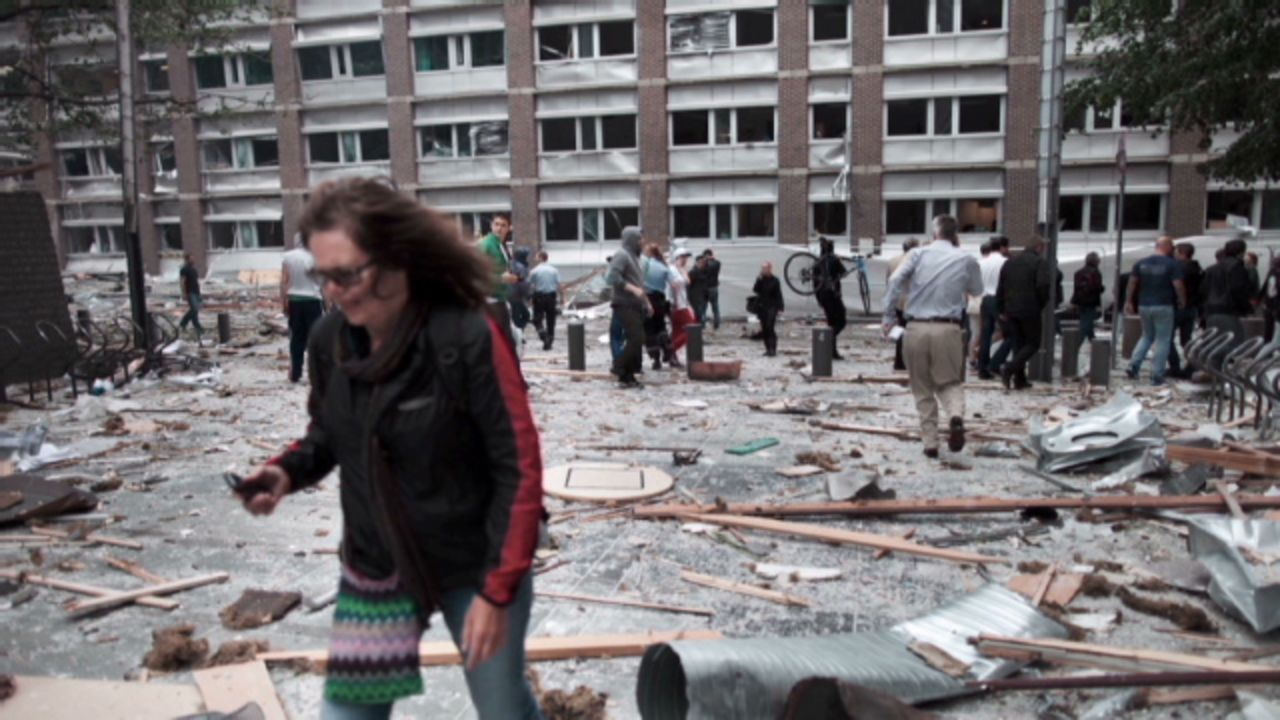
The media is currently hyperventilating over "minor damage" and "hunting perpetrators" at the U.S. Embassy in Oslo. They are missing the point. While reporters scramble to photograph a singed gate or a cracked window, they are ignoring the systemic decay of modern diplomatic security. If a device can detonate near a high-value target in one of the most monitored capitals on earth, the "perimeter" is a lie.
We are taught to believe that concrete bollards and thick glass make us safe. They don't. They make us targets with better insulation.
The Myth of the Hardened Perimeter
Diplomatic security has become a bloated, reactive industry that prioritizes optics over actual defense. When a small explosion occurs, the standard response is to increase the number of guards and tighten the "ring of steel." This is a fundamental misunderstanding of modern asymmetric threats.
I have watched agencies sink millions into physical barriers while their digital and human intelligence networks are effectively blind. A wall is a 14th-century solution to a 21st-century problem. If your security strategy depends on a perpetrator failing to reach your front door, you have already lost. The explosion in Oslo isn't a failure of the guards on duty; it is a failure of the philosophy that believes we can wall off the world and call it peace.
The Problem With Minor Damage
The term "minor damage" is a sedative used by the state to calm the public. In the world of security, there is no such thing as "minor" when it involves an embassy.
- A "minor" blast is a probe. It is a test of response times, detection capabilities, and the diplomatic climate.
- A "minor" blast is a psychological victory. It signals that despite billions spent on global surveillance, a motivated actor can walk up to a U.S. sovereign outpost and detonate a device.
- A "minor" blast is a media catalyst. It forces the embassy to shutter, creates chaos in the host city, and dominates the news cycle—all for the price of a few dollars in chemical components.
If you think this is a failure of Norwegian police or the State Department's Bureau of Diplomatic Security, you’re asking the wrong question. The question isn't "how did they get close?" The question is "why are we still using a model that allows them to get close?"
Why Modern Surveillance is a Paper Tiger
Everyone loves to talk about the "hunt for perpetrators." They act as if a grid of CCTV cameras and facial recognition software makes capture inevitable. This is a fairy tale.
In 2011, Oslo experienced a massive bombing and a horrific mass shooting. The city is one of the most surveilled environments on the planet. Yet, a decade later, we are still seeing perpetrators operate in the shadows of the embassy district. Why? Because we have traded intelligence for information.
Data Overload vs. Actionable Intel
We have more data than ever, but we have no idea what to do with it. Most surveillance systems are reactive. They exist to help us write a better police report after the building is already on fire.
Imagine a scenario where every person approaching the embassy is scanned, logged, and tracked. Does that stop a guy with a backpack? No. It just gives you a high-definition video of him doing it. True security requires pre-emption, and pre-emption requires human intelligence—something that has been gutted in favor of cheaper, shinier technology.
The Cost of Cheap Security
I’ve seen governments buy "cutting-edge" sensor arrays that trigger so many false positives they end up being ignored by the very guards they were meant to assist. This is the Alert Fatigue Paradox. When everything is an emergency, nothing is.
If the Oslo embassy was hit, it’s because the noise of daily life in a busy capital city drowned out the signal of the threat. We aren't failing because we don't have enough cameras; we’re failing because we’ve built systems that are too complex to be effective.
The Fallacy of the "Lone Actor"
Whenever an event like the Oslo blast occurs, the narrative immediately shifts to finding the "lone actor" or a small cell. This is a comforting lie. It suggests that if we just find this one person, the threat is gone.
The threat isn't the person. The threat is the vulnerability.
If one individual can cause even "minor" damage to a U.S. embassy, the vulnerability is systemic. It means the protocols are predictable. It means the host nation’s coordination with foreign security teams is flawed. It means the very idea of an "embassy" as a static, immovable fortress is obsolete.
Stop Trying to Fix the Fence
If you want to stop embassy bombings, stop building bigger fences. Instead, we need to decentralize.
The traditional embassy model is a relic of the Cold War. It is a giant, glowing "hit me" sign in the middle of a foreign city. We should be looking at:
- Distributed Diplomatic Nodes: Instead of one massive target, have multiple, smaller, non-descript offices that are harder to hit and easier to vacate.
- Digital First Diplomacy: Most of what happens in an embassy can and should happen in a secure cloud. If you reduce the physical footprint, you reduce the physical risk.
- Active Host Coordination: We need to stop treating host-country police as secondary actors and start integrating their real-time street intelligence into the embassy's core defense.
The Brutal Truth Nobody Admits
The reason we won't change is because Security Theater is profitable.
There are multibillion-dollar contracts for bollards, blast-resistant glass, and high-tech scanners. There is zero profit in telling a government that they need fewer buildings and more localized intelligence. The contractors want the "minor damage" stories because it justifies the next $500 million budget request for a "harder" facility.
We are currently caught in a cycle of:
- Attack occurs.
- Media panics.
- Government promises a "hunt."
- Security firms get paid for more hardware.
- Wait for the next attack.
This isn't a strategy. It's an ecosystem. And as long as we keep measuring security by the height of the walls rather than the quality of our foresight, we will keep seeing "minor damage" in Oslo, London, and beyond.
The Perpetrator isn't the Point
The police are "hunting perpetrators." Fine. Let them hunt. But finding the person who set off a small charge in Oslo won't make the next embassy any safer.
The real enemy is the complacency that says a "minor" explosion is an isolated incident. It’s the arrogance that thinks a concrete block can stop a modern ideologue. And it’s the sheer laziness of the media that refuses to look past the crime scene tape to see the rotting foundation of our entire approach to global security.
If you’re still looking at the singed gate in Oslo, you’re looking at the wrong thing. You should be looking at the billion-dollar budget that failed to stop a backpack from getting within striking distance of the most powerful nation's representatives.
The next time you hear a news report about "minor damage," don't be relieved. Be furious. It means the system is working exactly as intended: poorly, expensively, and just enough to keep you coming back for the next headline.
The perimeter is dead. Stop trying to paint it.