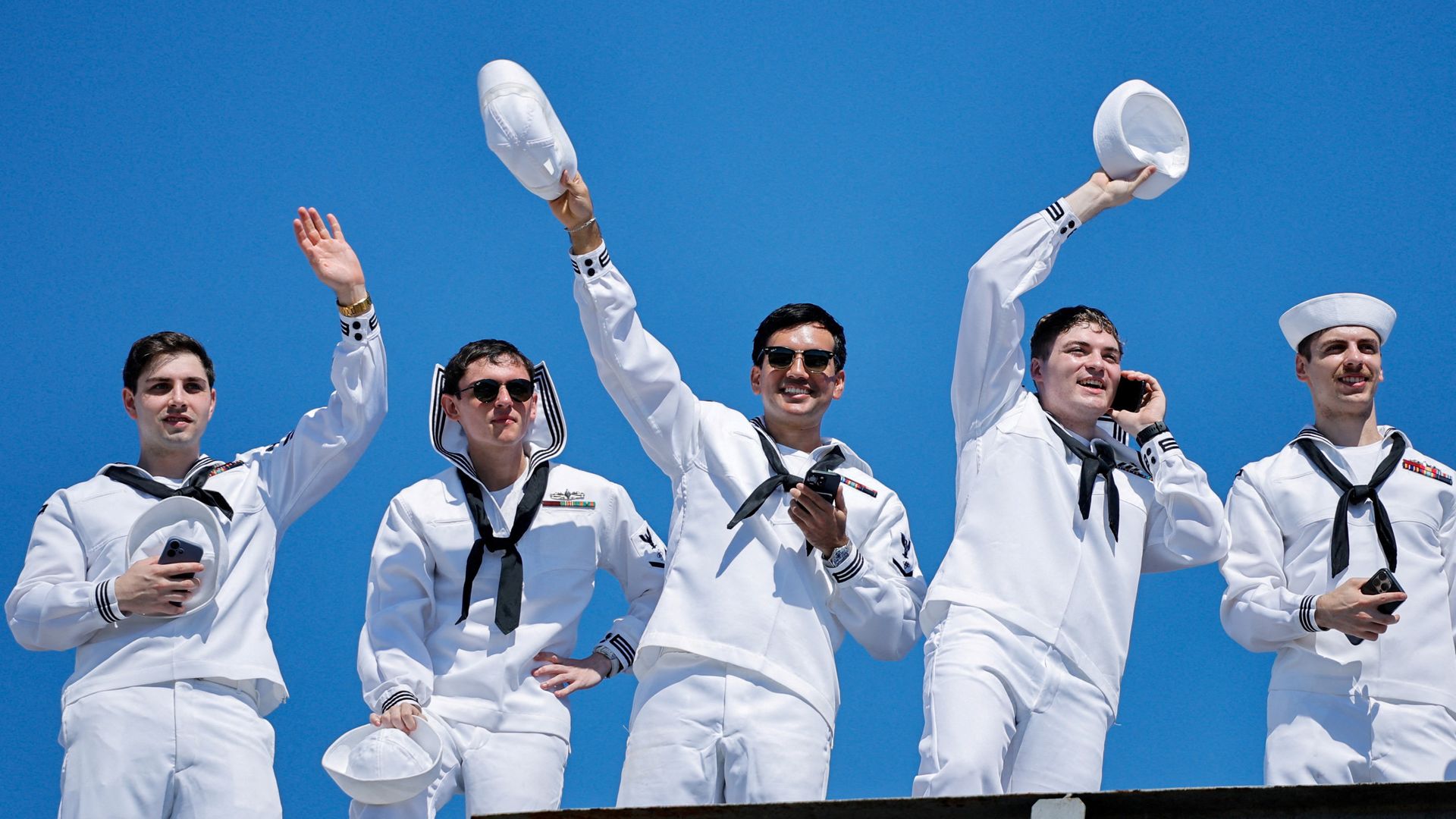
Naval deployments exceeding standard operational timelines create deep friction across mechanical endurance, logistics chains, and human capital reserves. When a surface combatant returns from an extended mission under scrutiny regarding board conditions, the narrative frequently defaults to surface-level commentary on fatigue or maintenance backlogs. Deconstructing this event requires replacing vague accounts with structured economic, operational, and organizational frameworks. Extended deployment cycles are not isolated anomalies; they are symptoms of a systemic deficit between force demand and force generation capacity.
Evaluating the mechanics of prolonged naval deployments reveals specific failure modes across asset depreciation, personnel degradation, and institutional response loops.
The Three Vectors of Operational Degradation
Extended deployments strain naval forces across three distinct, interacting vectors: mechanical depreciation, cognitive and physiological fatigue, and supply chain depletion.
[Force Demand] ---> (Extended Deployment) ---> [Mechanical Wear]
                                           ---> [Human Fatigue]
                                           ---> [Logistical Friction]
1. Mechanical Depreciation and Maintenance Deficits
A warship is a complex integrated system designed for specific operational hours between major overhauls. Pushing past these thresholds violates the engineered maintenance cycle.
- Corrosion Acceleration: Operating in saline environments without dry-dock access accelerates hull and piping degradation beyond nominal degradation curves.
- Component Fatigue: High-demand systems—such as propulsion plants, water distillers, and combat electronics—experience accelerated mean-time-between-failures (MTBF).
- The Maintenance Debt Multiplier: Deferring intermediate-level maintenance does not save resources; it compounds them. A repair deferred at sea typically demands a three-to-fivefold increase in labor hours and material costs when the vessel finally reaches an industrial facility.
2. Physiological and Cognitive Degradation
Human performance degrades predictably under sustained operational tempo combined with environmental stressors such as poor sleep hygiene, acoustic noise, and cramped living quarters.
- Circadian Disruption: Continuous watch rotations disrupt natural circadian rhythms, leading to cumulative sleep debt. This degradation manifests as reduced vigilance, slower reaction times, and impaired tactical decision-making.
- Nutritional and Environmental Stressors: Extended isolation from shore logistics strains fresh food supplies, forcing reliance on shelf-stable rations that impact morale and physical endurance. Environmental control systems operating continuously for months often exhibit reduced air quality, increasing susceptibility to respiratory illnesses among the crew.
3. Logistical Friction and Supply Chain Exhaustion
At-sea replenishment provides fuel and ordnance, but it cannot fully replace structural shipboard stores or specialized repair parts.
- Inventory Depletion: High-wear replacement parts are consumed faster than naval logistics pipelines can replenish them via vertical replenishment (VERTREP) or port visits.
- Workaround Culture: As spare parts become scarce, crews resort to ad-hoc engineering fixes. While creative, these workarounds often bypass redundancies, increasing vulnerability to secondary failures during high-threat maneuvers.
The Cost Function of Extended Rotations
To understand why navies push ships past their designated timelines, one must examine the institutional cost function. Force planners balance two competing economic variables: Operational Availability (Ao) and Life-Cycle Cost.
The standard formula for operational availability is expressed as:
$$A_o = \frac{\text{Mean Time Between Failures (MTBF)}}{\text{MTBF} + \text{Mean Time To Repair (MTTR)}}$$
When deployment lengths are artificially inflated to cover global presence gaps, the time available for scheduled maintenance shrinks. This compresses the denominator of force generation, leading to lower aggregate readiness across the broader fleet.
Deployment Extended ---> Maintenance Window Compressed ---> Fleet-Wide Readiness Deficit
This dynamic creates a negative feedback loop:
- A shortage of hull-days in a specific theater forces the extension of currently deployed units.
- Extended deployments consume the maintenance window required to keep those units viable.
- The resulting maintenance delays reduce the total number of operational ships available for future rotations, increasing pressure to extend the next available unit.
Breaking this loop requires adjusting strategic posture, accepting presence deficits in secondary regions, or increasing the total inventory of hulls. Absent structural changes, individual ships absorb the penalty through degraded habitability and mechanical strain.
Habitability as an Operational Variable
Living conditions on board a combatant are frequently framed as a welfare issue, but from a rigorous analytical perspective, habitability is an operational variable directly correlated with mission capability.
When environmental controls fail, berthing areas become overcrowded due to cross-decking or augmented detachments, and sanitation facilities experience chronic outages, the qualitative experience of the crew drops past a critical threshold. This drop is not merely a morale concern; it directly impacts cognitive bandwidth.
In high-stress naval environments, human error is the primary catalyst for mishaps. Chronic discomfort and exhaustion degrade the margin of error. A crew operating under severe habitability deficits exhibits lower tolerance for ambiguity, reduced situational awareness, and an increased rate of procedural shortcuts during routine maintenance.
Strategic Implications and Future Fleet Architecture
The recurrence of ships returning from extended deployments under adverse conditions points to a structural mismatch between global commitments and force structure. When strategic demands outpace industrial capacity, the deficit is absorbed by the physical structure of the ship and the physiological endurance of the personnel.
Addressing this vulnerability requires realigning operational pacing with industrial capacity rather than political signaling. Metrics of success must shift from cumulative days underway to operational readiness recovery rates. Until force sizing reflects the mathematical realities of maintenance and human endurance, extended deployments will remain a high-cost mechanism for masking structural scarcity.