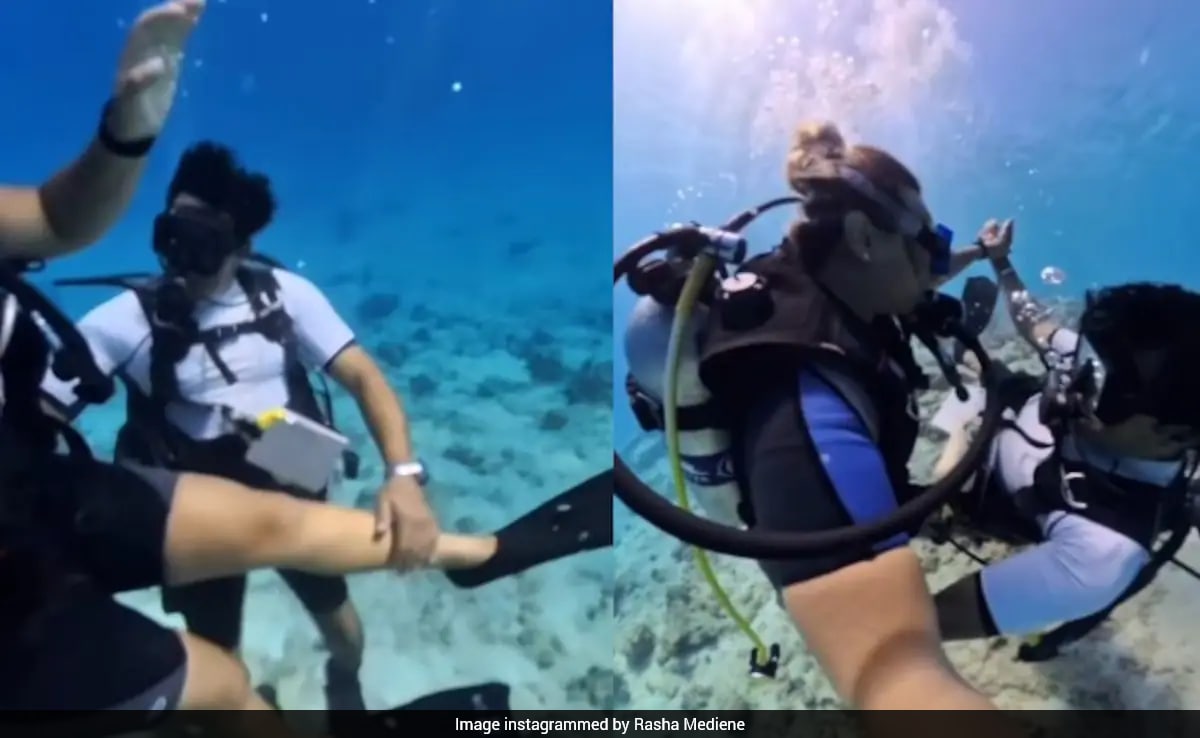
The safety of solo female travelers in high-contact adventure sports is not a matter of subjective experience but a direct function of structural oversight, asymmetric power dynamics, and the failure of institutional oversight. When a scuba diving instructor in Egypt—or any global diving hub—violates the physical boundaries of a student, it represents a breakdown in the Safety Management System (SMS) that should theoretically govern the industry. The incident is the terminal point of a chain of failed preventative controls. Understanding this requires deconstructing the specific environment of the "underwater classroom," where physical proximity is mandated by technical necessity, yet often unmitigated by professional distance.
The Physicality of the Underwater Environment
Scuba diving is unique among recreational activities because it requires a high degree of "tactile instruction." In a standard terrestrial classroom, physical contact is rarely required for skill acquisition. In an aquatic environment, instructors must frequently adjust a student’s buoyancy compensator (BC), manipulate heavy gear, or provide physical stability during a panicked ascent. This creates a Tactile Necessity Loop, where the boundary between professional assistance and inappropriate contact becomes blurred—not by the student, but by the instructor who holds the monopoly on technical knowledge. If you found value in this piece, you might want to check out: this related article.
The "Safety-Technical Paradox" exists here:
- The Technical Requirement: The instructor must stay within arm’s reach to manage life-support equipment.
- The Power Asymmetry: The student is in a state of sensory deprivation (restricted vision, inability to speak) and is entirely dependent on the instructor for survival.
- The Risk of Exploitation: The instructor can mask predatory behavior as "buoyancy adjustment" or "safety monitoring," banking on the student’s lack of technical expertise to identify the deviation from standard operating procedures.
Structural Vulnerabilities in the Egyptian Diving Sector
Egypt’s Red Sea coast is a high-volume, low-margin tourism market. This economic reality dictates the operational standards of many dive centers. When the objective is "high throughput"—getting as many divers in the water as possible to maintain profitability—the rigorous vetting of staff often becomes a secondary priority. For another angle on this development, see the recent coverage from Travel + Leisure.
The industry operates under a Franchise-Standard Model. While organizations like PADI (Professional Association of Diving Instructors) or SSI (Scuba Schools International) provide the curriculum and certification, they do not manage the day-to-day operations of the thousands of independent dive centers globally. This creates a "Governance Gap." A dive center might display a prestigious logo, but the actual management of human resources, background checks, and conduct monitoring is left to local owners whose primary incentive is cost-containment.
The breakdown in Egyptian diving safety often follows three distinct failure points:
- The Vetting Void: High turnover in seasonal diving hubs leads to "expedient hiring." Instructors with histories of misconduct in one region (e.g., Southeast Asia) can easily relocate to the Red Sea with a clean digital slate, as there is no centralized, global "bad actor" database for diving professionals.
- Cultural-Institutional Friction: In many regions, the legal framework for reporting sexual harassment is opaque or favors the local business over the foreign tourist. This creates a "Silence Incentive" for the dive center owner, who may prioritize the center's reputation over the victim's safety.
- The Isolated Instruction Variable: Training often occurs in a one-on-one format. Without a "Two-Person Rule" (requiring a second staff member or dive master to be present), the instructor has total, unmonitored access to the student.
Quantifying the Cost of Non-Standardized Conduct
The economic impact of these incidents extends beyond the individual trauma. For the solo traveler, the "Cost of Participation" suddenly includes a high risk of psychological harm, which acts as a deterrent for an entire market segment.
The Trust Degradation Coefficient
Every reported incident of misconduct in a specific region applies a "trust tax" on all operators in that area. If a solo traveler perceives the probability of an incident as $>1%$, the perceived risk often outweighs the utility of the trip. This leads to Market Segment Attrition, where high-spending solo female travelers—a rapidly growing demographic—divert their capital to destinations with perceived higher safety protocols, such as Australia or the Maldives.
Insurance and Liability Bottlenecks
As reports of "inappropriate touching" or assault increase, the actuarial risk for travel insurance providers shifts. If a destination becomes a known "high-risk" zone for sexual misconduct, insurance premiums for operators may rise, or specific liability coverage may be dropped. This forces the dive center into a "race to the bottom," where they must lower prices to attract less risk-averse (and often lower-spending) tourists, further degrading the quality of the staff they can afford to hire.
Technical Safeguards and Preventive Frameworks
To move beyond "awareness" and into "operational security," dive centers and solo travelers must adopt a framework of Hard and Soft Controls.
Hard Controls (Institutional)
- The "No-Contact" Briefing: Standardized protocols should require instructors to explain exactly where and why they might need to touch a student’s gear before entering the water. Any contact outside these pre-defined zones is a breach of protocol.
- Mandatory Body Cameras: In high-risk, one-on-one instructional settings, the use of waterproof action cameras (GoPros) should be a requirement, not an option. This creates an objective record of the interaction, protecting both the student and the professional.
- Independent Reporting Channels: Certifying bodies (PADI/SSI) must move away from the "refer back to the shop" model. There must be a direct, encrypted line for students to report misconduct that bypasses local management.
Soft Controls (The Solo Traveler’s Strategy)
The traveler must employ a Defense-in-Depth strategy. This involves selecting operators based on "Audit Trail Transparency."
- Staff-to-Student Ratio Verification: Choosing a group class over a private one reduces the opportunity for isolated misconduct.
- Requesting Female Instructors: While not always possible, requesting female staff signals to the dive center that the traveler is prioritizing safety and gender-aware instruction.
- The "Safety Stop" Veto: A diver must be empowered to end a session immediately if a boundary is crossed. The "I don't feel comfortable" signal must be treated with the same urgency as an "Out of Air" signal.
The Reality of Local Legal Recourse
A significant complication in the Egyptian context is the "Jurisdictional Trap." A solo traveler is often on a limited timeframe. The local police (Tourism Police) may take a report, but the legal process requires the victim to remain in the country for months or years to testify. Predatory instructors know this. They rely on the "Departure Deadline" to ensure that the traveler will leave the country before any meaningful prosecution occurs.
This makes Digital Accountability the only immediate lever. The "reputation economy" (TripAdvisor, Google Reviews) is often the only place where a traveler can exert pressure. However, these platforms are prone to "review scrubbing" or legal threats from the dive center.
Strategic Recommendation for Global Scuba Standards
The diving industry must evolve into a Verified Professional Registry model. Currently, a PADI number tells you an instructor passed a test; it tells you nothing about their behavioral history. A centralized, blockchain-verified credential system—where "flags" or reports of misconduct are permanently attached to a professional’s license—would eliminate the ability for predators to move between shops undetected.
Operators must transition from a "Compliance-Based" safety model to a "Human-Centric" one. This means recognizing that the student’s psychological safety is as critical as their physical oxygen supply. Until dive centers in the Red Sea and beyond implement the "Two-Person Rule" and "Explicit Consent Briefings," the risk remains a structural constant rather than an isolated anomaly. The solo traveler’s best defense is not trust, but the rigorous selection of operators who have replaced "vague promises of safety" with "verifiable operational transparency."
The next move for the individual traveler is to demand a Technical Safety Briefing that includes a "Contact Protocol" before even putting on a wetsuit. If the shop cannot provide a clear, professional answer on how they manage physical boundaries, they are not a high-performance operator, and the risk of participation is unacceptably high.