The North Wales Police Department’s recent threat to block callers reporting non-police matters is not a public relations failure; it is a defensive maneuver against the systemic collapse of triage efficiency. Emergency response systems are designed as high-bandwidth conduits for critical interventions. When these channels are clogged by low-utility inquiries—specifically domestic disputes over waste management (bins) and neighborhood noise complaints—the resulting "operational noise" creates a lethal latency in responding to high-priority threats.
This crisis is defined by a fundamental mismatch between Public Expectation Gravity and Resource Elasticity. The public views the police as a "service of last resort" for all civic friction, while the department operates under fixed budgetary and human capital constraints.
The Taxonomy of Demand Misallocation
To understand why North Wales Police (NWP) reached a breaking point, the incoming call volume must be categorized by its Operational Utility. Most "inappropriate" calls fall into three distinct strata of misallocation:
- Civilian-Municipal Friction: Inquiries regarding missed bin collections or parking disputes. These are non-criminal matters governed by local council bylaws, yet they default to the police due to 24/7 availability.
- Parental/Social Abdication: Calls regarding "noisy children" or standard adolescent behavior. This represents a transfer of social management costs from the private/community sphere to the state's enforcement arm.
- Mental Health and Welfare Gaps: Non-emergency welfare checks that occur when social services reach capacity during off-hours.
The NWP data indicates that approximately 20% to 30% of 101 (non-emergency) and 999 (emergency) calls do not involve a recordable crime or an immediate threat to life. In a system operating at 95% capacity, a 20% influx of "garbage data" does not just slow down the system—it induces a state of Queuing Theory Paralysis. When every operator is occupied with a dispute over a wheelie bin, the next caller reporting an active burglary or a cardiac arrest enters a queue where seconds correlate directly with casualty rates.
The Cost Function of Low-Utility Calls
Every call handled by a North Wales Police dispatcher carries a measurable Opportunity Cost. This is the value of the next best alternative use of that operator’s time. We can quantify this burden through the Triad of Operational Drain:
- Average Handling Time (AHT) Inflation: Non-police matters often take longer to process than emergencies because there is no standardized protocol for "my neighbor moved my bin." Dispatchers must spend time de-escalating the caller's frustration and explaining jurisdictional boundaries, extending the AHT and increasing the wait time for all subsequent callers.
- The Cognitive Load Tax: Constant exposure to low-utility friction increases "compassion fatigue" and reduces the cognitive sharpness required to identify subtle red flags in genuine emergency calls.
- Downstream Resource Deployment: In some instances, the persistence of a caller leads to a "soft dispatch"—sending a patrol car just to resolve the complaint. This removes a unit from its patrol sector, increasing the Mean Time to Respond (MTTR) for actual violent crimes by several minutes.
The Mechanics of Service Throttling
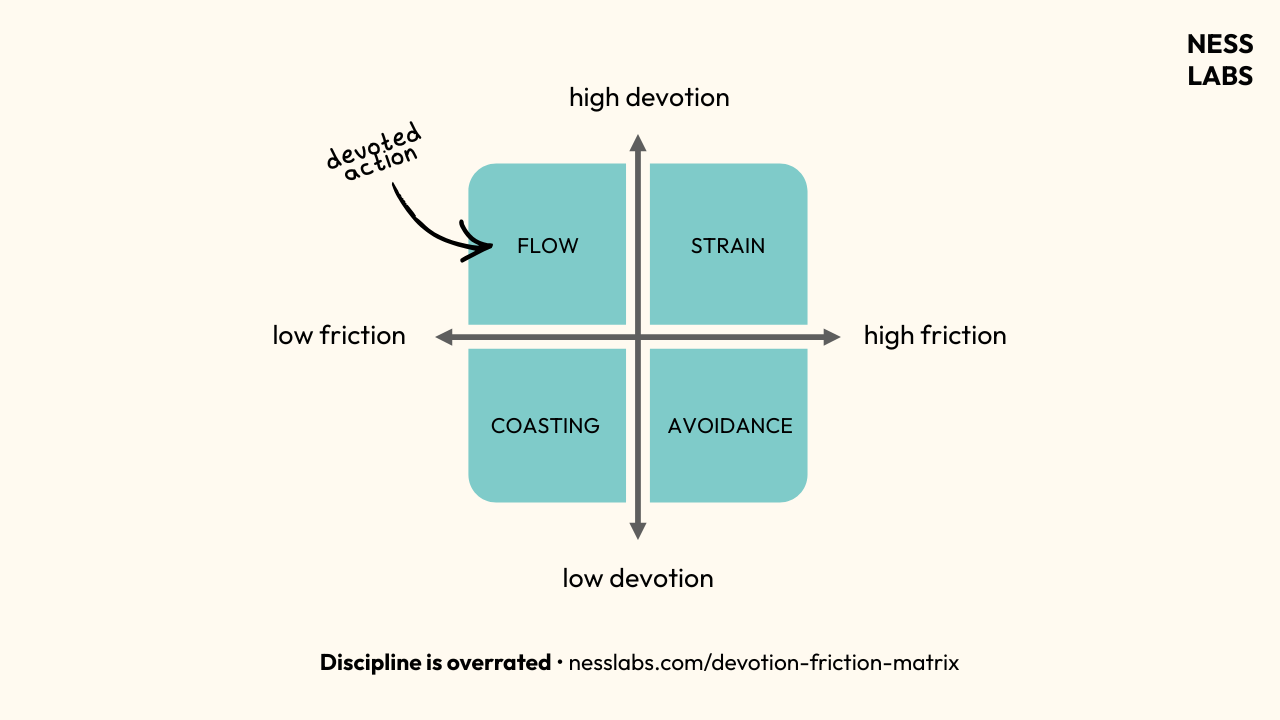
The threat to "ban" or restrict callers is an application of Negative Friction. In product design, friction is usually avoided. In public service management, friction is a tool used to discourage "low-value" users from consuming limited resources.
By publicly announcing potential bans, NWP is attempting to re-calibrate the public’s internal threshold for what constitutes a "police matter." This is a classic Demand Side Management strategy. If the perceived social or legal cost of making a trivial call increases, the volume of those calls should, theoretically, decrease.
However, the "ban" mechanism faces a significant Verification Bottleneck. Determining if a call is malicious or merely "misguided" is a subjective process that carries high litigation risk. A banned individual who later attempts to report a genuine emergency creates a catastrophic liability for the department. Therefore, the "ban" is likely a rhetorical deterrent rather than a widespread operational policy.
The Displacement Effect and Inter-Agency Failure
The surge in calls to North Wales Police is a symptom of a broader Institutional Vacuum. When local councils reduce their operational hours or social service departments face staffing shortages, the police department becomes the only remaining visible "open door" for the citizenry.
This creates a Displacement Effect:
- Step 1: A local council reduces its waste management hotline hours to 9 AM–4 PM.
- Step 2: A resident discovers a bin issue at 6 PM.
- Step 3: Frustrated by the lack of council response, the resident dials 101.
- Step 4: The police department absorbs the administrative cost of a failure in municipal infrastructure.
The police are essentially subsidizing the operational failures of other government entities. Without a Cross-Functional Service Integration, where calls can be seamlessly transferred back to the appropriate municipal department with "warm hand-offs," the police will continue to be the default filter for all social dissatisfaction.
Structural Solutions Over Rhetorical Threats
While the "ban" threat serves as a short-term deterrent, it does not address the underlying structural inefficiency. A masterclass in police strategy would move beyond threats toward Architectural Interventions:
- Automated IVR (Interactive Voice Response) Sorting: Implementing AI-driven voice filters that can detect keywords related to civil matters (e.g., "bins," "parking," "noise") and automatically redirect those callers to recorded information or a web portal for the relevant local council.
- Public Utility Education Campaigns: Rather than threatening bans, the department should publish a "Responsibility Matrix" that clearly delineates what the police do versus what the council does. This reduces the Information Asymmetry that leads to misplaced calls.
- The "User Fee" Model for Persistent Nuisance: For non-emergency civil matters, the introduction of a dynamic billing system for repeat offenders—where the cost of dispatching an officer for a civil dispute is charged back to the complainant—would provide a powerful economic incentive to resolve disputes privately.
Strategic Implementation: Reclaiming the 101 Line
The path forward for North Wales Police requires a shift from reactive policing to Precision Resource Management. The department must transition from being a "generalist service" to a "specialist enforcement agency."
- Audit and Segment: Conduct a 90-day deep-dive audit of all 101 call logs to identify the top 5 "Friction Points" (e.g., specific neighborhoods or specific types of civil disputes).
- Legislative Pushback: The Chief Constable must present this data to the Home Office and local councils to demand that other agencies increase their "after-hours" accessibility.
- Digital Front Door: Incentivize the use of a digital reporting portal for non-emergencies. Written reports are easier to filter, categorize, and ignore (if non-criminal) than live phone calls, which require immediate human attention.
The current trajectory is unsustainable. If the department continues to absorb the administrative overflow of the entire North Wales civic infrastructure, the "Master Brand" of the police as an elite emergency responder will continue to erode, replaced by a perception of the police as a glorified, and increasingly frustrated, customer service desk.
The final strategic play is not the banishment of the public, but the Aggressive Outsourcing of Non-Criminal Friction back to the agencies and individuals who own the problems. The police must stop being the "Everything Agency" to ensure they can remain the "Emergency Agency."