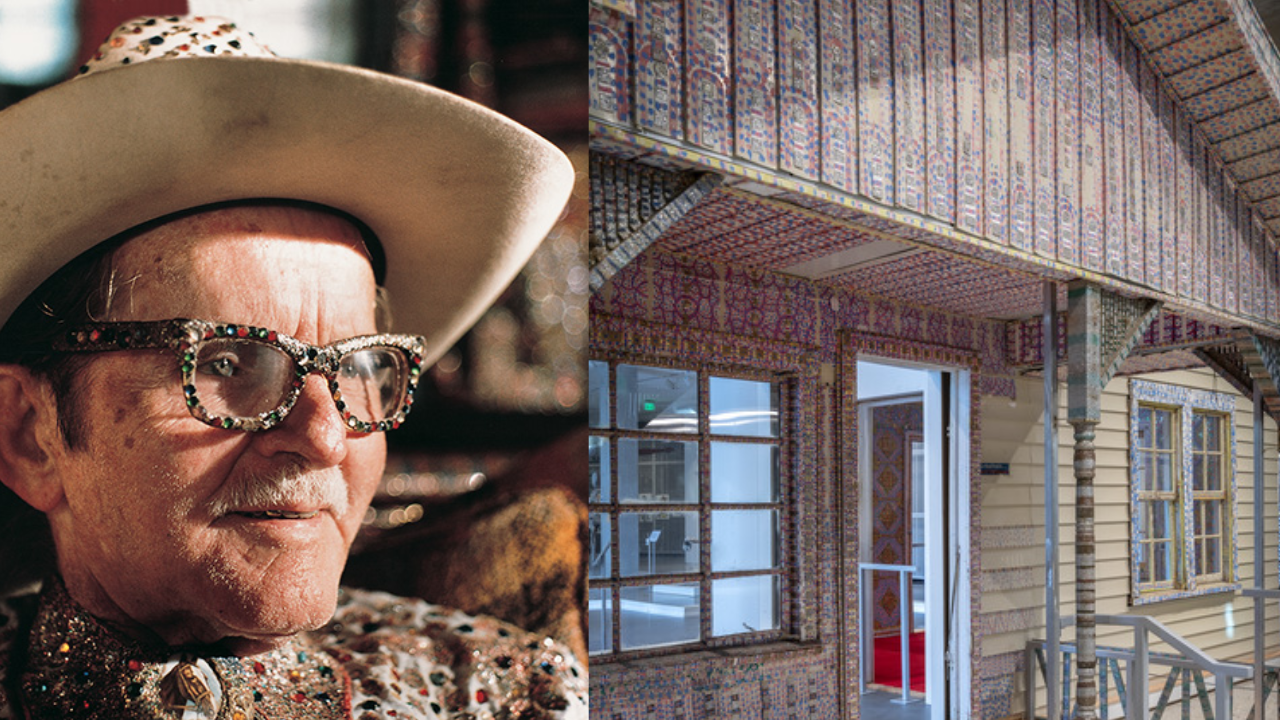
Radical career pivots in the entertainment sector rarely fail from a lack of raw talent; they fail because practitioners mistake aesthetic adoption for structural market positioning. When a tradesperson from a blue-collar region like Mississippi transitions into an archetype as visually saturated and historically specific as the "Rhinestone Cowboy," the transformation is not a whimsical makeover. It is a calculated re-allocation of human capital, a shift in brand equity, and an arbitrage play between industrial authenticity and theatrical spectacle. Most coverage of such transitions treats them as human-interest novelties, focusing on the superficial contrast between grease-stained coveralls and Nudie Cohn-inspired tailoring. That framing misses the underlying mechanics. To execute a jump from mechanical labor to stage persona without collapsing under the weight of imposter syndrome or market rejection, an operator must systematically convert utilitarian skills into performative assets while engineering a visual identity that commands immediate pricing power in a fragmented attention economy.
The Structural Arbitrage of Blue-Collar Capital
Every market entrant possesses a baseline inventory of non-transferable and transferable assets. A mechanic operating in Mississippi holds high mechanical literacy, diagnostic problem-solving capabilities, and deeply embedded regional credibility. In standard economic terms, this represents localized, high-trust human capital with a capped ceiling on hourly billing rates. The entertainment market, conversely, suffers from a chronic deficit of verifiable authenticity. Audiences accustomed to manufactured, focus-grouped personas exhibit high skepticism toward performers lacking a documented origin story. You might also find this related coverage useful: Why the 1992 Batman Returns Batmobile Could Really Hit $7 Million at Auction.
The strategic advantage of the mechanic-to-performer pipeline lies in origin-story immutability. You cannot synthesize decades of diagnostic labor under a chassis. When that background is retained as the foundational layer rather than erased, it acts as a credibility anchor. The transition succeeds when the operator recognizes that mechanical work and country-western performance share an identical operational ethos: functional self-reliance.
In a repair bay, failure is binary. An engine either turns over or it does not. There is no room for abstract theorizing when a transmission slips. That exact operational discipline transfers directly to live performance and independent music production. A performer trained in mechanical diagnostics approaches stagecraft, sound engineering, and audience engagement as closed-loop systems: As highlighted in latest coverage by The Hollywood Reporter, the results are notable.
- Input Calibration: Identifying the acoustic, visual, and emotional requirements of a specific venue before loading gear.
- Fault Isolation: Recognizing dead spots in a setlist or crowd disengagement in real time and adjusting tempo or instrumentation immediately.
- Preventative Maintenance: Managing vocal health, instrument setup, and touring logistics with the same rigor applied to fleet maintenance schedules.
Most aspiring entertainers burn capital chasing external validation before stabilizing their internal operations. The tradesperson treats the creative enterprise as a shop floor. Equipment is maintained rather than abused. Expenses are audited against immediate utility. The persona is built from the chassis up, ensuring the structural frame can support the weight of theatrical ornamentation before a single rhinestone is stitched onto a lapel.
Deconstructing the Rhinestone Cowboy Archetype as a Market Signal
The "Rhinestone Cowboy" aesthetic is frequently mischaracterized as mere camp or nostalgia. From a branding and market-signaling perspective, it is a high-contrast differentiation mechanism. Developed in the mid-twentieth century through the tailoring innovations of figures like Rodeo Ben, Nathan Turk, and Nudie Cohn, western wear adorned with heavy embroidery and glass crystals served a singular commercial purpose: visual dominance under stage lighting and low-resolution broadcast conditions.
When a performer adopts this aesthetic today, they are deploying a deliberate costly signal—a concept rooted in evolutionary biology and behavioral economics. A costly signal is credible precisely because it is expensive, time-consuming, and socially risky to fake. Custom western tailoring requires significant capital outlay and an unapologetic commitment to an extreme visual register. If a performer wears a heavily embellished western suit and delivers a subpar musical product, the visual contrast amplifies their failure. The garment raises the audience's baseline expectation before the first chord is struck.
The Semiotic Mechanics of Visual Contrast
The juxtaposition of a Mississippi mechanic's physical bearing with hyper-ornate western attire creates cognitive friction that forces attention. In an attention economy saturated with minimalist, indistinguishable indie-folk aesthetics and generic contemporary country uniforms (baseball caps, distressed denim, graphic tees), extreme formality functions as a pattern interrupt.
The visual system operates across three distinct layers:
- Silhouette Architecture: Structured shoulders, tapered waists, and bootcut trousers alter posture and stage movement. The garment enforces physical discipline, preventing the slouching or casual pacing common among amateur performers.
- Light Refraction and Kinetic Feedback: Rhinestones and metallic thread convert static stage lighting into dynamic motion. Every subtle shift in posture during a vocal phrase or guitar solo generates visual movement, holding audience eye-tracking metrics significantly longer than matte fabrics.
- Cultural Synthesis: Pairing Deep South agrarian and industrial roots with Western mythic iconography bridges two distinct American geographies. It claims the grit of the Mississippi Delta while projecting the aspirational grandeur of the American West.
By investing in high-tier visual signifiers early, the operator bypasses the "amateur" categorization that traps most regional performers in low-margin bar circuits. Venue bookers, festival promoters, and digital algorithms respond to high-contrast visual thumbnails. The suit does the initial customer acquisition work before audio playback even begins.
The Conversion Funnel: Reallocating Trade Skills to Entertainment Operations
Transitioning out of a full-time mechanical trade requires managing cash-flow volatility without severing the financial lifeline prematurely. A sudden, unhedged leap into entertainment usually results in rapid capital depletion, forcing the practitioner back into wage labor at a lower bargaining position. The rational path relies on a phased capital reallocation model where trade income subsidizes creative infrastructure until entertainment revenue achieves parity.
Phase One: Infrastructure Subsidization
During the initial buildout, the repair shop functions as an internal venture fund. Instead of taking on high-interest debt or signing predatory early-stage management contracts, the operator uses mechanical labor hours to purchase appreciating or durable creative assets:
- Audio Capture and Rigging: Acquiring studio-grade microphones, preamps, and portable PA systems rather than renting repeatedly.
- Bespoke Wardrobe: Commissioning custom western suits that retain resale or archival value and eliminate recurring costume expenses.
- Transport Logistics: Leveraging mechanical expertise to purchase, overhaul, and maintain a reliable touring vehicle at a fraction of retail market cost.
This final variable—fleet self-sufficiency—represents a massive competitive moat for an independent touring act. Transportation breakdowns and repair bills destroy the profit margins of emerging musicians. A performer who can diagnose a failing alternator, rebuild a carburetor, or replace a wheel bearing on the shoulder of an interstate eliminates third-party labor markups and prevents catastrophic tour cancellations.
Phase Two: Audience Acquisition via Narrative Asymmetry
Once the baseline product and visual identity are established, the marketing problem becomes distribution. Conventional music marketing relies on paid social media reach, playlist pitching, and PR retainers—channels where independent operators are outspent by major label conglomerates by orders of magnitude.
The mechanic-turned-Rhinestone-Cowboy bypasses direct ad-spend competition by exploiting narrative asymmetry. Media outlets, regional journalists, and social media algorithms prioritize anomalies. A story featuring an individual wrenching on heavy machinery by day and stepping onto a stage in custom crystal-encrusted western wear by night requires zero manufactured spin. The contrast itself serves as the hook.
To capture this value systematically, the operator must document the intersection rather than hiding the day job. Content capture occurs directly inside the transition zone:
- Process Documentation: Recording acoustic demos or vocal rehearsals inside the acoustic environment of a concrete-floored garage.
- Aesthetic Juxtaposition: Visual media showing the physical reality of mechanical work alongside the meticulous maintenance of stage wardrobe.
- Technical Translation: Explaining musical arrangement, guitar setup, and amplification using the precise, no-nonsense vocabulary of mechanical engineering.
This approach builds a dual-demographic audience. Traditional country and western fans engage with the musical and sartorial commitment, while blue-collar tradespeople and automotive enthusiasts engage with the shared vocational identity. Cross-pollination between these two high-loyalty demographics creates a resilient core customer base capable of sustaining direct-to-consumer merchandise and ticket sales.
Risk Factors, Operational Bottlenecks, and Market Limitations
No strategic pivot is frictionless, and romanticizing the transition obscures severe operational hazards. The intersection of heavy mechanical labor and live musical performance introduces specific physical, financial, and brand-positioning liabilities that must be actively mitigated.
Physical Capital Degradation
Mechanical work is inherently destructive to the human body, specifically the hands, wrists, and respiratory system. A musician relies on fine motor control, callous integrity, and consistent breath support. Severe hand trauma—crushed fingers, deep lacerations, chronic tendonitis from pneumatic tools—can halt a musical career overnight. Similarly, prolonged exposure to exhaust particulates, solvents, and welding fumes degrades vocal cord elasticity and lung capacity.
As entertainment revenue scales, the operator faces a strict biological constraint: you cannot indefinitely expose your primary revenue-generating instrument to industrial hazards. Mitigating this requires strict personal protective equipment protocols in the short term and a hard cutoff date for heavy mechanical labor once entertainment cash flows stabilize.
The Novelty Trap
The greatest strategic risk in deploying a high-contrast persona is becoming locked into a novelty classification. If audiences and industry gatekeepers view the Rhinestone Cowboy identity merely as an ironic costume or a gimmick attached to a mechanic, pricing power hits a hard ceiling. Novelty acts generate initial viral spikes but suffer from catastrophic retention rates. Audiences watch a novelty once; they buy tickets and albums repeatedly only when the underlying musical craftsmanship matches or exceeds the visual spectacle.
Avoiding the novelty trap demands relentless investment in core musical competencies:
- Songwriting Rigor: Avoiding cheap clichés about wrenches and trucks in favor of structurally sound, emotionally resonant narratives that stand on their own without visual context.
- Vocal and Instrumental Precision: Treating rehearsal with the exactitude of tolerance measurements in an engine block. Pitch accuracy, rhythmic pocket, and dynamic control must be non-negotiable.
- Repertoire Depth: Mastering the historical canon of country, western swing, and honky-tonk music so the visual homage is backed by encyclopedic genre fluency.
Capital Intensity of Custom Aesthetics
High-end western tailoring is capital-intensive and fragile. Rhinestones detach under vigorous stage movement; wool gabardine absorbs sweat and requires specialized dry cleaning; intricate chain-stitch embroidery snags on guitar hardware and microphone stands. Without a dedicated maintenance budget and proper garment transport protocols, an expensive stage suit degrades into a tattered liability within a single touring season.
Executing the Final Transition Protocol
The transition from regional tradesperson to viable touring entertainer is governed by unit economics, not passion. Passion supplies the initial kinetic energy, but financial discipline and operational systems determine survival. An operator standing at the threshold of full-time conversion must execute a clear, data-backed exit strategy from the trade floor rather than drifting out on vague optimism.
Establish a hard revenue-replacement threshold before relinquishing mechanical work entirely. Entertainment income—comprising guaranteed performance fees, net merchandise margins, and direct publishing or streaming royalties—must consistently cover 100% of baseline personal living expenses plus a 20% touring reserve fund for six consecutive months before full-time transition. During the bridge phase, shift mechanical labor from high-risk, physically taxing heavy repair toward higher-margin, lower-impact diagnostic consulting or specialty restoration work that preserves physical dexterity. Simultaneously, lock down intellectual property ownership across all original compositions and visual branding assets, ensuring that as audience scale increases, the equity built through years of dual-shift labor remains wholly owned by the operator who engineered it.