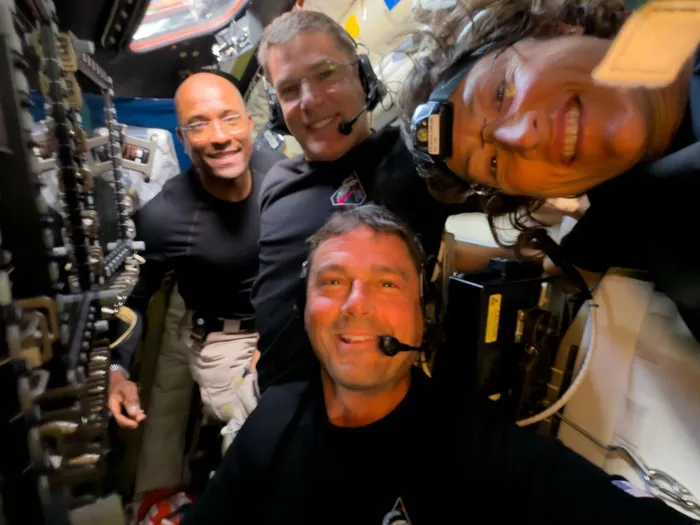
The splashdown of the Artemis II Orion capsule marks the transition from theoretical deep-space transport to a repeatable logistical loop. While public discourse focuses on the return of the four-person crew, the strategic significance lies in the validation of the Atmospheric Entry and Recovery (AER) protocol. This protocol dictates the survival of the vehicle under thermal loads exceeding 2,700°C and the physical retrieval of human assets within a mission-critical window. The success of this mission establishes the baseline for the Artemis III lunar landing by proving that the heat shield and parachuting sequences can handle the velocity of a lunar return trajectory—approximately 11 kilometers per second—which is significantly more violent than a return from Low Earth Orbit (LEO).
The Physics of Deep Space Re-entry Velocity
The primary constraint of the Artemis II mission was the management of kinetic energy. Unlike a return from the International Space Station, where vehicles enter the atmosphere at roughly 7.8 km/s, Orion returned from a translunar injection. This increased velocity necessitates a specialized re-entry profile known as the Skip Entry.
- Initial Aerobraking: The capsule dips into the upper atmosphere to bleed off velocity through drag.
- The Skip: Orion utilizes lift-to-drag ratios to "skip" back out of the dense atmosphere momentarily. This maneuver reduces the peak G-load on the crew and provides a larger cross-range capability, allowing NASA to precisely target the splashdown zone regardless of where the initial entry point occurs.
- Final Descent: The vehicle re-enters for the final time, deploying a sequence of 11 parachutes to slow the 9,300 kg capsule to a terminal velocity of roughly 30 km/h.
The thermal protection system (TPS) is the single point of failure in this sequence. Composed of an Avcoat ablator—a material that wears away to carry heat away from the cabin—the shield must maintain structural integrity while the exterior surface reaches half the temperature of the sun. The data gathered from the Artemis II charring patterns will determine the safety margins for all future crewed lunar maneuvers.
The Recovery Triad: Hardware, Navy, and Meteorology
Successful splashdown is not merely a landing; it is a complex maritime recovery operation. The methodology employed by NASA and the U.S. Navy relies on the Recovery Triad, a system designed to mitigate the risks of "the golden hour"—the first sixty minutes post-splashdown when the crew is most vulnerable to physiological stress and hardware malfunction.
Pillar I: The Littoral Combat Support Strategy
NASA utilizes a San Antonio-class amphibious transport dock. These ships feature a well deck that can be flooded, allowing the ship to submerge its stern. The Orion capsule is towed into the submerged deck, after which the water is pumped out. This "dry recovery" method is superior to crane-based lifting, as it minimizes the risk of dropping the capsule or causing structural damage due to the pendulum effect in high seas.
Pillar II: Physiological Stabilization
After ten days in microgravity, the human body undergoes rapid fluid shifts and vestibular disorientation. The "splashdown" impact—even at 30 km/h—imposes a sudden $G_x$ (chest-to-back) load. The recovery team's primary objective is the extraction of the crew into a controlled environment to prevent orthostatic hypotension, where blood pools in the lower extremities, potentially causing fainting or cardiac stress.
Pillar III: Environmental Mitigation
The Pacific Ocean recovery zone is dictated by the Sea State 4 constraint. If waves exceed 2.5 meters or wind speeds surpass 25 knots, the recovery hardware becomes unstable. The Artemis II mission required a 1,000-mile "weather corridor" to ensure that if an emergency re-entry occurred at any point during the mission, the capsule would land in survivable conditions.
The Cost Function of Lunar Hardware Reuse
The Artemis program differs from the Apollo era through its focus on fiscal sustainability and hardware iteration. While the Orion pressure vessel is designed for multiple flights, the heat shield and service module are expendable. This creates a specific depreciation curve for lunar missions.
- Fixed Costs: Research, development, and the construction of the Space Launch System (SLS) rocket.
- Variable Costs: The production of the European Service Module (ESM) and the ablation material for each flight.
- Asset Recovery Value: The post-flight analysis of the Orion avionics and life support systems.
By recovering the Artemis II capsule intact, NASA can harvest high-fidelity data on how deep-space radiation affects internal electronics. The "Van Allen Belt transition" is a major source of hardware degradation. Artemis II provided the first crewed data set on the effectiveness of the capsule’s shielding against solar energetic particles (SEPs) outside the protection of the Earth’s magnetosphere. This data directly influences the mass-budget for the Artemis III HLS (Human Landing System), as engineers can now tighten the tolerances for radiation hardening.
Structural Bottlenecks in the Lunar Supply Chain
The splashdown of Artemis II highlights the looming bottleneck in the Artemis roadmap: the production rate of the SLS and the integration of the Gateway station. The current architecture relies on a "single-shot" heavy lift capability. If a recovery were to fail or a capsule were lost, the replacement lead time is estimated at 24 to 36 months.
This creates a high-stakes environment where the Reliability Requirement ($R_q$) must exceed 0.999. To achieve this, the recovery sequence uses triple-redundancy in its parachute mortars and dual-redundancy in its uprighting bags—spheres that inflate to flip the capsule if it lands upside down (Stable II position).
The second bottleneck is the maritime logistics. The availability of U.S. Navy assets is subject to geopolitical shifts. A dedicated NASA recovery fleet would increase autonomy but at a prohibitive capital expenditure. Thus, the mission's end-to-end success is tethered to inter-agency cooperation that must remain stable over a twenty-year horizon.
Biological Response and Deep Space Adaptation
The Artemis II crew are the first humans to experience the "Total Isolation Effect" since 1972. Analyzing their cognitive and biological state post-splashdown is the precursor to Mars-duration missions.
- Bone Density and Muscle Atrophy: Despite the short duration, the high-radiation environment creates unique oxidative stress.
- Neuro-Vestibular Recalibration: The transition from the 0-g of space to the 1-g of Earth, punctuated by the 4-g impact of re-entry, serves as a stress test for the human inner ear and balance systems.
- Psychological Cohesion: The performance of the crew under the high-latency communication environment of the lunar far side provides a template for the command structure of future missions.
Strategic Forecast: Transitioning to the Lunar Permanent Presence
The successful recovery of the Artemis II crew confirms that the Orion-SLS stack is a viable "truck" for deep-space transport. However, the mission also exposes the limitations of the current splashdown model. For the Artemis program to evolve into a permanent lunar presence, the recovery phase must eventually move toward high-frequency, potentially land-based or autonomous maritime retrievals.
The data extracted from the Artemis II capsule will likely lead to a revision of the TPS thickness, potentially saving hundreds of kilograms of mass. This mass savings is the "currency" of deep space; every kilogram removed from the heat shield is a kilogram that can be added to the science payload or fuel reserves for the Artemis III lunar descent.
The next strategic move for the program is not the landing itself, but the industrialization of the SLS Block 1B configuration. The Artemis II splashdown proves the concept; the challenge now shifts from "can we return?" to "can we return at a frequency that supports a lunar economy?" Engineers must now focus on the refurbishment turnaround time of the Orion avionics. If the internal systems can be recertified within six months rather than eighteen, the flight cadence of the Artemis program could double, fundamentally altering the timeline for the construction of the Lunar Gateway.