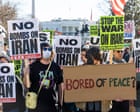
On February 28, 2026, the geopolitical order shifted when President Donald Trump authorized a devastating joint military operation with Israel that successfully decapitated the Iranian leadership. The strikes, which claimed the life of Supreme Leader Ayatollah Ali Khamenei and five to ten other high-ranking officials at a compound in Tehran, were not merely a response to failed nuclear negotiations in Geneva. They represent a high-stakes domestic gambit. By linking the strikes to claims of Iranian interference in the 2020 and 2024 elections, Trump is attempting to frame the upcoming 2026 midterms as a national security emergency, potentially giving him the leverage to overhaul federal voting standards before November.
The official narrative from the White House presents "Operation Epic Fury" as a necessary intervention to halt Iran’s nuclear program and support a domestic "struggle for freedom" following the deaths of an estimated 32,000 Iranian protesters. However, the timing of the escalation—coming just days after Trump’s State of the Union address and amid sagging polling on domestic affordability—suggests a more complex motivation. The administration is now moving to consolidate this military victory into a domestic political mandate, using the fog of war to justify an executive order that could fundamentally alter how Americans cast their ballots.
The Decapitation Strategy and the Intelligence Window
The decision to strike was accelerated by a "window of opportunity" identified by Israeli intelligence. For weeks, the U.S. had been building up a massive fleet of warplanes and two carrier strike groups, including the USS Gerald R. Ford and the USS Abraham Lincoln, in the Persian Gulf. While special envoy Steve Witkoff and Jared Kushner were engaged in "nothing burger" talks in Geneva, the Pentagon was finalizing a list of leadership targets.
The rationale for the decapitation strike was rooted in a belief that the Islamic Revolutionary Guard Corps (IRGC), while loyal to Khamenei, would fracture without his direct authority. This was a departure from traditional "maximum pressure" tactics. It was an attempt to trigger a total regime collapse from the top down.
While the military success is undeniable, the regional blowback was immediate. Iran’s remaining command structures launched retaliatory strikes against U.S. bases and commercial ports in Saudi Arabia, the UAE, Qatar, and Kuwait. Jebel Ali port in Dubai saw significant damage from Iranian drones on March 1, signaling that the "Axis of Resistance" is prepared for a protracted war of attrition.
The Election Interference Narrative
The most provocative aspect of the post-strike environment is how the administration has tied the bombardment to the 2026 midterms. On Truth Social, Trump explicitly linked the "renewed war" to allegations that Iranian intelligence sought to undermine his previous campaigns. This is not just historical grievance. It is the legal scaffolding for a planned "National Voting Emergency."
Internal documents and draft executive orders circulating within the administration suggest a plan to:
- Decertify voting machines that contain foreign-made components, citing Iranian or Chinese cyber vulnerabilities.
- Ban no-excuse mail-in voting under the guise of preventing foreign psychological operations.
- Nationalize voter rolls to purge what the administration calls "foreign-influenced" entries.
Legal experts and democracy advocates warn that this is a move to seize federal control over an election process that the Constitution vests in the states. By declaring a national emergency during active hostilities, the White House aims to shield these changes from judicial review, arguing that the courts cannot question the President’s national security judgment during wartime.
Escalation as a Political Reset
Historically, the party in power faces significant losses during midterm elections. In early 2026, the Trump administration was struggling with the fallout of the "DOGE" (Department of Government Efficiency) cuts and a rial-driven spike in global oil prices. A "rally 'round the flag" effect is a classic political maneuver, but Epic Fury goes further by creating a specific external enemy to justify internal policy shifts.
The administration’s focus on Iran’s "sinister" missile capabilities and the threat of them reaching the U.S. mainland serves to heighten public anxiety. This anxiety is being funneled into a demand for "security-first" election laws. The argument is simple: if Iran is at war with the U.S., any opposition to the administration’s election "reforms" is framed as a vulnerability to foreign sabotage.
Economic Fallout and the Middle East Armada
The cost of this operation is not just measured in munitions. The closure of airspace across the Middle East and the threat to the Strait of Hormuz have sent oil markets into a frenzy. Despite the administration’s promise of "making Iran great again" through a new, transactional deal, the reality on the ground is one of deepening collapse.
The Iranian Rial had already plunged to 1.42 million per dollar before the strikes. Now, with a seven-day national holiday and 40 days of mourning declared in Tehran, the country's economy is in a state of suspended animation. The U.S. is betting that the Iranian people will "take over their institutions," but the IRGC remains a potent, if wounded, force.
The New Security Architecture
Regional allies like Saudi Arabia and Jordan find themselves in an impossible position. While they welcome the weakening of their rival in Tehran, the direct Iranian strikes on their soil prove that U.S. protection comes at a high price. The Saudis have offered their "capabilities" to support regional measures, but there is deep-seated fear that a prolonged conflict will wreck the "Vision 2030" economic goals of the Gulf states.
In Washington, the fissures are widening. Democrats have characterized the strikes as "bumbling into war," while some Republicans are wary of the lack of congressional approval. The administration’s gamble depends on the war remaining "limited" enough to avoid a global depression but "emergency" enough to justify the overhaul of the American electoral system.
The coming months will determine if this was a masterstroke of coercive diplomacy or the beginning of a chaotic era where foreign policy is used primarily as a tool for domestic consolidation. With the 2026 midterms on the horizon, the smoke over Tehran is mirrored by the political fog in D.C.
Would you like me to analyze the specific legal challenges being filed against the draft "National Voting Emergency" executive order?