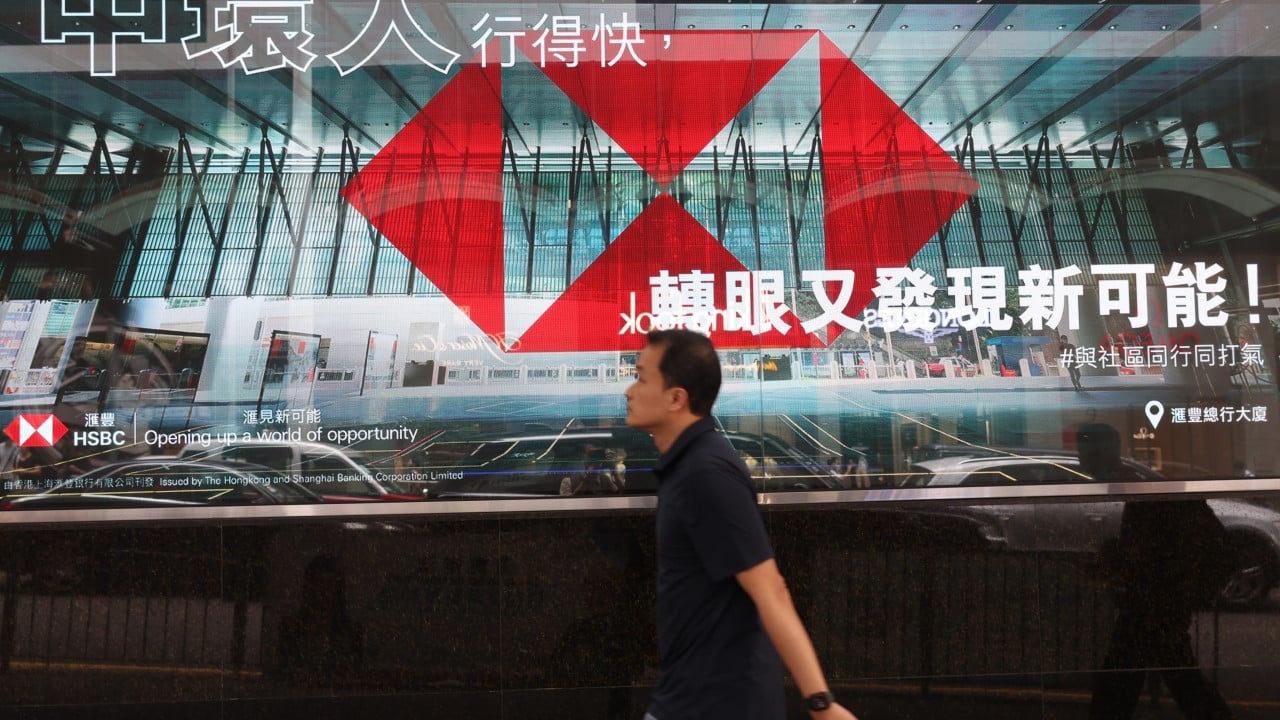
The rain in Hong Kong doesn’t just fall; it slants across the neon signs of Nathan Road, blurring the reflections of jewelry shops and bank branches into a smear of gold and red. On a Tuesday morning, Mr. Zhang stands under a dripping awning, clutching a leather briefcase to his chest like a shield. He traveled four hours by high-speed rail from Shenzhen, his heart doing a nervous flip-flop with every click of the train tracks.
He heard the rumors. Everyone on WeChat had been talking about it for weeks. New regulations. Tighter scrutiny. A tightening of the screws by the Hong Kong Monetary Authority (HKMA). To a small business owner like Zhang, who manufactures specialized LED components, those bureaucratic whispers sounded like a heavy iron door slamming shut. He believed his chance to secure a financial foothold outside the mainland was gone.
He was wrong. But fear is a powerful editor of reality.
The narrative circulating through the mainland's tech hubs and manufacturing districts was simple, bleak, and entirely inaccurate. The rumor mill claimed that Hong Kong was closing its banking doors to mainland residents as part of a sweeping regulatory overhaul. It felt believable. In an era of shifting global compliance, people instinctively brace for restriction.
The truth, however, lives in the quiet reality of the bank branches themselves, far away from the panic of social media feeds.
The Friction of the First Step
To understand why a simple bank account matters so much, you have to look at the geometry of cross-border life. For decades, Hong Kong has functioned as a financial lung for mainland entrepreneurs, families, and investors. It breathes in global capital and breathes out international opportunity.
Consider a hypothetical but common scenario: a family in Guangzhou wants to pay for their daughter’s tuition at a university in London, or an e-commerce merchant needs to settle invoices with suppliers in Vietnam. Navigating the domestic banking system for frequent international transactions can feel like trying to run underwater. The paperwork is mountainous. The delays are costly.
A Hong Kong bank account changes the friction of that reality. It offers a bridge to the global financial system, operating under a common-law legal framework that international businesses trust.
When the HKMA introduced updated guidelines aimed at anti-money laundering and enhanced due diligence, mainland social media forums lit up with panic. Posts warned of instant rejections, impossible document requirements, and an undeclared freeze on new mainland clients. The anxiety was palpable.
But regulatory evolution is not the same thing as exclusion.
The HKMA’s actual stance is rooted in a delicate balance: keeping the financial system clean without choking off the legitimate flow of people and capital that gives Hong Kong its lifeblood. The authorities explicitly stated that the new rules were designed to target bad actors and shell corporations, not legitimate individual retail customers or genuine business owners. The gate remains open. The path, however, has simply become more defined.
Inside the Glass Tower
Back on Nathan Road, Zhang finally steps through the heavy glass doors of a major international bank. The air conditioning hits him with a crisp, sterile chill, a sharp contrast to the humid street outside. He expects a interrogation. He expects a cold shoulder.
Instead, a personal wealth manager greets him with a polite nod and a cup of warm tea.
The process that follows is meticulous, yes, but it is far from impossible. The manager doesn't ask for miracles. She asks for clarity.
"We need to understand the story behind the money," she explains gently, reviewing his documents.
This is the core shift in the modern banking landscape. The era of walking into a branch with a passport and a stack of cash and walking out thirty minutes later with a debit card is over. That version of banking died years ago. Today, the currency that matters most isn't just the money you want to deposit; it's the transparency you bring with you.
For an individual mainland resident looking to open an account today, the requirements are logical, grounded in standard global wealth management practices.
- Proof of Identity: A valid mainland identity card and an exit-entry permit for traveling to and from Hong Kong and Macau.
- Proof of Address: A recent utility bill or bank statement that clearly ties the applicant to a physical location.
- Source of Wealth: The element where most people stumble. Banks want to see where the capital originated. For Zhang, this means tax receipts from his factory, corporate registration documents, and bank statements showing a history of legitimate business operations.
The scrutiny is real. The questions are specific. But they are not a trap. They are a filter.
The Psychology of the Ledger
We often treat banking as an exercise in cold mathematics, a bloodless exchange of digits across servers. It isn't. Money is deeply emotional. It represents late nights at a factory, years of skipped vacations, and the quiet ambition a parent holds for their child's future.
When a mainland resident seeks an account in Hong Kong, they are looking for stability and choice. They want to diversify. They want to ensure that if a sudden economic storm hits their local market, their family's foundational wealth is anchored in a deep, resilient harbor.
The fear of rejection often prevents people from even trying. They read a single horror story online about someone who was turned away because they couldn't explain a random cash deposit from three years ago, and they assume the system is rigged against them.
What the HKMA’s guidelines actually demand from banks is a principle called proportionality. This means a grandmother wanting an account to save for her grandson’s future shouldn't face the same level of forensic accounting as a multinational corporation moving millions of dollars through complex trade routes. The banks are instructed to adapt their scrutiny to the risk profile of the actual human being sitting across the desk.
When users complain about unfair rejections, the root cause is rarely a hidden policy to ban mainlanders. It is almost always a failure of communication. A mismatch between what the bank asked for and what the client provided.
The True Cost of Transparency
An open gate does not mean there are no guards. The reality of modern compliance means that banks are terrified of massive fines from global regulators. If they miss a single red flag, the penalties can be catastrophic. This fear trickles down to the front-line staff, making them cautious, sometimes overly so.
This is where the lived experience of navigating the system becomes crucial. To succeed, an applicant must adopt the mindset of an open book.
If there is an anomaly in your financial history—perhaps a large lump sum from a property sale or an inheritance—do not try to hide it or brush past it. Document it. Trace the journey of that money from the buyer's hands into your account. The banks do not penalize people for being wealthy; they penalize them for being mysterious.
The real problem lies elsewhere, not in the rules themselves, but in the cottage industry of scammers that has emerged around them.
Walk through the digital alleys of various social media platforms, and you will find hundreds of agencies promising "guaranteed openings" for a hefty fee. They claim to have insider connections or secret backdoors into major institutions. They prey on the anxiety generated by the rumor mill.
These services are a dangerous illusion. No agency can bypass a bank’s internal compliance algorithms. In many cases, using these dubious intermediaries can get an applicant permanently blacklisted if the bank discovers that the supporting documentation was doctored or misrepresented. The honest path is the only one that actually leads to the destination.
The Rain Clears
Two hours later, Zhang walks out of the bank. The rain has stopped, leaving the streets glistening under a pale afternoon sun. He doesn’t have his account active just yet—the compliance team in the back office still needs to run their final verifications—but his application has been formally accepted for processing. The wealth manager smiled when she shook his hand. She told him he had provided exactly what they needed to see.
The briefcase under his arm feels a little lighter now.
The financial border between Hong Kong and the mainland is changing, evolving into something more sophisticated, more regulated, and undeniably more complex. It requires more effort to cross than it used to. It demands a level of financial literacy and transparency that can feel daunting to the uninitiated.
Yet, despite the grand narratives of economic decoupling and tightening control, the fundamental architecture remains intact. The bridge hasn't been demolished. The guards are simply asking for passports now, instead of letting everyone sprint across the border unchecked.
The city continues to hum with the sound of capital moving, trades settling, and futures being secured, one meticulously verified account at a time.