The ballot box in Okinawa rarely delivers quiet politics. When voters head to the polls for gubernatorial contests, the outcome invariably centers on a single, immovable friction point: the sprawling footprint of the United States military. Decades of administrative pushback from local leaders against Tokyo and Washington have turned these elections into referendum battlegrounds. Yet, the central government treats local resistance as a bureaucratic inconvenience rather than a structural crisis.
More than half of the fifty thousand American troops stationed in Japan under the bilateral security pact are crowded onto Okinawa. This small subtropical island chain accounts for less than one percent of Japan’s total land area. For the people living beneath the flight paths of Marine Corps Air Station Futenma or watching heavy transport aircraft rumble past residential neighborhoods, the security umbrella feels less like a shield and more like an occupation.
The core dispute revolves around the decades-old plan to relocate Futenma from its densely populated urban center in Ginowan to the coastal area of Henoko in Nago. Tokyo and Washington frame this as a reduction of risk, pointing out that Henoko is far less populated. Okinawans counter with a different reality. They view the Henoko project not as a relocation, but as the construction of a brand-new base that will lock in heavy military burdens for another generation.
Successive governors have ridden this deep-seated resentment into office, pledging to block the landfill and construction work at Oura Bay. Incumbent leaders like Denny Tamaki have consistently made opposition to the Henoko replacement facility the cornerstone of their political identity. When these anti-base candidates win, Tokyo responds with legal maneuvers, financial pressures, and court challenges to force compliance.
The Geopolitical Blind Spot
Mainland Japan views the American alliance through the sharp lens of rising regional threats. From Tokyo's perspective, aggressive maritime expansion by China and persistent missile provocations from North Korea leave no room for scaling back defense capabilities. National lawmakers argue that Okinawa is the geopolitical linchpin of the nation's southwestern defense perimeter. Weakening the alliance or halting base construction is treated in the capital as an unacceptable strategic vulnerability.
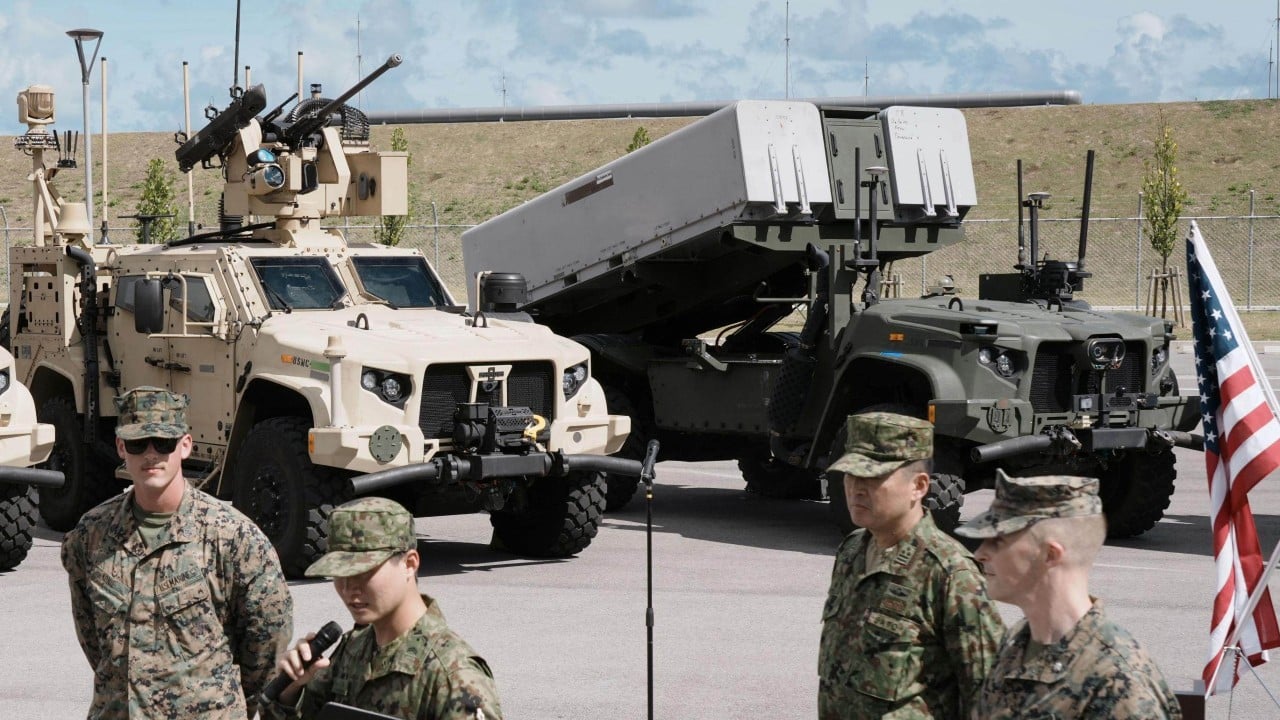
Okinawa experiences this calculus differently. Local residents live closest to the potential flashpoints, particularly the Taiwan Strait. The rapid militarization of Japan’s outer islands—featuring new missile batteries and amphibious deployment units—fuels an acute fear among Okinawans. They worry that hosting primary staging grounds turns their homes into the absolute first target in any armed conflict.
This creates a profound democratic paradox. National security policy is dictated by a mainland majority that bears virtually none of the daily social and environmental costs. Meanwhile, the local population bears the brunt of aircraft noise, environmental degradation of coral reefs, and occasional crimes committed by service members, yet finds its collective voice systematically overridden by courts in Tokyo and Fukuoka.
Economic Leverage and Political Realities
Economic dependence is frequently weaponized by the ruling party in Tokyo to erode local opposition. Historically, the central government has tied developmental subsidies, public works funding, and tourism promotion packages to cooperation on base realignment issues. Candidates backed by the ruling Liberal Democratic Party routinely campaign on promises of economic revitalization, arguing that confrontation with Tokyo only starves the prefecture of vital financial lifelines.
Even so, financial sweeteners have lost much of their persuasive power. Voters have repeatedly demonstrated that economic anxiety does not automatically override existential safety concerns and historical grievances. The memory of the 1945 Battle of Okinawa—where the island became a devastating ground combat zone—remains a powerful cultural anchor. When leaders in Tokyo suggest that local security concerns are secondary to alliance management, they awaken generational trauma.
The Cost of Impasse
The ongoing stalemate at Henoko has entered a multi-year cycle of engineering delays, environmental protection lawsuits, and administrative defiance. The central government has gone so far as to execute proxy approvals, stripping the prefectural governor of authority to block landfill designs. This heavy-handed approach bypasses local democracy entirely, signaling that Tokyo will utilize every instrument of state power to achieve its objective.
Bypassing local consent solves nothing permanently. It hardens local defiance, guarantees that future gubernatorial elections will remain fiercely contested, and erodes trust in the central democratic framework. As long as national defense strategy relies on concentrating an asymmetric burden on a single, unwilling prefecture, the dispute will continue to poison relations between Naha and Tokyo.
The next time election returns flash across television screens in Japan, the focus will inevitably settle on the margin of victory in the south. Yet watching the numbers change ignores the underlying structural failure. Until national policymakers share the strategic weight more equitably across the entire archipelago, Okinawa will remain a permanent fracture line in Japan's security architecture.