The air in July does not usually taste like copper.
Stand on the coast of Peru, where the Humboldt current typically drags cold, nutrient-rich water up from the Antarctic abyss, and you will smell it before you see it. The water is too warm. It feels like stepping into a bath left unattended for hours. The pelicans sit heavy on the wooden pilings, their feathers unkempt, staring into troughs of grey water that hold no silver flash of anchovies. Down here, the fishermen talk about the water the way old-timers talk about a bad lung. They call it el niño, the little boy, but there is nothing childlike about the weight it drops onto the shoreline. If you found value in this article, you should read: this related article.
Across the Pacific, in a cramped kitchen in Brisbane, Maria watches the ceiling fan spin lazy circles that move no air. Her electricity bill arrived this morning, folded twice in a blue envelope, demanding numbers she does not have. Outside, the grass in her small backyard has turned the color of old cardboard. It crunches beneath her toddler’s sneakers. The television in the corner hums with a weather anchor pointing a chrome stick at a map stained the angry, bruised purple of a digital heatwave.
These two scenes do not look connected. They happen thousands of miles apart, separated by the immense blue curve of the earth. Yet they are tied by an invisible elastic band pulled tight across the equator. When the Pacific Ocean runs a fever, the whole planet sweats, shivers, and shifts its weight. For another perspective on this story, see the latest update from NBC News.
We talk about climate anomalies as if they were lines on a ledger. Scientists in air-conditioned offices speak of sea surface temperature anomalies exceeding two degrees Celsius above average in the central and eastern equatorial Pacific. They chart the Southern Oscillation Index like cardiologists reading a failing heartbeat. They use words like phase shift and thermocline.
Listen to the numbers.
A record-breaking El Nino is not a graph. It is a physical displacement of trillion-ton masses of warm water sloshing eastward toward the Americas like soup in a bowl carried by a runner who has tripped.
To understand what this means for your kitchen, your grocery bill, and the soil beneath your feet, we have to drop the jargon. We have to look at what happens when the engine of the global climate system stutters.
The Great Heat Engine
The Pacific Ocean is the largest heat sink on the planet. Normally, trade winds blow steadily from east to west across the tropical expanse, pushing warm surface water toward Asia and Australia. This piled-up warmth creates a towering pool of bathtub-hot water in the western Pacific, while cold water surges up from the depths along the coast of South America to replace it.
Think of it as a giant, planetary conveyor belt of air and water.
During an El Nino event, those trade winds weaken. Sometimes, they stall completely.
Without the winds to hold it back, the mountain of warm water in the west slumps back toward the east. It spreads out across the ocean like honey poured onto a flat plate. The warm layer deepens. The cold water down below gets trapped, unable to rise.
When that happens, the atmosphere loses its anchor. The jet stream—the high-altitude river of air that steers storms across the northern and southern hemispheres—gets kicked off its tracks. It bends. It kinks. It drops torrential floods onto places that have not seen rain in decades, while baking breadbasket regions into dust.
In California, the rain arrives not as a gentle spring mist, but as atmospheric rivers. These are firehoses of moisture drawn straight from the tropics, slamming into coastal cliffs with the force of freight trains. I remember standing on a bluff in Pacifica during a previous strong cycle, watching a hillside slide across a two-lane highway like wet chocolate cake. The earth simply let go. It had absorbed all the water it could hold, and then it chose gravity.
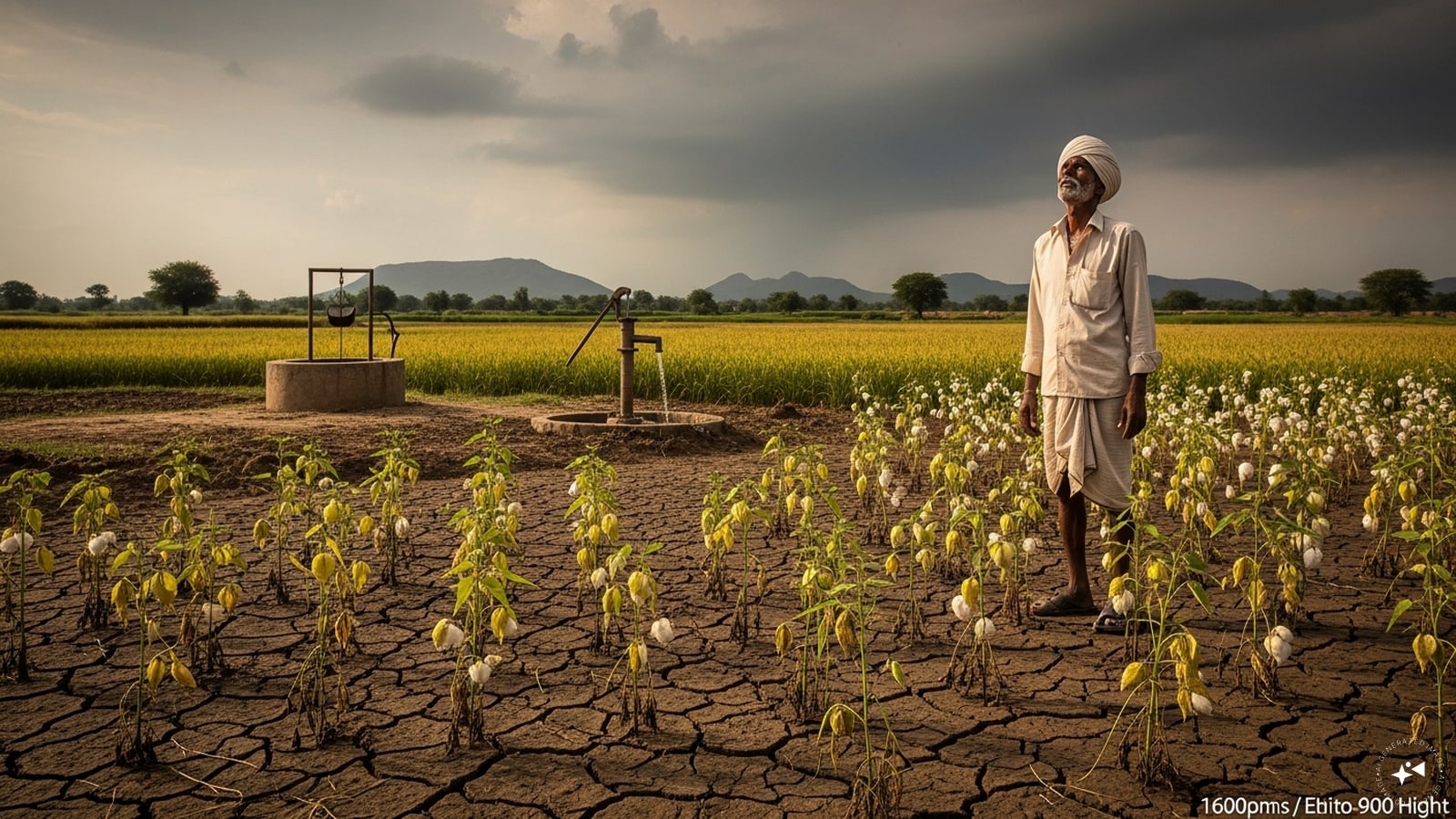
Meanwhile, on the other side of the ocean, the air above Indonesia and eastern Australia dries out like old parchment. The monsoon rains fail. Reservoirs drop until cracked mud patterns look like shattered stained glass. Farmers walk through fields of corn that grew knee-high before giving up, their leaves curling inward to protect whatever moisture remains in the stalk.
The Price of an Empty Field
You do not need to live near the ocean to feel the breath of a warm Pacific. You feel it every time you push a shopping cart down the aisle of a grocery store.
The global food system is a fragile, interconnected web stretched tight across international borders. When drought strikes the agricultural plains of Australia, or floods rot the soybean pods in South America, the shockwaves reach your local supermarket within months.
Consider chocolate. The cocoa bean is notoriously finicky. It requires steady humidity and reliable rainfall. When El Nino disrupts the West African monsoon—often working in tandem with its sister phenomenon, the Indian Ocean Dipole—cocoa yields plummet. The futures market reacts instantly. Traders in Chicago and London look at satellite data showing withered pods, and the price of a standard chocolate bar ticks upward.
It is not just chocolate. Coffee, palm oil, wheat, and beef all dance to the rhythm of ocean temperatures. Ranchers in Texas and the southern plains often face brutal droughts during these cycles, forcing them to sell off their herds early because pasture grass has turned to dust. When cattle inventory drops today, beef prices rise tomorrow.
This is the hidden cost of a fluctuating sea. It is a tax levied on every household, paid in pennies at first, then dollars, until the cost of simply feeding a family begins to strain the margins of working life.
The Whisper of the Future
We are standing in a different era now. The baseline has shifted.
When scientists talk about a record-breaking El Nino today, they are not talking about an event occurring in a vacuum. They are dropping a heavy stone into a pond that is already rising. Global background temperatures, driven by decades of industrial carbon emissions, have raised the temperature of every ocean on earth.
When you superimpose a natural cycle of Pacific warming onto a warming planet, the math changes. It is like adding dry kindling to an already smoldering fire.
We saw the previews of this script play out globally as surface temperature records shattered month after month, sending marine heatwaves cascading across coral reefs. Corals do not have a voice, but they speak in color. When the water stays too warm for too long, they expel the microscopic algae that nourish them. They turn bone white, ghostly and fragile, before dying altogether. A bleached reef is a silent city. The fish leave. The protective barrier that keeps storm surges from crashing directly into coastal villages vanishes.
We are left to wonder how many systems can bend before they break.
Yet, there is a strange clarity that comes with facing these extremes. For generations, we built our infrastructure—our coastal cities, our drainage systems, our massive monoculture farms—assuming a stable climate. We treated the weather as a reliable background noise to human history.
That era is over.
The Pacific Ocean is showing us its hand. It is telling us that the earth is a living, breathing engine, highly sensitive to the smallest shifts in pressure and temperature.
Maria turns off the spinning ceiling fan in Brisbane. She steps outside into the afternoon glare, shielding her eyes against a sun that feels too close, too heavy. She reaches down to pull a dry weed from the dirt, feeling the crackle of dead roots beneath her fingers. She does not know what the weather will bring next month, nor does she know how high her next bill will climb. But she knows the wind has changed direction, and she can feel the heat rising off the earth, waiting for the rain that has not yet learned how to fall.