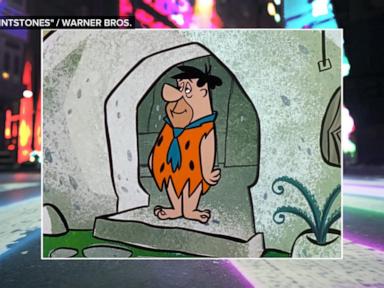
The entertainment media is currently congratulating itself on a supposedly brilliant discovery: online buzz is booming because people love nostalgia, reality television, and royal tributes. Analysts look at the charts, see a spike in engagement numbers for a thirty-year-old sitcom clip or a recycled clip of a royal wedding, and declare a golden age of digital connection.
They are reading the data completely backward.
What the data actually shows is a cultural flatline. The reliance on reality TV, endless historical retrospectives, and comforted-by-the-past nostalgia isn't a sign of a thriving digital community. It is a distress signal. It is the definitive proof that modern content creation has run entirely out of original ideas. We are watching an industry cannibalize its own history because it is too terrified, too underfunded, and too mathematically risk-averse to build anything new.
The Algorithmic Trap of Comfort Food
Look closely at why media executives love the "nostalgia drive." It is cheap.
When a platform pushes a retrospective on a deceased royal or a compilation of "iconic reality TV moments" from 2004, they aren't engaging in cultural curation. They are deploying a low-risk financial strategy. I have sat in rooms where production companies deliberately killed original, challenging scripts to greenlight a documentary about a twenty-year-old pop star's public breakdown. Why? Because the data tells them the baseline audience already exists.
This creates a self-fulfilling loop.
- The algorithm serves up what worked before because it guarantees a baseline click-through rate.
- Users click because it requires zero cognitive load to process something they already recognize.
- Executives see the clicks and declare, "The people demand more nostalgia!"
This isn't audience preference; it is systemic force-feeding. We are witnessing the industrialization of creative laziness. When every major network and streaming platform relies on the same psychological triggers of memory and cheap shock value to drive metrics, the art form itself rusts.
The Reality TV Lie
The standard industry defense of reality TV is that it reflects "authentic human behavior" and provides a democratic space for public discourse.
It does neither. Modern reality television is a highly engineered, deeply cynical exercise in formulaic conflict. The "online buzz" it generates isn't a vibrant town square—it is a digital gladiatorial arena designed to provoke outrage metrics. Outrage keeps eyes on screens longer than any other emotion.
The premise that reality TV is a stable, dominant pillar of entertainment business long-term is fundamentally flawed. Audiences are developing a tolerance to the formula. To achieve the same level of online engagement that a simple argument caused ten years ago, producers must push participants into increasingly unhinged, synthetic scenarios. The returns are diminishing. The cost to human dignity rises, while the actual cultural value sinks to absolute zero.
The Downside of Moving On
Rejecting this safe, recycled content model is incredibly difficult, and it comes with real financial danger.
If a studio decides tomorrow to stop relying on legacy intellectual property and cheap unscripted drama, their quarterly metrics will likely tank. Audiences, conditioned by years of algorithmic coddling, do not automatically flock to complex, unfamiliar narratives. It takes time, immense capital, and a tolerance for high-profile failures to build a new cultural touchstone. Most public media companies, answers to shareholders who demand growth every ninety days, simply do not possess the stomach for that kind of risk.
But the alternative is worse. By feeding the public a steady diet of cultural leftovers, the industry is effectively training the next generation of consumers to have an attention span that only activates when triggered by something they saw in their childhood.
Dismantling the Premise
People often ask: How can nostalgia be bad if it makes viewers happy?
The question itself assumes that temporary emotional comfort is the highest goal of media consumption. It confuses sedation with satisfaction. Nostalgia provides a quick hit of dopamine by reminding you of a time when life felt simpler. It doesn't challenge, it doesn't inspire, and it certainly doesn't move the cultural conversation forward. A culture that only looks backward is a culture in terminal decline.
Stop tracking the volume of online buzz and start looking at its velocity and depth. A million people tweeting a recycled meme from a 90s sitcom creates a massive spike on a chart, but it leaves behind no lasting impact. It is digital exhaust.
The industry needs to stop treating online chatter as validation for its own creative bankruptcy. If the only way to get people talking is to dig up a ghost or script another manufactured argument in a mansion, the production model is broken. Turn off the rearview mirror. Build something that risks total failure, or admit that the industry is just running a multi-billion-dollar museum.