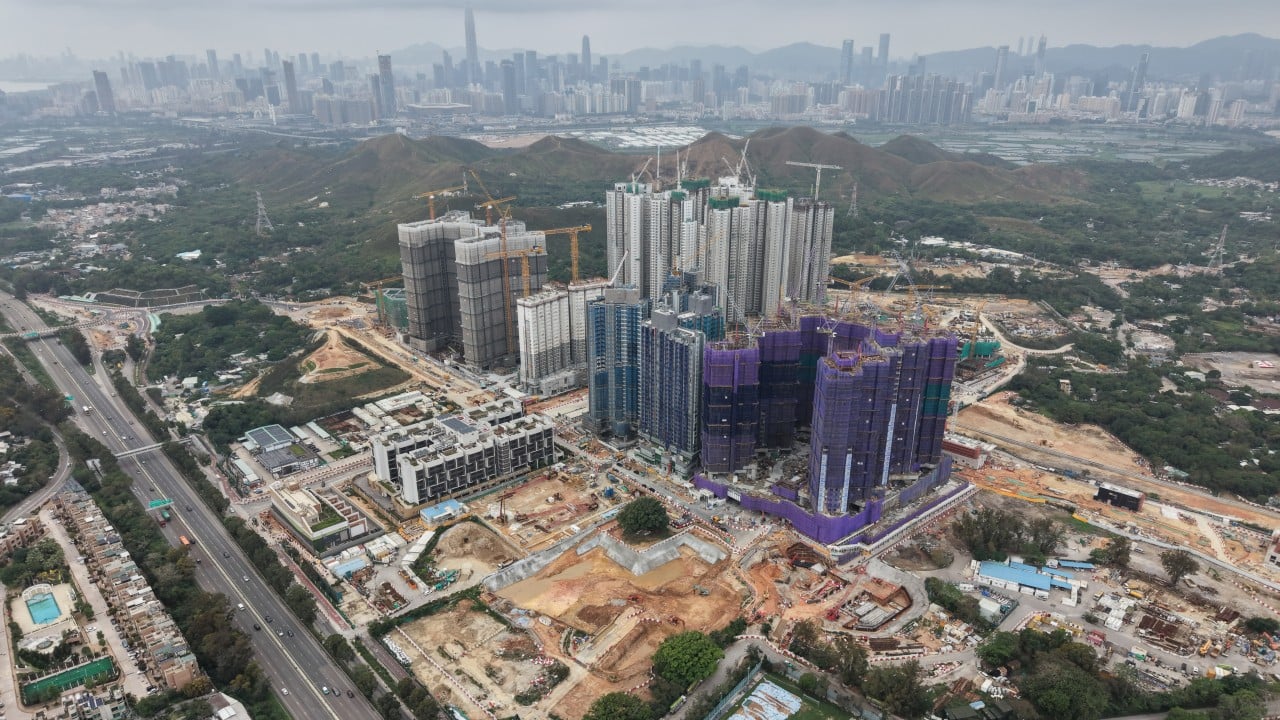
Central planning has a funny way of ignoring gravity. The current obsession with the "Northern Metropolis"—this sprawling, multi-billion-dollar vision of a high-tech border hub—suffers from the classic delusion that you can manufacture an ecosystem by sheer force of will and a massive checkbook.
Politicians and urban planners love to talk about "phased development" and "incremental growth." They argue that this project needs more than one big push. They claim it needs sustained, long-term nurturing. They are wrong. It doesn’t need a push; it needs a pulse. And right now, the only pulse in the room is the sound of taxpayers’ money hitting the floor.
The Infrastructure Trap
The consensus view is that if you build the rails, the roads, and the shiny glass towers, the talent will migrate. This is the "Field of Dreams" school of economics, and it’s consistently failed from the Rust Belt to the empty "innovation zones" of Southeast Asia.
Real tech hubs are organic accidents, not government-mandated zones. Silicon Valley didn’t happen because a governor decided to build a "Southern Peninsula Tech Hub." It happened because of a specific collision of defense spending, academic freedom at Stanford, and a legal framework that didn't let corporations own a person's ideas indefinitely.
The Northern Metropolis plan assumes that by building physical proximity to Shenzhen, you magically inherit its momentum. It treats innovation like a physical gas that leaks across borders. It doesn't. Innovation is a byproduct of friction and incentives. By trying to "smooth out" the transition with massive government-led infrastructure, you’re actually removing the very competitive pressures that force companies to evolve.
The Myth of the Phased Approach
The competitor's argument for "more than one big push" is a euphemism for "we don’t know how to make this profitable, so let's keep funding it until the next election cycle."
When you phase a project of this scale, you create a graveyard of half-finished dreams. Look at any stalled mega-project. Phase One is always the "Showcase." It looks great in brochures. Phase Two is where the budget gets slashed. Phase Three is where the "metropolis" becomes a glorified business park with a 30% occupancy rate and a high-end coffee shop that only opens on Tuesdays.
A "push" implies that the project is a boulder you’re trying to move up a hill. If an economic zone requires constant pushing, it’s because it’s fundamentally poorly positioned. A viable economic engine doesn't need a push; it needs a release valve. The government should be removing barriers, not building monuments.
Talent Doesn’t Move for a Master Plan
Ask any founder in the trenches where they want to be. They want to be where the money is, where the talent is, and where the regulations are predictable. The Northern Metropolis offers none of these.
It’s positioned as a bridge between the administrative stability of one region and the manufacturing might of another. But bridges are things people cross to get somewhere else; they aren't places where people live.
- The Wage Gap Problem: You cannot attract top-tier global talent to a "metropolis" if the surrounding cost of living remains tethered to a luxury real estate market while the local industry is still in its infancy.
- The Regulatory Fog: Businesses hate uncertainty. A project that exists across a border zone with "evolving" rules is a nightmare for compliance officers.
- The Identity Crisis: Is it a satellite city? A tech corridor? A residential overflow? By trying to be all three, it achieves the efficiency of none.
Follow the Capital, Not the Concrete
I’ve seen cities pour billions into "Smart Districts" that ended up as high-tech ghost towns because they forgot one thing: capital is cowardly. It goes where it is safe and where it can grow.
If the Northern Metropolis were a viable investment, private equity would be screaming to fund it without government subsidies. The fact that the narrative is dominated by "public-private partnerships" and "government initiatives" tells you everything you need to know. It’s an artificial market.
Real growth looks like a wildfire. It’s messy. It’s unplanned. It’s aggressive. The Northern Metropolis plan is a manicured garden. It looks nice, but it can’t survive in the wild.
The Shenzhen Fallacy
The biggest mistake planners make is comparing the Northern Metropolis to the early days of Shenzhen. Shenzhen worked because it was a radical departure from the status quo—it was a pressure release for a nation's pent-up economic energy.
The Northern Metropolis isn't a departure; it’s an extension of the status quo. It’s more of the same property-driven development that has dominated the region for decades. We are building 21st-century offices for 20th-century industries using 19th-century urban planning logic.
Stop Trying to "Foster" Innovation
The word "foster" should be banned from urban development. You foster a child; you don't foster a multibillion-dollar tech sector. You either create the conditions where it can survive or you don't.
If we want the border region to actually matter, we should stop building "hubs" and start dismantling the friction.
- Deregulate the land use immediately. Stop deciding which building is for "biotech" and which is for "AI." Let the market decide.
- Slash the taxes for the first 1,000 startups. Not a "grant" that requires a 50-page application. A flat, zero-tax environment.
- Open the borders for talent. If you have a STEM degree and a job offer, you get a visa in 24 hours. No quotas. No bureaucracy.
Instead, we get "more than one big push." We get committees. We get white papers. We get a "metropolis" that exists only on a CAD drawing.
The true cost of the Northern Metropolis isn't the tax dollars. It’s the opportunity cost. It’s the thousands of entrepreneurs who will spend the next decade waiting for the government to "push" the project to completion, rather than building something real in a place that doesn't need a permission slip to exist.
Quit looking for the next push. Start looking for the exit.