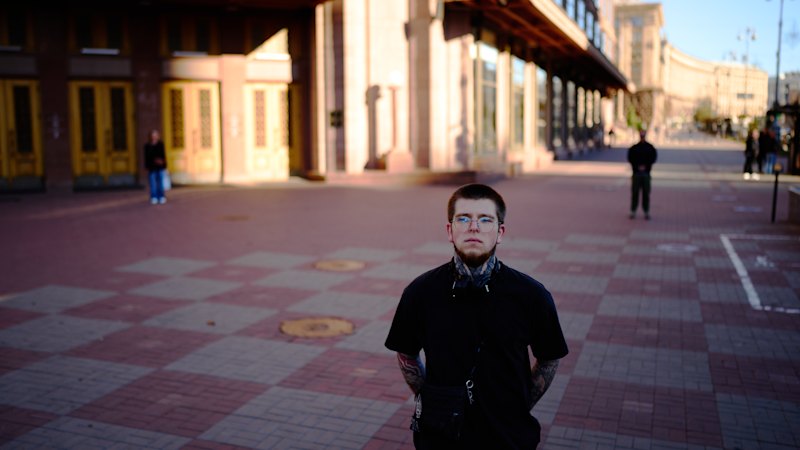
The coffee shops in Kyiv are crowded at two in the afternoon. Laptops sit open beside ceramic cups of flat whites, and conversations bounce between marketing strategies and weekend plans. Outside, the air is crisp, carrying the scent of damp pavement and exhaust from marshrutka minibuses. It looks like any European capital on a mild Tuesday.
Then the phone in a patron's hand vibrates. A red banner flashes across the screen, warning of incoming ballistic missiles launched from the Bryansk region. The barista does not stop steaming milk. The customers do not pack their bags. Two people near the window glance upward for a fraction of a second, calibrate their risk, and return to their screens. This is life in Kyiv under persistent bombardment, where human adaptation has converted the extraordinary terror of modern war into a dull, administrative background noise.
Every peaceful moment in a frontline nation is a psychological construction. It is maintained by air defense batteries hidden in suburban tree lines, by municipal workers fixing water mains three hours after a strike, and by a population that has learned to compartmentalize dread so efficiently that it resembles indifference. But beneath the veneer of urban normalcy lies a grinding, invisible erosion that statistics on gross domestic product or missile interception rates fail to capture.
The Architecture of Anticipation
To understand contemporary urban survival, one must examine how prolonged threat alters public behavior. In the opening months of the full-scale invasion, every wail of the air raid siren emptied the streets. Basements filled with anxious families clutching pets and passports. That level of hyper-vigilance is metabolically unsustainable. The human nervous system cannot remain at peak adrenaline for months without collapsing into chronic exhaustion.
Consequently, a collective calculus took over. People learned to read the threat environment with the precision of meteorologists. A drone threat from the south carries a different probability profile than a MiG-31 takeoff in Belarus. Citizens track Telegram channels run by intelligence monitors the way commuters elsewhere check train schedules. They calculate travel times, proximity to designated shelters—most of which remain locked or inadequate—and decide whether to move from the fifth floor to the hallway, or simply stay put and pour another cup of tea.
This rationalization of risk is a defense mechanism. It allows civil society to function, keeping tax revenues flowing and municipal services operational. Yet it creates a surreal cognitive dissonance. Walking past shattered apartment facades in the Podil district while someone power-washes the sidewalk outside a newly opened boutique exposes the central paradox of this war: life and death occupy the exact same coordinate in space and time.
The Economic Mirage of Stability
The illusion of normalcy is heavily underwritten by macroeconomic foreign aid and the sheer resilience of local small businesses. Restaurants reopen because employees need wages and owners need to pay rent. Cafes become makeshift remote offices for software developers whose electricity at home flickers out due to rolling grid damage.
However, this commercial pulse masks a deeper structural vulnerability. The labor market is severely fractured. Millions of working-age citizens remain displaced abroad or deployed on the eastern and southern fronts. Businesses face acute hiring shortages, compounded by the constant threat of targeted infrastructure strikes that can wipe out a supply chain overnight.
Energy security remains the most precarious pillar of this fragile stability. While the summer months offer relative clemency, the looming threat of winter campaigns targeting generation facilities casts a long shadow over urban planning. Generators hum outside pharmacies, restaurants, and grocery stores, a constant auditory reminder that the grid is an intensive care patient kept alive by quick fixes and imported diesel.
The Psychological Ledger
Journalistic dispatches often focus on the physical scars of the conflict—the cratered roofs, the charred frames of trolleybuses, the temporary memorials piled high with chrysanthemums. The psychological ledger is far harder to quantify.
Exhaustion in Kyiv is not merely about sleep deprivation caused by nocturnal drone raids that rattle windowpanes at three in the morning. It is the exhaustion of sustained uncertainty. No one can plan for next month, let alone next year. Career trajectories are frozen or violently diverted. Families remain separated across international borders, children grow up viewing anti-aircraft explosions as normal nocturnal pyrotechnics, and the boundary between civilian existence and military reality has dissolved entirely.
When foreign visitors arrive and marvel at the vibrancy of the restaurant scene, they often misinterpret it. They see defiance where they should see endurance, or resilience where there is simply no alternative. To stay in Kyiv and keep working is not a romantic ideological statement for most; it is simply the default setting of people defending their right to exist in their own homes.
The resilience of the city is real, but it is not infinite. It is a finite resource being drawn down daily, payment against a future whose terms remain entirely unwritten. As long as the batteries hold and the early-warning systems buy those crucial extra minutes, the cafes will stay open, the laptops will stay flipped open, and the city will pretend, with fierce and heartbreaking discipline, that peace is something you can practice until it finally arrives.