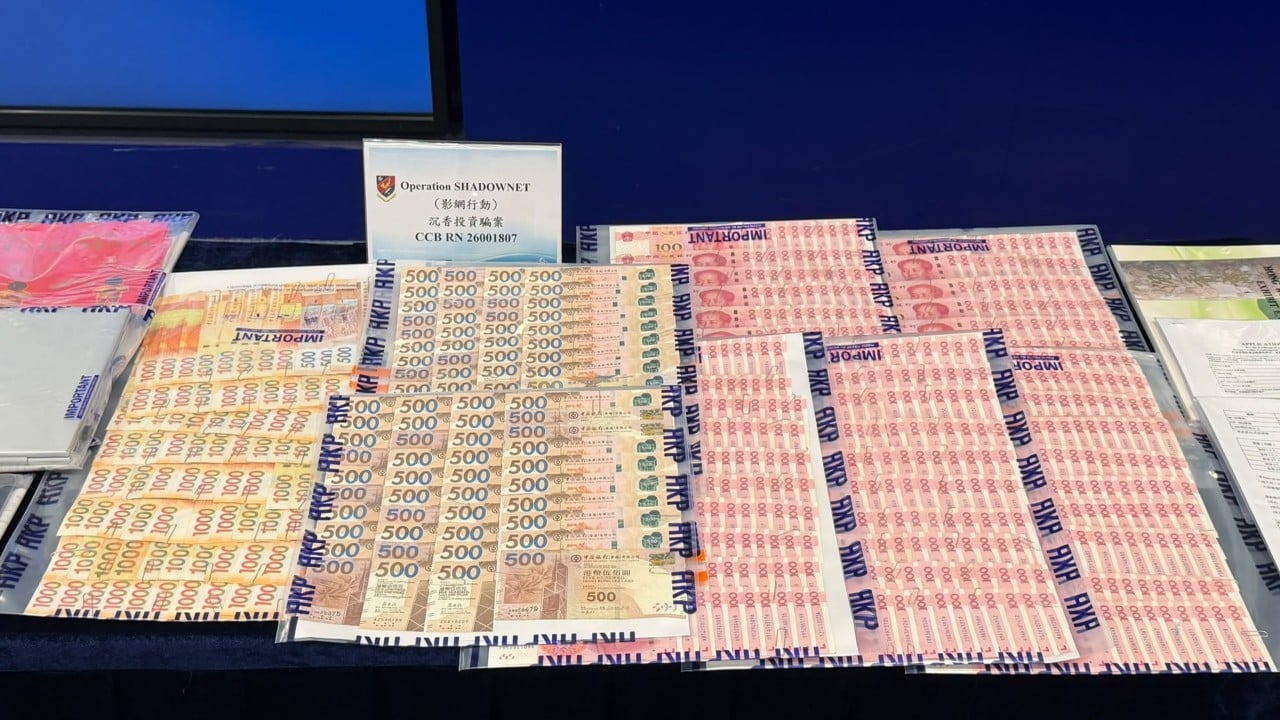
Hong Kong police arrested six suspects in October 2026 over an alleged HK$14 million agarwood and crypto investment scam tied to the BBB Group that operated since 2017. Twenty-one reported complainants, mostly aged 52 to 82, lost between HK$30,000 and HK$1.9 million each after being pitched Malaysian agarwood plantations, a proprietary token called iBBB that plunged 99.92% from launch, intellectual property licensing plans, and automated car-wash ventures.
Nine years is an eternity in financial fraud. Most fly-by-night schemes burn out within eighteen months because new money eventually runs dry or regulators kick the door in. For another perspective, consider: this related article.
Surviving nearly a decade requires discipline, adaptability, and a keen reading of human psychology. Operators do not keep a scheme alive for nine years by shouting promises from a rooftop. They do it by changing the story whenever an old story gets stale, turning unredeemed payouts into fresh "investments," and picking assets that sound exotic enough to discourage basic due diligence.
How a Nine-Year Fraud Stays Alive
A casual reader looks at a headline about agarwood and cryptocurrency and sees a bizarre mashup of ancient timber and modern tokens. Someone who has spent decades watching retail fraud sees something much more calculated. Further coverage on the subject has been shared by The Guardian.
Schemes like this rarely rely on a single lie. They rely on narrative rotation. When an investor begins asking when their money will actually come back, a seasoned operator does not simply say no. They offer an upgrade.
According to police details reported in October 2026, investors who were already tied up in the scheme were steered toward rollovers—shifting from agarwood arrangements into intellectual property licensing paying 25% interest, a proprietary cryptocurrency, or automated car-wash station deals promising 30% annual returns. Referral bonuses between 10% and 30% on fresh money gave existing participants another reason to keep bringing friends into the tent rather than demanding cash exits.
A delayed withdrawal is not a refusal to pay. In long-running schemes, it is a negotiation designed to convert a cash liability into another locked-up promise.
Every rollover buys time. Every new asset class resets the clock on a victim's expectations. If a tree takes years to mature, or a token needs time to find its footing on a market, or an automated car wash needs "expansion capital," the operator gets breathing room while the underlying cash flow remains opaque.
The Appeal of Exotic Commodities
Agarwood is real, rare, and expensive. Resin-infused heartwood from Aquilaria trees has been traded across Asia for centuries for incense, medicine, and perfumery, commanding high prices when genuine grades are harvested.
That real-world prestige makes it catnip for pitchmen. Most retail investors do not know how to grade agarwood, verify plantation yields in another country, or distinguish sustainable cultivation from wild poaching and hype. When a pitch pairs an obscure physical commodity with a shiny digital token, ordinary skepticism often freezes.
- Information asymmetry: Ordinary buyers cannot easily inspect overseas tree plots or verify independent production audits.
- Credibility by association: Linking a pitch to a tangible, high-value botanical product makes the scheme feel grounded in the physical world rather than pure air.
- Moving goalposts: Agricultural timelines and commodity pricing give promoters convenient excuses when promised returns slip.
Cryptocurrency adds a second layer of confusion. Retail buyers often treat any token name—such as iBBB in this investigation—as if it carries the liquidity, oversight, or market depth of major digital assets. When a thinly traded or proprietary token collapses by 99.92% from launch, paper balances evaporate while the promoter can blame "market volatility."
Why Older Investors Carry the Heaviest Risk
Investigators noted that most of the 21 reported victims were between 52 and 82 years old. That age bracket is not a coincidence.
People in their fifties, sixties, seventies, and eighties frequently hold accumulated savings, retirement payouts, or property equity. Many are also looking for yield at a stage of life when rebuilding a wiped-out nest egg is far harder than it is for a twenty-five-year-old with decades of earning power left.
High headline returns—like 25% interest or 30% annual yields—hit a very specific nerve when bank deposit rates look modest or inflation eats into fixed incomes. Pitchers know how to frame those numbers not as reckless gambles, but as "exclusive" opportunities shared out of goodwill.
The Quiet Cost of Underreporting
Twenty-one complainants totaling HK$14 million is the police tally as of mid-October 2026, with officers still examining seized devices and contacting potential victims. In cases that span nine years, official complaint numbers often understate the true reach of an operation.
Some victims feel embarrassed. Others assume that because they signed a contract or rolled their balance into a newer product, their loss was somehow a bad business call rather than a crime. Still others stay quiet because they recruited relatives or close friends into the same circle and cannot bear admitting the whole thing was hollow.
That silence is oxygen for a long-running fraud. A scheme that runs from 2017 to late 2026 survives partly because early payouts—or simply polite, confident communication—keep complaints scattered until withdrawals stall across the board.
Regulatory Blind Spots and Enforcement Reality
When Hong Kong's Securities and Futures Commission placed suspicious agarwood investment arrangements linked to BBB Group on its alert list in October 2026, followed by Commercial Crime Bureau arrests and a search of premises in Kwun Tong, the public saw the visible end of a long investigation. What it did not see is why early warning signs so often arrive late in the game.
Financial regulators do not have omniscient vision over every private contract, side deal, or cross-border arrangement. When promoters package an offer as an agricultural contract, a car-wash stake, an intellectual property license, or an obscure token, they often test the boundaries of what looks like a conventional regulated security at first glance.
Consider a hypothetical example to see how easy it is for an investor to miss the warning signs. Suppose an investor puts HK$500,000 into an overseas timber plot promising steady annual payouts. After two years, cash payouts slow down, and a representative suggests rolling the balance into a new digital token tied to the company's "ecosystem," promising a bonus for doing so. On paper, the investor still has a statement showing a higher number. In reality, no independent custodian holds the funds, and the new token has no real outside demand.
This is the gray area where retail investors get burned. A promoter does not have to fake a bank logo to mislead people; they only need to present paperwork that looks official enough to stop someone from asking tough questions.
What Enforcement Can and Cannot Do
Police raids, device seizures, and cash confiscations—such as the roughly HK$540,000 in cash and 25 devices seized in the October 2026 operation—are vital for building criminal cases and tracing money flows. Identifying a suspected cross-border dynamic, including a Malaysian passport holder cited by police alongside local Hong Kong arrests, also highlights how fraud networks span jurisdictions.
Yet enforcement rarely makes victims whole overnight. Once money has been spent on operating expenses, commissions, travel, or moved across borders over nine years, recovering every dollar is an uphill battle.
Even strong regulatory watchlists have limits. A warning list alerts the public after a product comes to regulators' attention, which is essential, but it cannot force a dishonest operator to return funds that are already gone.
Red Flags You Should Never Rationalize Away
Looking back at a nine-year scheme is easy once the arrests make the news. Spotting the mechanics while a pitch is still active takes colder eyes.
- Yields detached from reality: Any pitch dangling 25% or 30% returns as routine or low-risk deserves immediate skepticism, regardless of whether the story involves trees, tokens, or car washes.
- Rollovers instead of cash: If getting your principal or promised return back always requires moving into a newer product, a bonus tier, or a fresh contract, treat the promised liquidity as an illusion.
- Complex mashups: When a single operator keeps shifting between unrelated industries, the common thread is usually the sales pitch, not operational mastery.
- Pressure to recruit: Bonus structures rewarding you for bringing in new investors are a classic hallmark of pyramid-style cash recycling.
Before handing over money to any private arrangement, verify whether the entity or product is properly licensed or flagged on official regulatory registries, demand clear proof of where funds go, and walk away the moment straight answers turn into sales talk.