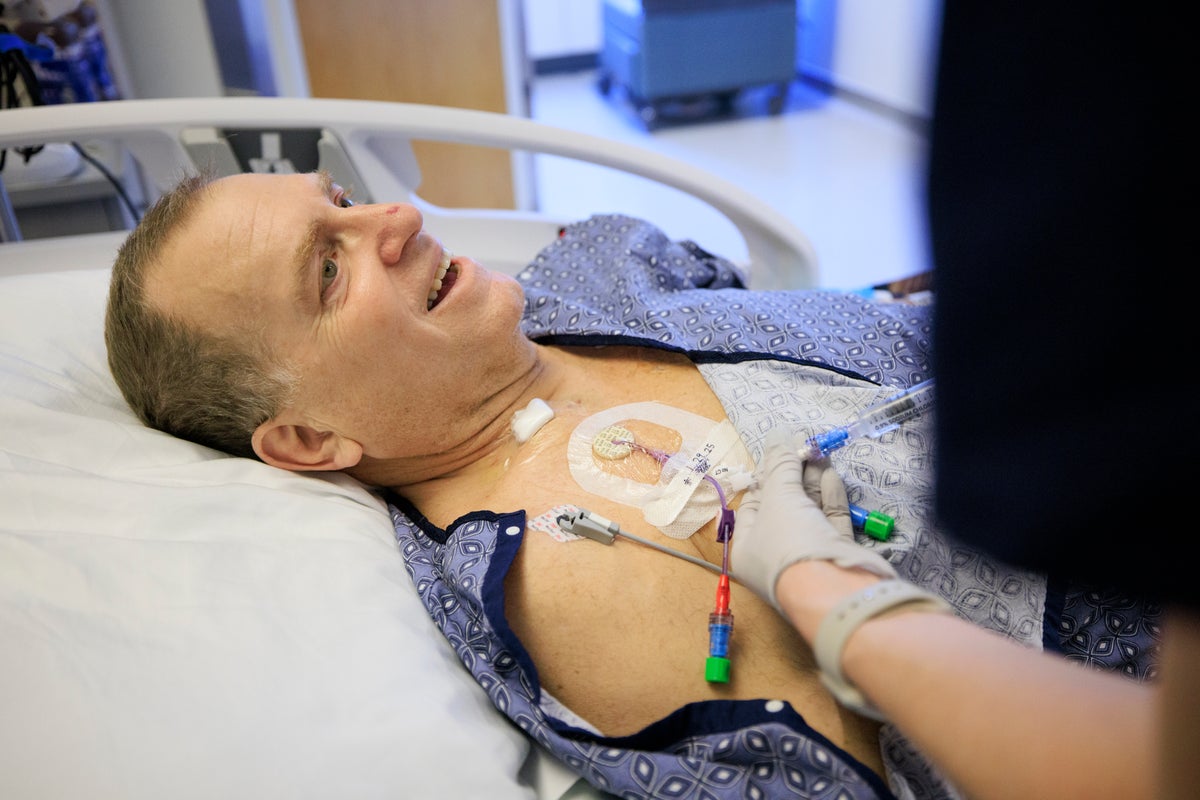
The hospital room smells like floor wax and old copper. Anyone who has spent enough fluorescent-lit nights listening to the metronomic tick of a dialysis machine knows that exact odor. It is the smell of borrowed time.
For nine months, a man lived with a heart that beat, lungs that drew oxygen from the sterile air, and a kidney harvested from a genetically engineered pig.
Think about the sheer audacity of that sentence.
For decades, we treated the human body as a closed corporation. Cross the species barrier and the immune system riotously rejects the foreign invader. White blood cells descend like ancient infantry, tearing apart any tissue that does not bear the correct genetic passport. This is the tragic arithmetic of organ failure. You wait on a list. The list is too long. The clock runs out. That is how the story has always ended.
Until recently.
Imagine looking down at your own forearm, watching the blue rivers of your veins pulse, knowing that somewhere in a sterile laboratory across the ocean, an animal was born with a single, highly specific destiny: to keep you breathing.
To understand why this nine-month milestone matters so profoundly, you have to strip away the clinical jargon of xenotransplantation. You have to sit in the dark with the fear of a family whose world has shrunk to the diameter of a plastic tube. I know that room. I know the desperate math of watching a loved one's skin turn the color of unbaked dough as toxins slowly accumulate in the blood. You pray for a phone call that never comes. You watch the calendar pages tear away like scabs.
Then science changes the vocabulary.
Scientists at institutions like Massachusetts General Hospital did not simply stitch a foreign organ into a human cavity and hope for the best. They rewrote the biological software of the donor animal. Sixty-nine genomic edits. Let that number settle in your mind. Sixty-nine distinct alterations to a pig's DNA. They chopped out genes that trigger hyperacute human rejection. They inserted human genes to trick our immune sentinels into standing down. They knocked out porcine endogenous retroviruses to ensure no latent animal sickness could jump the species gap.
It is genetic carpentry performed with a scalpel made of light.
When the modified kidney was finally placed inside a human recipient, it did not immediately blacken and die. It went to work. It filtered blood. It produced urine. It performed the quiet, uncelebrated alchemy of cleansing the body, day after mundane day, for over two hundred and seventy days.
Nine months.
That is not just a statistical data point for a medical journal. That is an entire school year. That is a summer turning to autumn, winter biting hard at the windows, and spring returning with the stubborn green of new grass. That is birthdays celebrated, quiet conversations whispered in the dark, and ordinary mornings drinking bad coffee from a paper cup.
Critics will point out the complications. They will remind us that xenotransplantation is still in its infancy, that subjects in these trials face immense hurdles, and that the ultimate goal remains elusive. They are right, of course. Medicine advances through a graveyard of well-intentioned failures. Not every trial ends in triumph. The biological friction between human physiology and animal tissue is immense, a simmering war fought at the microscopic level where cells recognize other cells as alien.
Yet we are no longer asking if it is possible. We are asking how far we can push the boundary before the wall gives way completely.
The shortage of human organs is a silent slaughter. Every day, people slip away because the supply of generous donors cannot keep pace with the brutal efficiency of chronic disease. We have built a modern society capable of launching metal cylinders into the outer dark of the solar system, yet we still watch people die because a single fist-sized filter of flesh failed inside them.
The pig kidney that beat inside a human chest for nine months is a fracture in that old reality. It is a wedge driven into the door of impossibility.
We stand now at a strange, quiet threshold in human history. Behind us lies an era where organ failure was an absolute ceiling, a hard wall at the end of the corridor. Ahead lies a complicated, messy, brilliant landscape where the boundaries between species blur in the service of keeping a human heart beating just a little bit longer.
The monitor beside the bed stops its frantic clicking. The room grows still. But out in the laboratories, in the cold light of microscopes and the quiet hum of gene-sequencing machines, the work continues, stitching together the frayed edges of what it means to be alive.