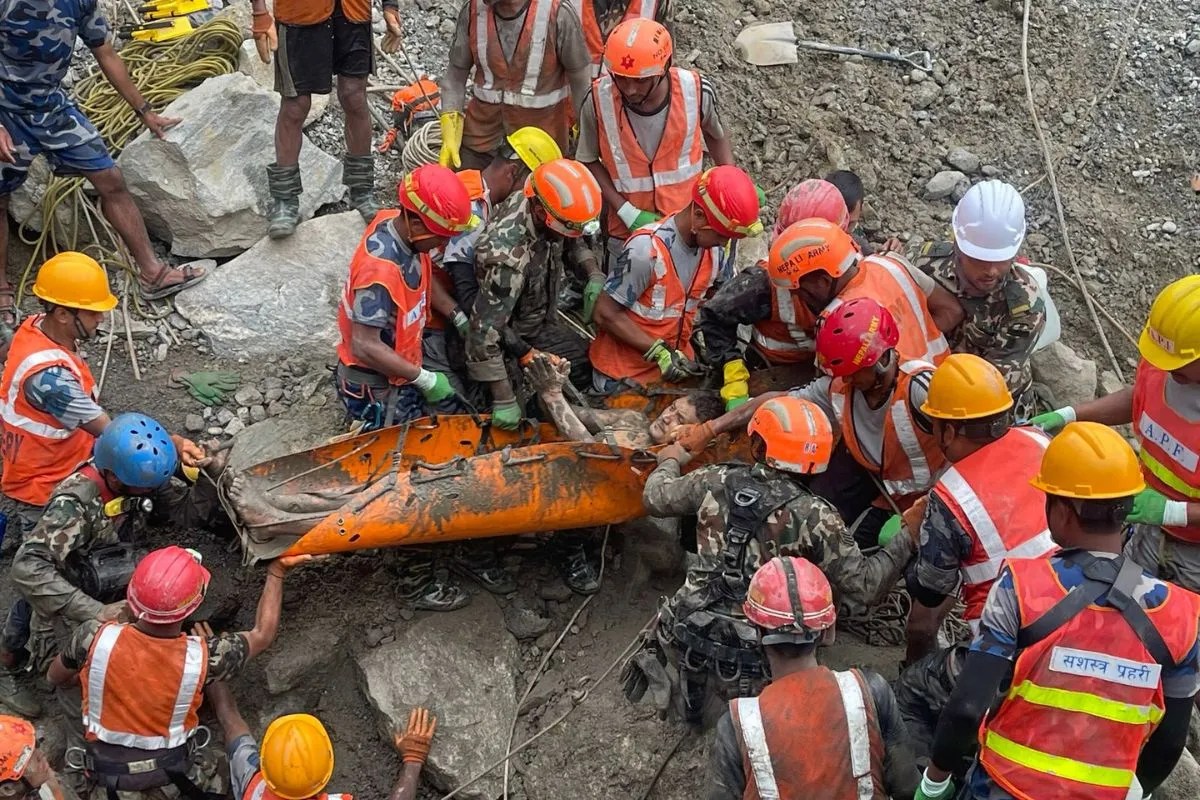
Nine days beneath tons of Himalayan mud and debris, two men cheated death inside a sealed hydropower tunnel along the Trishuli River. When mechanical foreman Sanjay Sah and supervisor Kabir Maharjan finally blinked into the daylight on a Friday rescue operation, they shattered statistical norms of human endurance following a catastrophic flash flood. While the headlines capture the emotional reunions and the tears of families, the structural failures, engineering vulnerabilities, and frantic rescue mechanics behind the disaster expose a harsh reality facing modern infrastructure in high-altitude mountain zones.
The catastrophe began when an abrupt wall of water and debris, triggered by severe mountain destabilization near the Nepal-Tibet border, slammed into the Trishuli-3A hydropower project. Millions of gallons of slurry rushed down the valley, sealing underground entry points and trapping dozens of workers deep inside.
In situations like this, the immediate assumption from outsiders is total structural collapse resulting in instantaneous suffocation. Physics, however, occasionally carves out narrow margins for survival. Underground engineering constructs often form accidental air pockets when bulkheads or control rooms remain structurally intact despite external flooding. Sah and Maharjan found themselves isolated approximately 170 meters inside the tunnel structure.
Survival for over two hundred hours without external provisions requires more than just oxygen pockets; it demands extreme psychological resilience. Sah later recounted spending the nine-day ordeal silently chanting the Hare Krishna Mahamantra to stave off panic in pitch-black conditions. Panic consumes oxygen faster through elevated respiration rates. Mental discipline, rhythmic repetition, and sheer stubborn refusal to accept death kept their bodies functioning while rescue teams fought through impenetrable blockages above.
Behind the miraculous survival narrative lies an uncomfortable infrastructure crisis. The Himalayan region is witnessing an unprecedented boom in hydropower construction, altering river corridors to meet surging regional energy demands. Yet, environmental assessments frequently underestimate flash flood velocities and glacial lake outburst flood risks. When the torrent struck, over nine hundred workers across multiple projects along the Trishuli corridor were reported missing or trapped, highlighting a systemic lag in early-warning evacuation protocols for underground facilities.
Traditional disaster management frameworks in remote terrain rely heavily on heavy machinery arriving after the fact. In the Trishuli tunnel operation, success hinged on acoustic detection—rescue workers hearing faint taps and voices from within the concrete bowels of the mountain—rather than automated tracking systems. If the trapped workers had been unconscious or unable to make noise, the acoustic window would have closed permanently.
The recovery of Sah and Maharjan provides a brief window of psychological relief for a nation grieving hundreds of casualties. Yet, as medical teams evaluate the physical toll on the survivors at Kathmandu military hospitals, the broader industry must reckon with the vulnerabilities built into sub-surface energy corridors. Engineering triumphs in the Himalayas must evolve past structural resistance to include active, fail-safe evacuation pods for subterranean crews before the next seasonal deluge tests the mountain walls once more.
Nine Days After Deadly Nepal Floods, 2 Men Are Rescued From Tunnel
This video documentation from the Washington Post captures the actual footage and global reporting of the dramatic rescue operation that pulled survivors from the sealed hydropower tunnel.