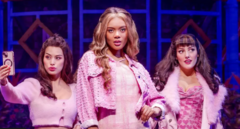
The dressing room mirror reflects a face the world usually associates with high school cruelty, plastic tiaras, and the glossy, superficial world of Hollywood satire. But the sweat on Charlie Burn’s forehead isn't from stage lights. The trembling in her hands has nothing to do with opening-night jitters. Outside the theater walls, the air smells of burning rubber and acrid smoke. Sirens wail in a discordant symphony that has recently overtaken the streets of Belfast.
For an actor, the theater is a sanctuary. It is a space where reality suspended, where the chaos of the outside world is bartered for a few hours of collective illusion. When that illusion shatters, the silence left behind is deafening.
Charlie Burn, known to thousands for her role as Cady Heron in the touring production of the Mean Girls musical, found herself trapped in a real-world drama she never auditioned for. The marquee lights were switched off. The doors were bolted. A production that traveled across oceans to bring joy to a city instead became a casualty of escalating street violence.
The stage was set for a week of sold-out performances at the Grand Opera House. Instead, the venue was forced to release a statement that sent ripples through the entertainment industry. Due to ongoing civil unrest, safety concerns left them with no choice but to cancel the remaining performances. It was a decision made in the interest of public safety, but the human cost of that decision stretches far beyond lost ticket revenue.
To understand the weight of this moment, consider what happens when a city’s cultural heartbeat skips a beat.
Imagine a young theatergoer, clutching a ticket bought months in advance, waiting for a night of escapism, only to be told the streets are too dangerous to walk. Think of the stagehands, the ushers, the local vendors whose livelihoods depend on the foot traffic of a bustling theater district, suddenly staring at empty sidewalks.
Burn took to social media, not to promote a show or share a backstage selfie, but to voice a raw, unvarnished fear. She admitted to being terrified, unable to leave her hotel room, watching a city she hoped to entertain descend into conflict.
"I haven't left my house. I'm scared," she shared. The words are stark. They contrast sharply with the vibrant, confident persona she adopts on stage every night. It reminds us that underneath the costumes and the makeup, performers are acutely vulnerable. They are human beings operating in unfamiliar environments, entirely exposed to the socio-political climates of the cities they visit.
The civil unrest gripping parts of Belfast didn't emerge from a vacuum. Weeks of tension, fueled by complex socio-economic frustrations, political friction, and historical grievances, culminated in clashes that spilled onto the pavements. Bricks were thrown. Vehicles were torched. The police service struggled to maintain order as pockets of violence flared up, turning ordinary neighborhoods into flashpoints.
When violence erupts, art is often the first thing we sacrifice. We label it a luxury, a non-essential service that can be paused until the storm passes. But this perspective gets it completely backward.
Art is not a luxury. It is the connective tissue of a community. In times of division, the theater serves as a neutral ground, a place where people from all walks of life sit shoulder to shoulder in the dark, sharing the same laughs, feeling the same tension, and applauding the same triumphs. When you close a theater, you don't just cancel a show. You shut down a venue for human connection. You cede the public square to fear.
The financial metrics of a cancelled tour are easy to calculate. Producers look at spreadsheets, insurance adjusters file claims, and refunds are processed with the click of a button. What remains unquantifiable is the psychological toll.
For the cast and crew of Mean Girls, a touring production is a grueling marathon. They live out of suitcases, away from families, pushing their bodies to the absolute limit to deliver eight high-energy shows a week. They endure the physical strain because of the payoff: the roar of the crowd, the palpable energy of a live audience reacting in real-time. To have that stripped away, not by a technical glitch or an actor's illness, but by the threat of physical harm, is deeply demoralizing.
The Grand Opera House itself stands as a resilient monument to Belfast's complex history. Having survived the darkest days of the Troubles, its ornate Victorian architecture has witnessed decades of transformation. It has seen the city heal, reinvent itself, and emerge as a vibrant cultural hub on the global stage. To see its doors closed once again due to street violence feels like a painful regression, a haunting echo of a past that many hoped was firmly under the floorboards.
Consider the ripple effect on the local economy. A major touring production brings thousands of people into the city center. They eat at nearby restaurants, buy drinks at local pubs, book hotel rooms, and hail taxis. When a show cancels, the economic damage radiates outward, hitting small business owners who are already navigating a precarious economic climate. The empty seats in the auditorium translate directly to empty tables in the bistros next door.
The situation forces a uncomfortable conversation about the responsibility of care in the entertainment industry. How much risk should performers be expected to tolerate? When does the show must go on attitude cross the line into negligence?
The producers of Mean Girls and the management of the Grand Opera House drew a clear line in the sand. They prioritized human life over entertainment, a choice that is undeniably correct but tragic in its necessity.
As the smoke clears from the streets and the sirens fade into the background, the task of rebuilding begins. Not just rebuilding broken storefronts or clearing charred debris, but restoring the sense of safety and community that allows culture to thrive.
The actors will eventually pack their costumes, board buses, and move on to the next city on the itinerary. They will perform for audiences who know nothing of the fear felt in that Belfast hotel room. The reviews will praise their vocals, the choreography, the sharp comedic timing.
But for Charlie Burn, and for the people of Belfast who were denied a night of joy, the memory of the dark stage will linger. It serves as a stark reminder that the peace and stability we take for granted are fragile things, easily disrupted by the flames of discontent. The curtain will rise again, because it always does, but the silence left in the wake of this cancelled week speaks volumes about the cost of conflict.