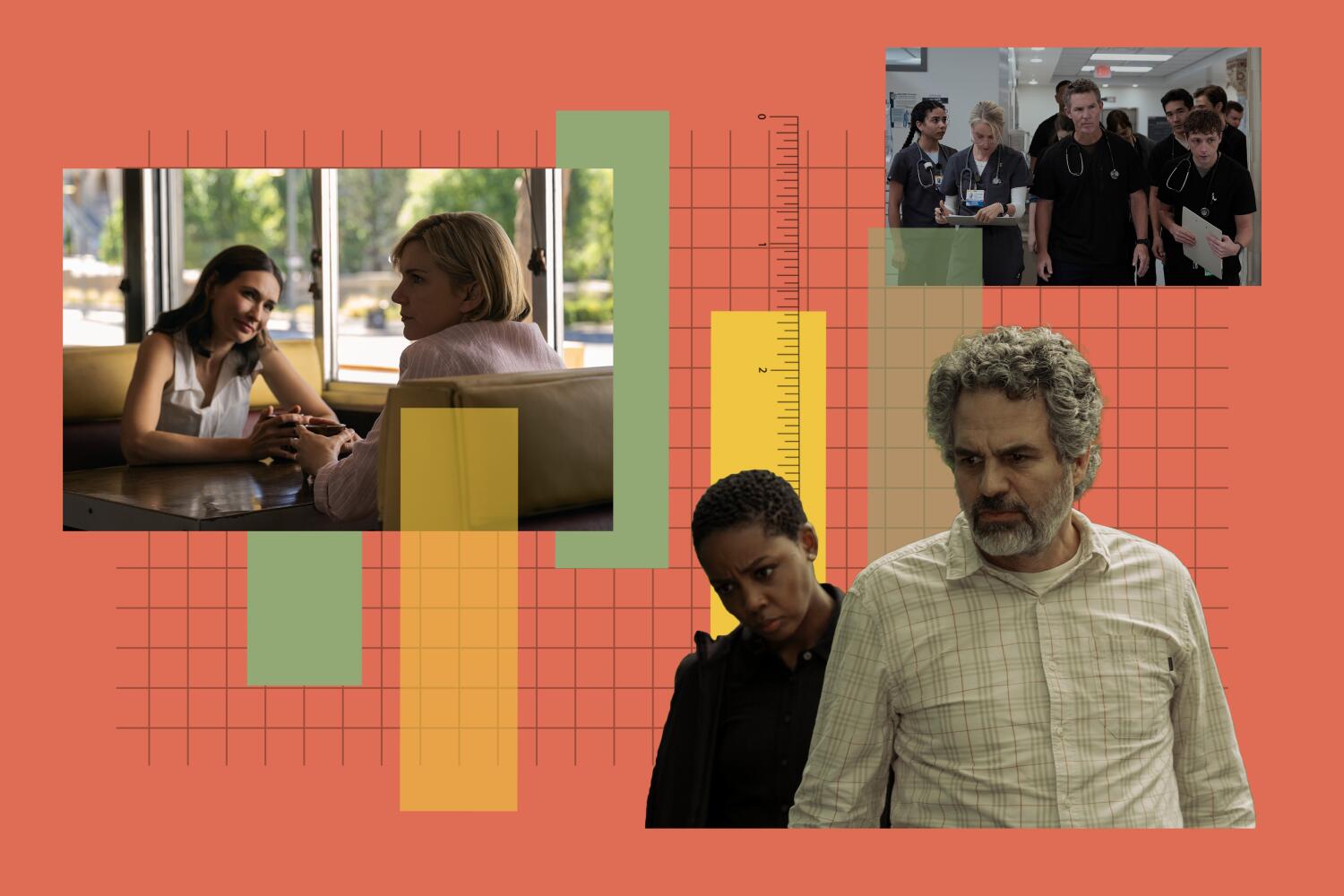
The blue light hits the back of your throat before it even registers in your eyes. It is 2:00 AM. Outside, the streetlights are doing that heavy, orange buzz that belongs exclusively to the dead hours of Tuesday morning. Inside, you are staring at a rectangular void on the wall, waiting for a fictional character to make a choice that will ruin their life.
We do this to ourselves. We pay to do it. Meanwhile, you can find other stories here: Why The Mandalorian and Grogu Movie Will Tell Us If Star Wars Big Screen Magic Is Gone For Good.
We call it the Golden Age of Television, or the Peak TV era, or whatever clinical term Wall Street analysts use to describe the fact that millions of grown adults are currently losing sleep over the fate of a corrupt media dynasty, an apocalyptic survivor, or a chef screaming about risotto. But when we talk about the race for the Best Drama Series Emmy, we are not actually talking about golden statuettes. We are talking about the mechanics of human obsession.
The industry likes to pretend the Emmys are a meritocracy of craft. They pass out heavy ballots to voters who are drowning in screeners, hoping that pure artistic genius will rise to the top. It is a beautiful lie. The truth is much messier, much more volatile, and infinitely more human. The Emmys are a thermometer stuck into the mouth of the culture. They do not tell us what the best show is; they tell us where it hurts. To see the bigger picture, check out the excellent article by Deadline.
The Weight of the Crown
To understand the current war for the crown, you have to understand the ghosts that haunt the Television Academy.
For years, the drama category was a monolithic block. You could predict the winners by looking at which show had the biggest budget, the most recognizable movie stars migrating to the small screen, and the most aggressive billboard campaign on Sunset Boulevard. Success bred success. A dominant series would lock its teeth into the trophy and refuse to let go for four or five seasons, turning the entire ceremony into a predictable, black-tie coronation.
But the tectonic plates shifted. The massive, multi-season epics that once dictated the terms of our cultural conversation have ended their runs. Their sets are struck. Their costumes are sitting in archival warehouses in Burbank.
What remains is a vacuum. And Hollywood hates a vacuum.
Consider the sheer panic of a network executive in May. The fiscal year is closing. The subscriber churn is real. The board of directors wants to see engagement metrics, but the creative talent wants to see prestige. In the offices overlooking the 405 freeway, the Emmy campaign is not a vanity project. It is a survival strategy. If you win the big one, your show is no longer just content. It becomes a destination. It becomes the reason someone hands over fifteen dollars a month instead of cancelling their subscription to buy groceries.
The Contenders in the Dark
The ballot this year reads like a map of our collective anxieties.
On one side, you have the historical weight of the period piece. These are the shows that use the past as a safe house to talk about the present. They feature meticulous production design—every fountain pen is period-accurate, every wool suit is tailored to the exact specifications of 1962. Voters love these shows because they look like work. You can see the money on the screen. When a show spends six million dollars an hour to recreate a forgotten street corner in London or New York, the Academy feels a deep, instinctual urge to reward the effort. It is the television equivalent of a firm handshake and a gold watch.
Then there is the quiet juggernaut of the contemporary thriller. These are the shows that do not rely on dragons or spaceships but on the terrifying intimacy of two people talking in a poorly lit kitchen. They are cheap to make by comparison, but they are expensive to watch emotionally. They catch fire through word of mouth.
Think about how you discovered your favorite drama. It probably was not an advertisement. It was a text message from a friend at noon on a Thursday that simply said: Are you watching this?
That question is the most powerful marketing tool in the history of entertainment. It creates a specific kind of social currency. To be left out of the loop is to be excluded from the watercooler conversation, even if that watercooler is now a fractured thread on a social media app. The Academy voters are not immune to this pressure. They live in the same world we do. They go to the same dinner parties. When they vote, they are often voting for the show that made them feel like part of the living, breathing world for an hour every Sunday night.
The Anatomy of a Voter
Let us look at a hypothetical voter named Sarah. She is a veteran film editor, fifty-four years old, living in Silver Lake. She has a stack of screener links sitting in her inbox that she has promised herself she will get to before the deadline. She is tired. She spent nine hours today cutting a commercial for a truck company that paid her mortgage but withered her soul.
When Sarah sits down to watch the nominees, she is not looking for a masterpiece. She is looking for an antidote to her own exhaustion.
If a show starts slow, if it asks her to read three pages of backstory before the first commercial break, she clicks away. The modern Emmy race is won or lost in the first ten minutes of an episode. The pacing must be relentless, yet it must feel effortless. It is a brutal standard. If the writer shows their hand, if the director gets too cute with the camera angles, Sarah notices. She is a professional. She can see the seams.
The shows that survive Sarah’s scrutiny are the ones that manage to trick her into forgetting she is an editor. They are the ones that make her lean forward, her wine glass resting forgotten on the coffee table, while her mind stops analyzing the edit points and starts bleeding for the people on the screen.
The Hidden Math of Prestige
There is an unspoken formula to these predictions that the charts and graphs always miss. It is the math of momentum.
A show can have the best reviews in the world, but if it peaked in November, it is dead by the time the ballots drop in the summer. The human brain has a notoriously short memory for art. We are creatures of the immediate. The series that drops its season finale right as the voting window opens has an unfair, beautiful advantage. It is fresh blood. The conversations are still raw. The tears have not fully dried.
Conversely, the long-gestating sophomore season faces a different kind of hill. The sophomore slump is not just a myth; it is a statistical reality. When a debut season captures the cultural imagination, the pressure on the follow-up is monstrous. The creators are no longer writing in a room by themselves; they are writing with the voices of five million armchair critics shouting through the walls. They try too hard. They expand the scope when they should have deepened the focus. They mistake a bigger budget for a bigger heart.
The frontrunners this year are those rare beasts that managed to dodge both traps. They are the series that treated their second or third seasons not as a victory lap, but as a reckoning.
The Silence After the Credits
We care about this because stories are the only way we figure out who we are.
When the lights go down and the theme music starts, we are looking for a mirror. We want to see our own greed, our own capacity for love, our own terrifying potential for cruelty played out by beautiful strangers under perfect lighting. We want to know that someone else feels the way we do when the house is quiet and the day is done.
The debate over who will take home the statue for Best Drama Series will rage on until the envelopes are torn open on stage. The pundits will analyze the voting blocks, the campaign expenditures, and the historical precedents. They will treat it like an election or a sporting event.
But the real victory happened months ago, in the dark, when a writer stared at a blank screen and figured out exactly how to break your heart, and you sat there in the blue light of your living room and let them do it.