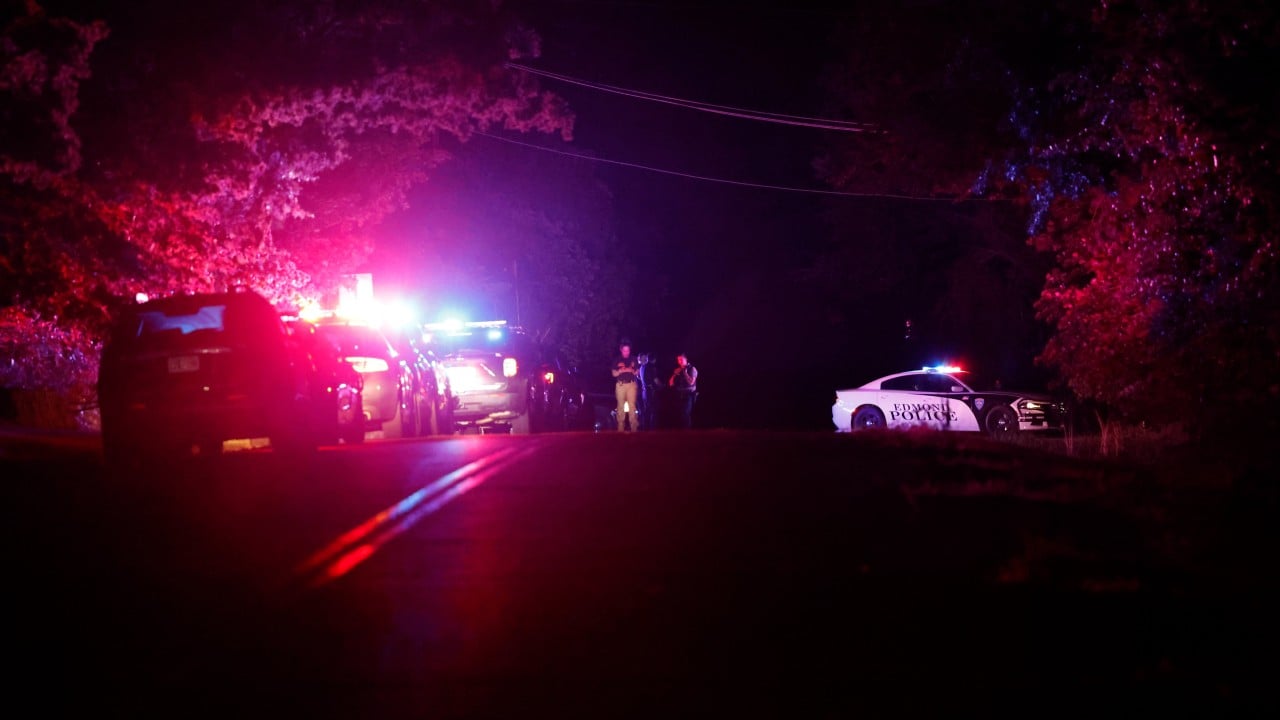
The flashing lights of emergency vehicles have become a permanent fixture of the American midnight, but the mass casualty event in Memphis this past April exposed a deeper, more systemic rot than the typical headlines suggest. When gunfire erupted at an unpermitted block party in Orange Mound, leaving two dead and at least six others wounded, the immediate response followed a weary script. Police blamed "reckless" behavior. Politicians offered prayers. The media counted the bodies. Yet, the real story lies in the spectacular failure of urban management and the predictable collapse of public safety in neighborhoods that the city has effectively abandoned to the whim of social media-driven chaos.
Thirteen people were initially reported as casualties, a number that fluctuated as victims scrambled to various hospitals in private vehicles, bypassing the formal emergency response system. This chaotic dispersal is a hallmark of modern urban violence. It signals a profound distrust in the state’s ability to protect or even process the aftermath of a tragedy. In Memphis, a city currently grappling with a violent crime rate that consistently outpaces national averages, the Orange Mound shooting was not a freak accident. It was the logical conclusion of a policy vacuum where "pop-up" events are allowed to swell into thousand-person gatherings without a single permit, security plan, or police presence until the first magazine is emptied.
The Anatomy of an Unregulated Powder Keg
Orange Mound is a neighborhood with deep historical significance as the first community in the United States built by and for African Americans. Today, however, it serves as a backdrop for a recurring nightmare. The block party at Carnes Park was advertised heavily on social media, drawing a crowd of roughly 300 people into a space with no crowd control and no professional oversight.
We see this pattern across the country. An "influencer" or a local promoter posts a flyer on Instagram. They promise a night of "vibes" and music. They do not hire off-duty officers. They do not coordinate with the Department of Parks and Neighborhoods. They simply rely on the hope that nothing goes wrong. When 300 people become 1,000, and the heat of a Memphis spring mixes with alcohol and the presence of high-capacity firearms, the margin for error disappears.
The investigators on the ground found hundreds of shell casings. This wasn't a single shooter with a grievance. This was a crossfire. The sheer volume of lead in the air suggests the presence of "switches"—small, illegal devices that convert semi-automatic handguns into fully automatic weapons. These devices have turned neighborhood disputes into military-grade engagements, and the local authorities are fundamentally ill-equipped to stop their spread.
Why the Permitting System is a Ghost Town
City officials often point to the permitting process as the solution, yet the process itself is a bureaucratic hurdle that the very people hosting these parties have no intention of clearing. A permit requires insurance. It requires a site map. Most importantly, it requires paying for a police presence. For a grassroots promoter in an underserved area, these costs are prohibitive.
This creates a dangerous "black market" for gatherings. Because the city makes it difficult and expensive to gather legally, people gather illegally. The result is a total lack of situational awareness for the Memphis Police Department (MPD). On the night of the shooting, the MPD was reactive rather than proactive. They were chasing the sound of the shots rather than managing the flow of the crowd.
- Financial Barriers: Permit fees and security costs can exceed $5,000 for a medium-sized event.
- Trust Deficit: Many community organizers fear that involving the police will lead to harassment rather than protection.
- Digital Speed: Social media allows a party to double in size in thirty minutes, far faster than city infrastructure can respond.
The reality is that Memphis, like many mid-sized American cities, is trying to police a 2026 reality with 1990s technology and 1970s staffing levels. The department is currently hundreds of officers short of its authorized strength. When you have a depleted force, you stop patrolling neighborhoods and start moving from one 911 call to the next. You lose the "intelligence" that comes from knowing which street corners are simmering.
The Hospital Disconnect and the Data Gap
One of the most telling aspects of the Orange Mound incident was the confusion over the number of victims. Initial reports cited 16, then 13, then 8. This isn't just poor reporting; it’s a symptom of a fragmented healthcare and law enforcement data loop.
When a shooting occurs, the "Golden Hour" is the window in which medical intervention is most likely to prevent death. In Memphis, victims often refuse to wait for an ambulance. They are thrown into the back of private cars and driven to Regional One Health or other local trauma centers. While this gets them to a surgeon quickly, it creates a fog of war for the police. They arrive at a "cold" scene with blood on the pavement but no victims to interview.
This creates a massive hurdle for the "how" of the investigation. Without immediate victim statements, shooters vanish into the night. The "no snitching" culture is often blamed, but the truth is simpler: if the state couldn't protect you at the park, why would you trust them to protect you after you give a statement?
The Fallacy of the "Lone Act of Violence"
The political rhetoric following the shooting focused on "senseless violence." This is a convenient phrase because it suggests that the event was unpredictable and devoid of logic. It wasn't.
The violence in Memphis is predictable. It follows the geography of poverty and the timeline of systemic disinvestment. If you look at a map of the city’s most violent sectors and overlay it with a map of food deserts and predatory lending offices, the lines match perfectly. The shooting at the party was a localized eruption of a high-pressure system that has been building for decades.
The weapons used are a major factor. The proliferation of "ghost guns" and the ease of obtaining Glock switches have changed the lethality of street-level conflict. A person with a 15-round magazine is a threat; a person with a 50-round drum and an auto-sear is a catastrophe. During the Orange Mound shooting, the sheer density of fire meant that bystanders stood almost no chance of escaping unscathed. This wasn't targeted; it was atmospheric.
Rebuilding the Urban Social Contract
If the goal is to prevent the next mass shooting at a block party, the solution isn't just "more police." It is the restoration of the social contract. This means the city must find a way to facilitate safe gatherings without the crushing weight of bureaucratic fees.
- Community-Led Security: Investing in non-police violence interrupters who have the street soul to de-escalate tensions before they turn into gunfights.
- Streamlined Permitting: Creating a "Community Event" tier for permits that provides city-funded security for historic neighborhoods like Orange Mound.
- Real-Time Surveillance and Response: Utilizing integrated camera networks to identify large unpermitted gatherings in real-time, allowing for a "soft" police intervention—dispersing the crowd before the conflict starts.
The Memphis shooting is a warning to every other American city that thinks it can ignore its periphery. When you allow neighborhoods to become autonomous zones of neglect, the violence will eventually spill over the borders and onto the evening news. The people of Orange Mound deserve more than a crime scene tape and a press conference. They deserve a city that views their celebrations as worth protecting, rather than just another liability to be managed after the fact.
The investigation into the shooters continues, but the investigation into the city's failures is already complete. The evidence is written in the shell casings left in the grass of Carnes Park. Until the city addresses the fundamental lack of oversight for mass gatherings and the desperate need for specialized gun-violence task forces, the music will keep stopping, and the hospitals will keep filling up.
Stop looking for a single gunman to blame for the decline of urban safety. Start looking at the empty desks in the police precincts and the lack of funding for community centers. The tragedy in Memphis was an act of omission by the state as much as it was an act of commission by the shooters.