The fluorescent lights in the county clerk’s office hummed like a trapped cicada. Outside, the Mississippi humidity hung so thick you could practically chew it, smelling of damp earth, diesel exhaust from Highway 61, and late-autumn woodsmoke.
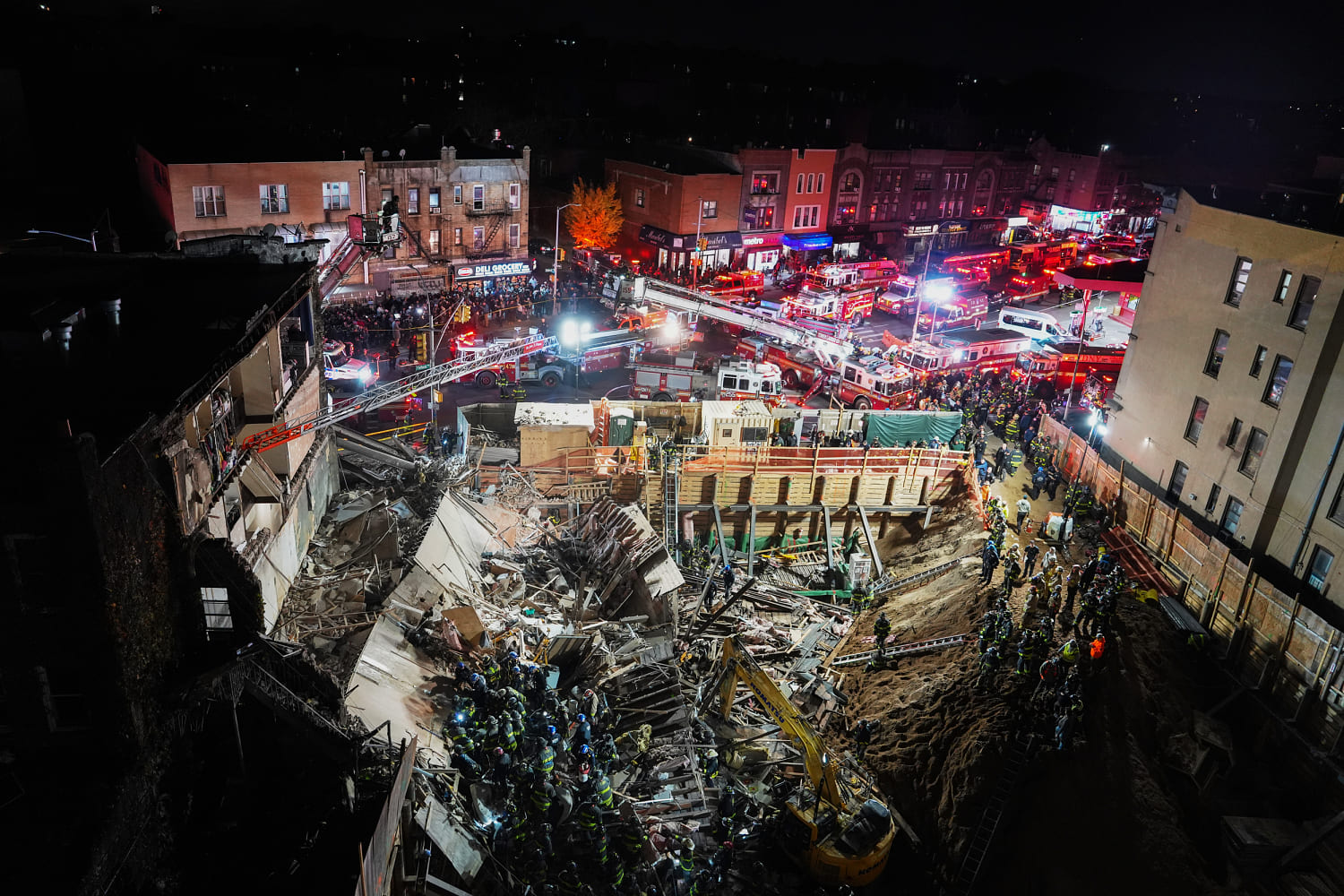
Inside, Evelyn stood with her knuckles pressed white against the laminate counter. She was sixty-eight years old, a retired school cafeteria manager whose knees ached every time the barometric pressure dropped. Behind her, three dozen people waited in a line that snaked past the vending machines and out the glass double doors into the parking lot. Nobody was checking their phones. Nobody was complaining about the wait. Meanwhile, you can read similar events here: The Dust That Never Settles When Brooklyn Falls.
They were watching the precinct tally sheet taped to the wall.
For decades, conventional political wisdom treated Mississippi’s federal Senate races as foregone conclusions—mathematical certainties etched in stone before the first yard sign was ever hammered into the red clay. Analysts in Washington looked at voter registration spreadsheets, ran their regressions, and moved on to swing states with flashier demographics. They saw a monolith. To understand the complete picture, check out the recent article by The Guardian.
They missed Evelyn.
When the Associated Press finally called the Mississippi Senate race for the Democratic challenger just past midnight, the cable news anchors stumbled over their own teleprompters. To understand how a state that hadn't sent a Democrat to the U.S. Senate since John Stennis retired in 1989 suddenly flipped its script, you have to stop looking at electoral maps from thirty thousand feet and get down into the gravel where people actually live.
The Architecture of an Assumption
Politics, at its core, is a habit. Communities vote the way they do for the same reason they attend the same churches, shop at the same hardware stores, and root for the same college football teams on crisp Saturday afternoons. Identity hardens over generations until it feels less like a choice and more like inheritance.
For more than thirty years, that inheritance in Mississippi belonged exclusively to the Republican Party. Following the great political realignment of the late twentieth century, white conservative voters consolidated into a reliable majority, while Black voters—who make up roughly thirty-eight percent of the state’s population, the highest percentage of any state in the nation—formed the bedrock of a Democratic minority that consistently fell short at the statewide level.
Think of the state’s electorate like an old wooden dam holding back a massive reservoir. Year after year, the water level rose slightly, pressing against the timber, yet the structure held. Pundits measured the thickness of the wood and declared it impenetrable. What they failed to measure was the slow, quiet erosion happening underneath the waterline.
Consider a hypothetical composite of the voter who broke that dam—let’s call him Marcus, a thirty-four-year-old diesel mechanic living outside Hattiesburg. Marcus isn't a political junkie. He doesn't watch cable news panels, and he couldn't name half the members of the Senate Judiciary Committee if you offered him a new set of snap-on wrenches. Four years ago, Marcus stayed home on Election Day because, as he put it over coffee at a local diner, "Neither side fixes the potholes on my road, and both sides talk like they’re reading off a script written in New York."
This year, Marcus voted. Not out of sudden ideological conversion, but because his sister’s rural hospital thirty miles away shut down its labor and delivery ward, forcing her to drive nearly ninety minutes down a two-lane highway while having contractions.
When policy stops being an abstract debate on television and starts dictating whether your niece is born in a hospital bed or the backseat of a Honda Civic, political habits fracture.
Invisible Stakes in the Pine Belt
If you listen to national political coverage, you would think Americans vote exclusively on culture-war flashpoints and viral soundbites. Spend forty-eight hours in a diner in Tupelo or a barbershop in Jackson, and you realize how utterly disconnected that narrative is from kitchen-table reality.
The real story of this Senate race wasn't written in press releases. It was written in hospital closures, broadband dead zones, and young people packing U-Hauls for Atlanta, Dallas, and Nashville because the local economy couldn't offer them a future worth staying for.
Mississippi has long struggled with some of the highest poverty rates and lowest median household incomes in the country, according to U.S. Census Bureau data. Rural healthcare infrastructure, in particular, has teetered on the brink of collapse for a decade, with dozens of rural hospitals operating at a financial loss and facing imminent closure.
For years, voters treated these struggles like bad weather—unfortunate, painful, and entirely beyond anyone’s control. You don't blame the mayor when a hurricane hits the Gulf Coast, and you don't blame your senator when the local factory locks its gates.
The Democratic campaign succeeded because it systematically dismantled that fatalism. Instead of importing national talking points crafted by coastal consultants, the candidate spent eighteen months holding town halls in gymnasiums, VFW halls, and church basements across all eighty-two counties. The message was stripped of partisan jargon and reduced to a simple, uncomfortable question: Look at your county today compared to ten years ago—are you getting what you paid for?
That question landed differently than a traditional partisan attack. It didn't ask lifelong conservatives to betray their values; it asked them to act like shrewd consumers evaluating a contractor who hadn't finished the job.
The Mathematics of Showing Up
Of course, persuasion alone doesn't win a statewide election in the Deep South. Turnout does.
Political strategists often talk about "expanding the electorate" as if voters were widgets waiting to be activated by a clever digital ad buy. Anyone who has actually knocked on doors in July heat knows that theory is nonsense. People don't open their screen doors for algorithms. They open them for neighbors.
Across the Mississippi Delta—from Tunica down through Clarksdale, Greenville, and Vicksburg—a quiet, relentless organizing infrastructure had been building for years, largely ignored by national media outlets chasing louder stories elsewhere. Local civic groups, church networks, and community organizers focused on the unglamorous mechanics of democracy: fixing registration errors, arranging rides to early voting locations, and explaining down-ballot races in plain English.
Let’s look at the numbers without the spin. In previous midterm and off-year cycles, stark turnout gaps between predominantly white suburban counties and predominantly Black Delta counties routinely handed Republicans comfortable double-digit margins. Even when Democratic candidates generated enthusiasm in urban centers like Hinds County, low participation in rural counties mathematically locked them out of contention.
This time, the turnout curve bent.
In precincts across the Delta and the Golden Triangle, participation surged past historical baselines, matching—and in several counties exceeding—presidential-year turnout levels. Simultaneously, in fast-growing suburban pockets like DeSoto County south of Memphis and Madison County north of Jackson, younger, more diverse commuters shifted just enough points away from the incumbent to erase the traditional GOP buffer.
It wasn't a landslide. It was a tightening vise.
Every percentage point gained in rural healthcare-starved counties, combined with a five-point uptick in Delta turnout and a three-point erosion in suburban margins, converged on Tuesday night like tributaries feeding a flooded river.
What Washington Misunderstands About Southern Voters
There is a particular brand of condescension reserved for Southern states in national political discourse. When a Deep South state votes reliably red, commentators write it off as backwards or immovable. When it suddenly elects a Democrat, those same commentators rush to declare a permanent ideological revolution.
Both reactions miss the truth.
Mississippi hasn't suddenly transformed into Massachusetts. Its voters remain deeply rooted in faith, family, personal responsibility, and skepticism toward federal overreach. To claim otherwise would be dishonest, and frankly, insulting to the people who cast those ballots.
What changed wasn't the soul of Mississippi; it was the willingness of voters to hold incumbents accountable when loyalty ceased to deliver tangible results.
Think of a marriage where one partner stops listening because they assume the other will never leave. For decades, national Republicans took Mississippi’s six electoral votes and two Senate seats for granted, pouring campaign cash into Ohio, Pennsylvania, and Georgia while treating the Magnolia State like an ATM for donor fundraisers. Meanwhile, national Democrats often treated the state like a lost cause, starving local candidates of resources until the final weeks of October.
When both parties treat your home like a foregone conclusion, neglect becomes bipartisan.
The winning Democratic campaign exploited that vacuum by running a fiercely localized race—talking about agricultural subsidies for soybean and catfish farmers, federal infrastructure dollars for crumbling bridges, maternal mortality rates, and technical college funding. By refusing to take the bait on nationalized culture-war distractions, the candidate forced the incumbent to defend an actual legislative record in front of voters who were paying closer attention than ever before.
The Weight of the Morning After
Winning an election is an adrenaline rush; governing is a slow grind through concrete.
The morning after the confetti is swept off the ballroom floor, the newly elected senator faces a sobering reality. One Senate seat doesn't magically reopen a shuttered emergency room in Leflore County, nor does it instantly pave every washed-out county road or bring high-speed fiber internet to every farmhouse.
Furthermore, representing a deeply divided state in a hyper-polarized Senate means walking a razor's edge every single day. Vote too closely with national party leadership, and those moderate suburbanites and frustrated rural independents who took a chance on change will feel betrayed. Break ranks too often, and the core base that powered the historic turnout surge will feel abandoned.
That tension is real, and pretending otherwise would be naive. Voters who broke a thirty-seven-year streak didn't do it to watch another politician disappear into the Washington echo chamber. Their patience will be shorter, their scrutiny sharper, and their expectations higher than any incumbent has faced in modern state history.
Back in that county clerk’s office near Highway 61, the room finally emptied out around one in the morning. Evelyn folded her paper copy of the local precinct results neatly into thirds and tucked it inside her purse alongside her reading glasses and a packet of peppermint candies.
She pushed open the heavy glass door and stepped out into the cool night air. Across the street, the neon sign of an all-night gas station buzzed softly against the dark treeline, illuminating an empty stretch of two-lane asphalt that looked exactly the same as it had twenty-four hours earlier—except that for the first time in her adult life, Evelyn walked to her car knowing somebody in Washington finally had to ask for her permission before taking her vote for granted.