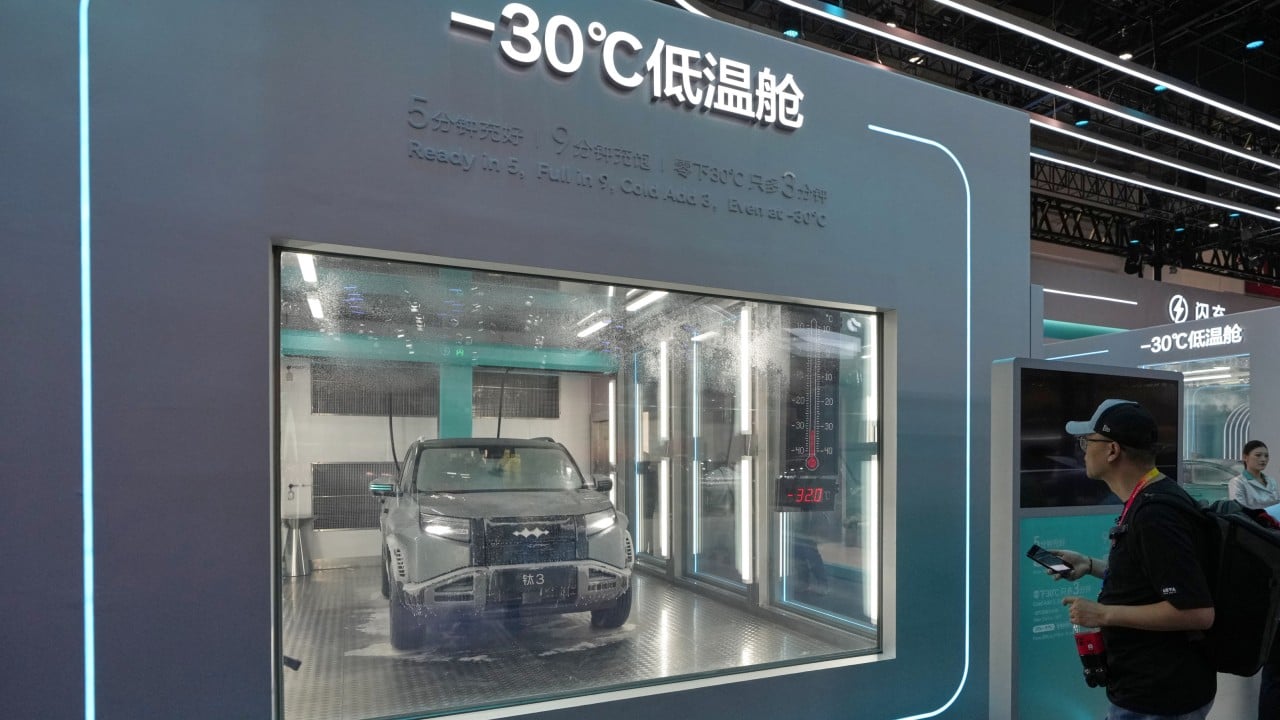
The biggest lie in the automotive world right now isn't about range—it's about time. For years, we've been told that "fast charging" means sitting in a Walmart parking lot for 45 minutes while your car sips electrons like a lukewarm latte. But if you look at what's happening in China right now, that era is officially dead. We’re moving past the "range anxiety" phase and entering the "patience anxiety" phase, and China’s battery giants are winning.
The goal isn't just to match the speed of a gas pump anymore. It's to beat it. I'm talking about 10% to 80% in the time it takes to use a restroom and check your emails. While the West is still debating charging port standards, companies like CATL, BYD, and GAC are shipping tech that makes a Tesla Supercharger look like a dial-up modem.
The Death of the 30 Minute Wait
Forget everything you know about 400V or even standard 800V systems. The new benchmark is "C-rating." In simple terms, a 1C battery takes an hour to charge. A 6C battery? That’s 10 minutes.
We’re seeing a massive shift toward 5C and 6C charging rates in mass-production vehicles. Take the Li Auto Mega. It uses a customized CATL Qilin battery that peaks at 520kW. It can add 500km of range in exactly 10 minutes. That isn't a lab experiment; it's a minivan you can buy today.
Then there’s the CATL Shenxing Plus. Just last week at the Beijing Auto Show, CATL showed off their third-generation Shenxing LFP (Lithium Iron Phosphate) battery. The numbers are staggering:
- 10% to 80% in 3 minutes and 44 seconds.
- 10% to 90% in 6 minutes and 27 seconds.
Think about that. In less than seven minutes, you have a nearly full tank. That is faster than most people can fill a gas truck and pay the cashier. This isn't just about premium NCM (Nickel Cobalt Manganese) chemistry either. LFP, which used to be the "budget" choice, is now hitting these speeds.
Liquid Cooling and the Heat Problem
You can't just shove 600kW into a battery without it becoming a very expensive space heater. The secret isn't just the chemistry; it's the plumbing.
Chinese manufacturers have moved to "cell-to-chassis" (CTC) designs with integrated liquid cooling plates that cover more surface area than ever before. For instance, Huawei recently rolled out a 1,500kW liquid-cooled charging system. Yes, 1.5 megawatts. For context, that’s enough power to run a small skyscraper.
The charging cables are liquid-cooled too. If you’ve ever used a standard 350kW charger in the US, the cable is heavy, stiff, and gets hot. Huawei’s new 800A terminals use thin, flexible, liquid-cooled leads that a child could carry.
Why This Matters for Longevity
The common "expert" take is that ultra-fast charging kills batteries. Honestly, that’s becoming an outdated myth. CATL’s latest data shows that even after 1,000 ultra-fast charging cycles, these new batteries maintain a State of Health (SoH) above 90%. If you only fast-charge on road trips, the battery will likely outlast the car's frame.
The Infrastructure Gap
There’s a catch, though. Having a 6C battery is useless if your charger only puts out 50kW. China is currently outbuilding the rest of the world in "Ultra-Fast Charging" (UFC) hubs.
By the end of 2025, Li Auto alone plans to have 4,000 supercharging stations across China’s highway network. These aren't just chargers; they’re mini-power plants with huge battery storage buffers to prevent the local grid from melting when three cars plug in at once.
Meanwhile, GAC Aion is deploying "A480" stations that output 480kW. If you plug a GAC V 6C into one of these, you’re looking at a 0-80% charge in 8 minutes. We’re seeing a massive "solar-storage-charging" synergy where stations use their own giant batteries to "peak shave," taking pressure off the grid while delivering consistent 600kW+ bursts to cars.
What's Next for the Rest of Us
If you're in North America or Europe, you’re probably feeling a bit left behind. Most of our "fast" infrastructure is still stuck at 150kW or 350kW. But the tech is coming. Whether through partnerships or sheer market pressure, the 10-minute charge is the new baseline.
If you're shopping for an EV today, don't just look at the total range. Look at the charging curve and the C-rate. A car with 300 miles of range that charges in 10 minutes is infinitely more useful than a car with 500 miles of range that takes an hour to replenish.
Stop worrying about finding the "perfect" long-range battery. The future isn't about carrying a massive, heavy battery everywhere you go. It’s about being able to fill a smaller, more efficient battery in the time it takes to buy a Snickers bar. Check your local infrastructure plans and look for "800V architecture" in your next vehicle specs—that's the minimum entry fee for the speed revolution.