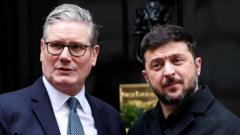
Volodymyr Zelenskyy isn't just in London to shake hands and pose for the cameras at 10 Downing Street. He’s here because the war has entered a terrifying new phase where cheap tech is beating expensive hardware. Today’s meeting with Keir Starmer to sign a fresh defence declaration isn't a "business as usual" diplomatic visit. It’s a desperate, calculated move to stop Vladimir Putin from turning the chaos in the Middle East into a strategic win for Russia.
If you’ve been following the news, you know the world’s eyes have drifted toward the conflict between the US, Israel, and Iran. That’s exactly what the Kremlin wants. While the West is distracted by tankers in the Gulf, Zelenskyy is here to remind everyone that the drones terrorizing shipping lanes are the same ones killing people in Zaporizhzhia.
The drone gap and why this deal matters
We’ve seen the shift happen in real-time. Modern warfare isn't just about heavy tanks anymore. It’s about 500-pound drones doing the work of multi-million dollar missiles. The new pact between the UK and Ukraine is designed to bridge the gap between Ukrainian battlefield ingenuity and British industrial muscle.
Here is the reality. Ukraine has become the world’s largest laboratory for electronic warfare. They’re inventing things in muddy trenches that NATO scientists haven't even dreamed of yet. This agreement basically formalizes a trade. Ukraine gives the UK the data and "know-how" from fighting off Iranian-made drones, and the UK provides the cash and factories to scale up production.
The AI Center of Excellence in Kyiv
One of the most interesting parts of this deal is the £500,000 being poured into a new AI Center of Excellence based right in Kyiv. It sounds like a small amount of money for a war, but in the world of software and algorithms, it goes a long way.
The goal? AI-driven targeting.
Russia has been using heavy electromagnetic interference to jam Ukrainian drones. To get around this, you need drones that don’t rely on a constant GPS signal or a human pilot sitting miles away. You need "smart" drones that can recognize a T-90 tank on their own and stay on course even when the signal is cut. This center is about making sure Ukraine stays one step ahead in the "cat and mouse" game of electronic warfare.
Addressing the Putin windfall
Starmer was very direct about the timing of this visit. He’s worried about a "windfall for Putin." What does that mean?
Since the US and Israel began strikes on Iran, oil prices have spiked. Because the US recently loosened some restrictions on Russian oil to keep global prices from hitting the ceiling, Russia has been raking in billions. Data suggests the Kremlin made nearly €6 billion from fossil fuels in just the last two weeks.
Zelenskyy’s frustration is palpable. He’s watched as Washington eased up on Moscow to save people money at the gas pump, while his cities are still being hammered. This visit is about securing a long-term commitment that doesn't depend on the whims of the US election cycle or fluctuating oil prices.
Moving beyond the 100 year partnership
Last year, the two leaders signed a 100-year partnership. It was a bold headline, but critics called it symbolic fluff. Today’s pact is the "teeth" that the original agreement lacked.
Key pillars of the new agreement
- Joint Production: We aren't just sending kits anymore. The goal is joint production lines where British firms like BAE Systems work directly with Ukrainian teams.
- Third-Country Cooperation: The pact explicitly mentions working with third countries. This is likely a nod to places like Poland or the Baltic states, creating a "Fortress Europe" supply chain that bypasses the gridlock in the US Congress.
- The Octopus Drone: Production is ramping up. We’re looking at 1,000 "Octopus" interceptor drones per month starting soon. These are specifically designed to hunt down and kill Russian reconnaissance drones.
What this means for you
You might wonder why a drone pact in London affects your life. It’s about global security architecture. If Ukraine loses the ability to innovate, Russia doesn't just stop at the border. The tactics being perfected in Ukraine—like using AI to bypass jamming—will be used against Western interests everywhere.
Starmer and Zelenskyy are betting that by integrating their defence industries now, they can make 2026 the year the war ends. It’s a tall order. But with the "Axis of Aggression" between Russia and Iran tightening, sitting back isn't an option.
Your next steps to stay informed
- Monitor the "Coalition of the Willing" updates: Watch for the trilateral meeting with NATO Secretary General Mark Rutte tomorrow. This will reveal if other European nations are ready to match the UK's commitment.
- Track the Abramovich deadline: See if the UK government actually takes legal action against Roman Abramovich over the £2.5 billion from the Chelsea FC sale. That money could be a massive game-changer for Ukrainian reconstruction.
- Watch the energy markets: If the US-Israel-Iran conflict escalates, keep an eye on whether the UK pushes for tighter sanctions on Russian oil despite the price pressure.
The signed pact is a start, but the real test is how fast those "AI-driven" drones actually hit the front lines.