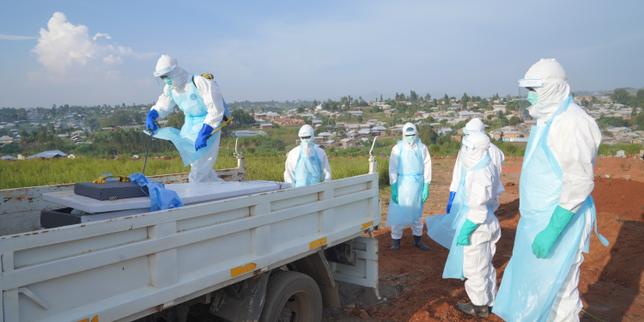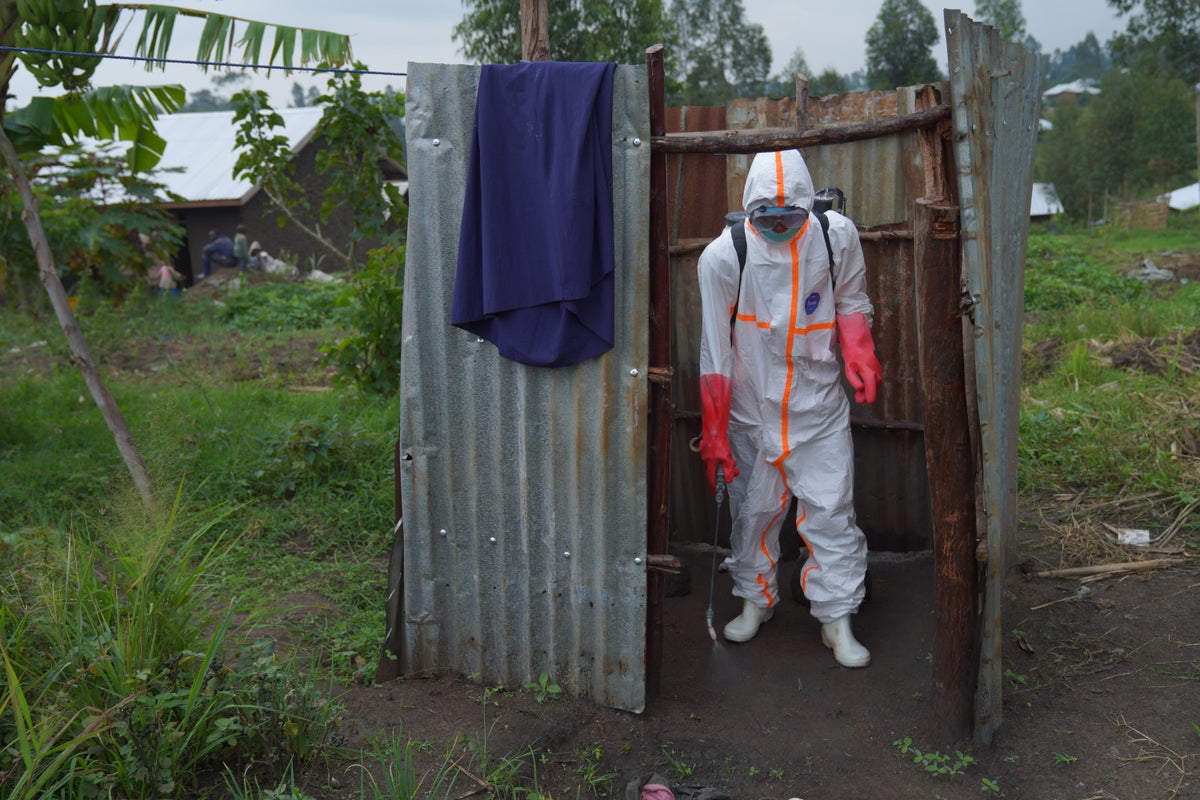
The numbers coming out of central Africa right now are terrifying. The current Ebola outbreak in the Democratic Republic of Congo has officially shattered previous grim milestones, climbing past 2,325 deaths and 4,945 confirmed cases.
If you are wondering how an epidemic can spiral this fast, you have to look at the ground reality. This crisis has officially surpassed the infamous 2018-2020 Kivu outbreak to become the deadliest in the country's history. It is moving at a blinding pace. Public health officials note it is killing roughly one person every thirty minutes.
Why This Strain Is Causing Pure Chaos
Most people remember the 2014-2016 West African crisis or Congo's own recent struggles, assuming medical teams have a standard playbook ready. They do not.
This specific surge is driven by the Bundibugyo species of Ebola. Unlike other strains that benefit from established stockpiles of experimental vaccines and therapeutics, the Bundibugyo variant currently lacks approved, widely available vaccines or targeted treatments. Medical workers are basically fighting a blindfolded battle against a hemorrhagic fever that thrives on confusion and infrastructure gaps.
The case fatality ratio is hovering around 46 to 47 percent. Nearly one out of every two people who test positive ends up dead. Experts point out this spike doesn't mean the virus mutated into a biological monster overnight. Instead, it exposes a brutal truth: surveillance systems are buckling, testing is delayed, and sick people simply cannot reach care in time.
The Ground Realities Driving the Spread
Disaster management on paper looks clean. On the ground in Congo's northeastern provinces, it is messy, dangerous, and often hostile.
Ituri remains the epicenter, accounting for the vast majority of infections. But the virus has already leaked into six different provinces. Think about the geography. You are dealing with a massive country spanning over 100 million people, where state presence is thin, roads are practically non-existent during rainy seasons, and armed militias have carved out territory for decades.
When response teams roll into a village, they don't always find open arms. Decades of institutional neglect breed deep community mistrust. If locals view government health workers with suspicion, they hide sick family members. Traditional burial practices continue in secret. By the time a case is officially flagged, the transmission chain has already branched out into local markets, churches, and transport hubs.
World Health Organization leaders have warned that the trajectory looks dangerously similar to the early days of the historic West African epidemic. Yet, international funding often arrives late, treating these outbreaks like sudden surprises rather than predictable recurring threats in a fragile ecosystem.
What Needs to Happen Right Now
Stopping an acceleration of this scale requires ditching slow bureaucratic frameworks.
First, community engagement must take precedence over top-down military-style enforcement. If local leaders aren't driving the messaging, containment protocols fail. People need safe, trusted alternatives to traditional practices without feeling hunted by health authorities.
Second, front-line responders need immediate logistical backing. Hand-washing buckets outside shops in Bunia won't stop an airborne-adjacent fluid crisis if treatment centers lack basic personal protective equipment and rapid diagnostic tools.
The international community cannot afford to watch from a distance while this virus exploits every single fracture in Congo's health network. The window to reverse this curve is closing fast.