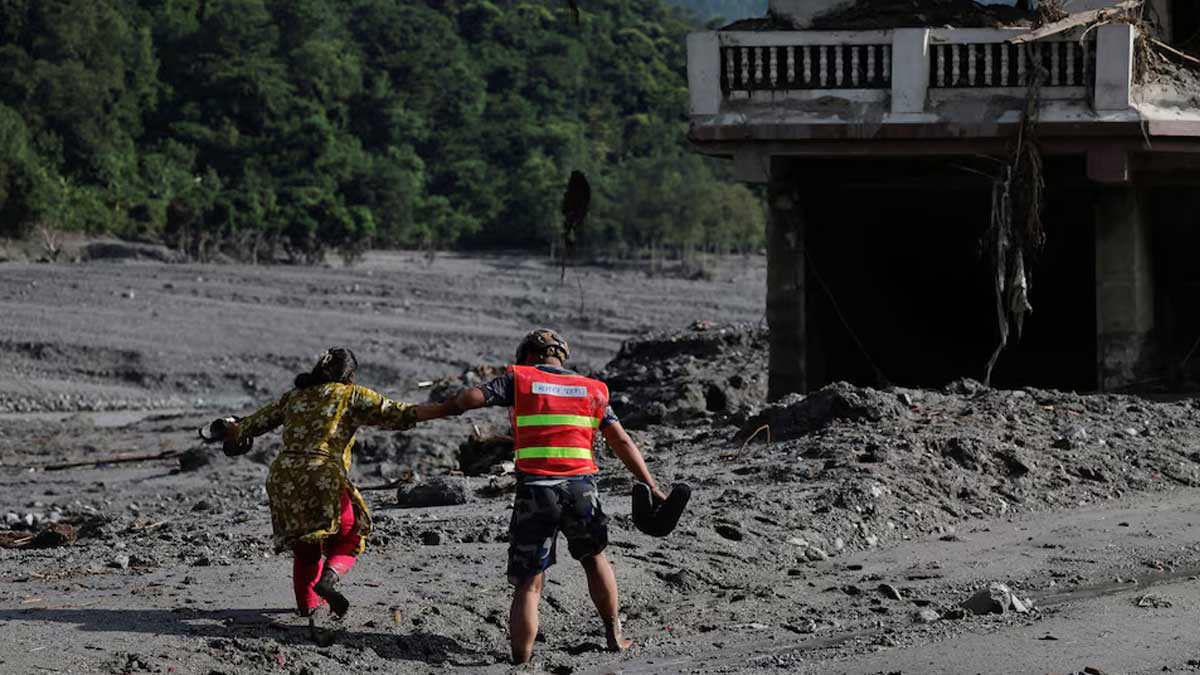
The death toll from the monsoon disasters that hammered Nepal has climbed to a devastating 469, according to official police records. Entire neighborhoods in the Kathmandu Valley and surrounding districts vanished under torrents of mud and swollen river water. Emergency services overwhelmed by the sheer scale of the disaster struggled to reach cut-off mountain passes for days. Yet calling this tragedy a purely natural event is a dangerous misdirection. Mother Nature supplied the rain, but human ambition built the trap.
For decades, rapid urbanization across the Himalayan foothills has ignored basic hydrological realities. Wetlands were paved over. Floodplains became high-density housing blocks. Natural drainage channels were choked with concrete and construction debris. When the monsoon hit with unprecedented fury, the water had nowhere to go.
The Anatomy of a Man-Made Disaster
Water remembers where it belongs. When developers carve roads into fragile mountain slopes and build settlements directly over ancient riverbeds, they invite catastrophe. The Kathmandu Valley serves as a textbook example of this ecological amnesia. Once a seasonal lake bed with porous soils and extensive marshlands, the valley now features a dense grid of asphalt and brick.
During the height of the monsoon, rivers like the Bagmati and the Bishnumofu swelled beyond their historical boundaries. They did not just flood; they reclaimed their historical footprints.
- Unregulated construction narrows river channels by up to 50 percent in urban centers.
- Deforestation in the upper catchments strips hillsides of the root systems holding topsoil in place.
- Poor solid waste management clogs culverts and storm drains before the heavy rains even peak.
Local authorities knew the risks. Year after year, warning reports sat on government desks. Zoning laws existed strictly on paper, routinely bypassed through political patronage and systemic corruption. Builders cut corners because enforcement was virtually non-existent. The result is a housing market built on shifting silt and deferred maintenance, paid for in human lives.
Climate Shocks Meet Institutional Inertia
Global weather patterns are shifting dramatically. Monsoon cycles have become erratic, characterized by prolonged dry spells followed by intense, concentrated downpours. A month's worth of rain now drops in a matter of hours. Traditional infrastructure cannot cope with these extreme meteorological parameters.
Engineers designed the country's main drainage systems decades ago for entirely different weather volumes. Upgrading this infrastructure requires billions of dollars, funds that frequently vanish into administrative inefficiency or get diverted to short-term political vanity projects.
Meanwhile, rural-to-urban migration accelerates. People fleeing impoverished mountain villages crowd into hazard-prone river corridors simply because land there is cheaper or available. They trade economic survival for mortal peril.
Emergency response mechanisms fare little better. Search and rescue operations relied heavily on underfunded local police and poorly equipped volunteers during the worst of the flooding. Helicopters grounded by severe weather could not airlift the injured from isolated hamlets. Satellite communication links failed. The state demonstrated that it is entirely reactive, scrambling to count the dead while possessing zero capacity to preempt the danger.
The Cost of Inaction
Rebuilding the affected areas using the exact same blueprints guarantees future disasters. If roads are simply repaved and houses rebuilt on the exact same vulnerable floodplains, the next monsoon will deliver an identical body count.
True recovery demands an aggressive, politically painful overhaul of land-use policy. Authorities must enforce strict setback zones along all major waterways, tearing down illegal structures regardless of who owns them. Watershed management must be prioritized over concrete expansion.
The hills of Nepal will continue to face brutal monsoon seasons. The rain will return next year, and the year after that. Whether the death toll remains a tragic anomaly or becomes an annual baseline depends entirely on whether the state stops blaming the weather and starts confronting its own planning failures.