The rain over Hong Kong does not merely fall. It descends with a heavy, deliberate persistence, turning the air into a shimmering gray soup and the narrow alleyways into rushing creeks. On this particular morning, the humidity clings to the skin like a warm, wet wool blanket. It is the kind of weather that makes human shopkeepers pull down their metal shutters, brew a pot of dark milk tea, and wait out the deluge behind steamy glass.
Machines do not drink milk tea. They do not wait. They are engineered to operate in the sterile, predictable vacuum of a spreadsheet, where variables are controlled and the weather is always an agreeable seventy-two degrees.
Until the power flickers.
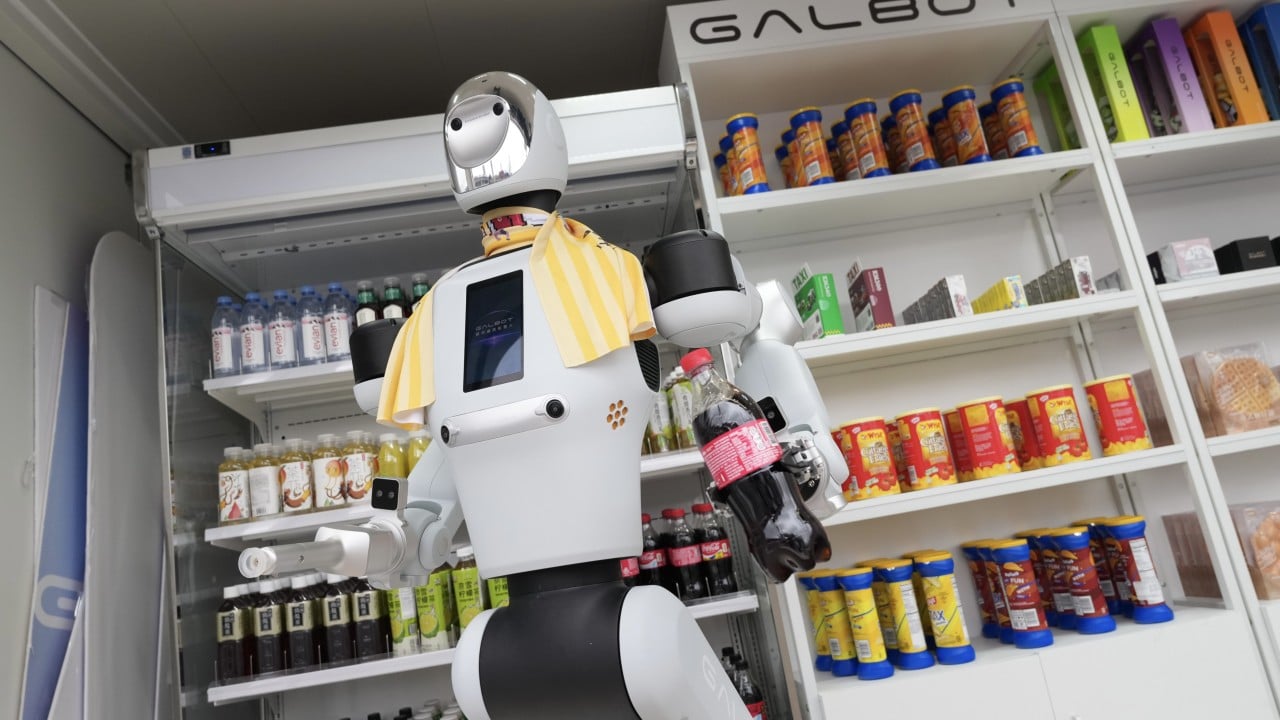
Step inside one of the city's newly minted robot convenience stores on its grand opening day, and you will find an exercise in quiet ambition. Shelves are stacked with precision. Robotic arms hum softly behind thick sheets of Plexiglas, waiting to slide horizontally, grip a can of sparkling water with exact pneumatic pressure, and drop it into a delivery chute. There are no cashiers here. No tired teenagers leaning against the counter scrolling through their phones. No human error in counting back change. It is pure, unadulterated efficiency.
Or at least, it is supposed to be.
Outside, the storm drains struggle to swallow the runoff. Inside the automated storefront, the Wi-Fi router blinks a frantic, rhythmic amber. The signal drops. Just for a fraction of a second. But in the architecture of automated retail, a fraction of a second is an eternity.
Imagine, for a moment, a hypothetical commuter named Mei. Mei is late. She is sprinting from the MTR station, her umbrella turned inside out by a sudden gust of wind, desperate for a cold bottle of green tea before her morning meeting. She reaches the sleek, futuristic storefront of the automated shop. She taps her Octopus card against the sensor. The screen flashes green. She selects her drink.
And then, nothing happens.
The robotic arm twitches. It moves two inches to the left, hesitates, and freezes mid-air. On the digital display, a tiny, glowing error code appears: Connection Timeout.
Mei stares at the glass. The machine stares back with a blank, unblinking monitor. There is no manager to apologize, no human to open the access hatch manually and hand over the bottle with a sheepish smile. There is only the hum of cooling fans and the relentless drumming of the rain outside.
This is the hidden friction of our automated future. We design systems for the ideal day—the dry day, the high-bandwidth day, the day when the infrastructure holds firm under the weight of human expectation. But technology does not exist in a vacuum. It exists in Hong Kong. A city of concrete canyons, torrential downpours, subterranean blind spots, and unpredictable power grids.
When the first day of these robot stores collided with a heavy rainstorm and sudden network outages, it wasn't just a technical glitch. It was a collision between absolute engineering and messy reality. The cold facts reported across local headlines were simple: connectivity dropped, automated transactions failed, customers were left standing in puddles. But the human story is about our collective rush toward a future we are not yet entirely built to inhabit.
We crave convenience. We want our transactions frictionless, instantaneous, and stripped of awkward human interaction. We want to tap a screen, grab our goods, and vanish. But in stripping away the human element, we also strip away adaptability. A human clerk facing a network outage will grab a calculator, take cash, or simply give you the bottle and tell you to pay tomorrow when the system reboots. A robot cannot improvise. It does not know empathy. It only knows code.
When the rain lashed against the glass doors on that opening day, the vulnerability of our shiny new toys was laid bare. It turned out that the most advanced retail technology in the world could still be brought to its knees by a clogged gutter and a dropped packet of data.
We are building monuments to efficiency on shifting ground. Every time we remove the human buffer between ourselves and our tools, we trade a manageable human error for a catastrophic system failure. The robot stores will reopen. The engineers will patch the software, waterproof the sensors, and install redundant backup routers. The network will stabilize.
Next time, the arm will not freeze. The green tea will drop smoothly into the slot. Mei will catch her train on time, completely unaware of the invisible digital war that had to be won just to hand her a beverage.
Yet, as you walk past the glowing storefronts tonight, listening to the water rush through the gutters of Causeway Bay, it is worth asking what we lose in the quiet transfer of power. Efficiency is a worthy god, but it is a brittle one. And when the storm breaks, it is still the human being standing in the rain, waiting for the lights to come back on.