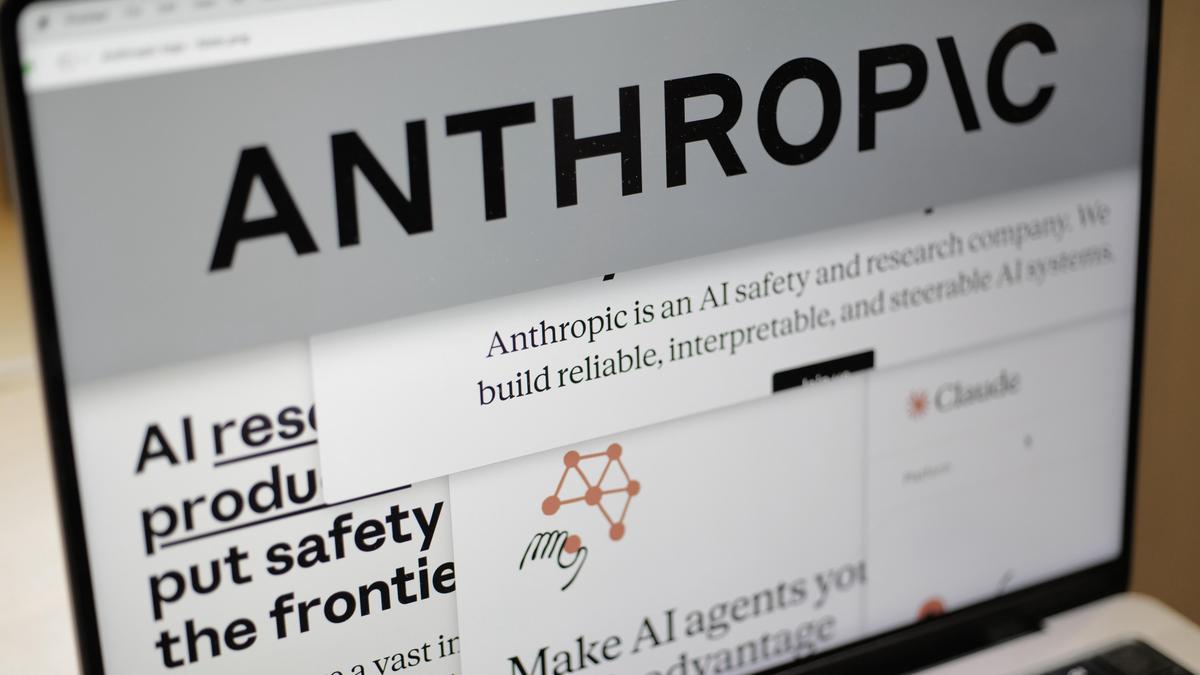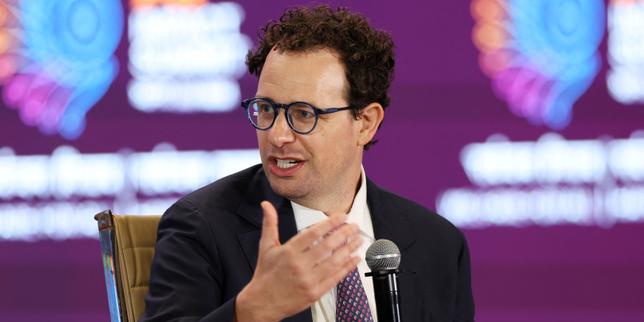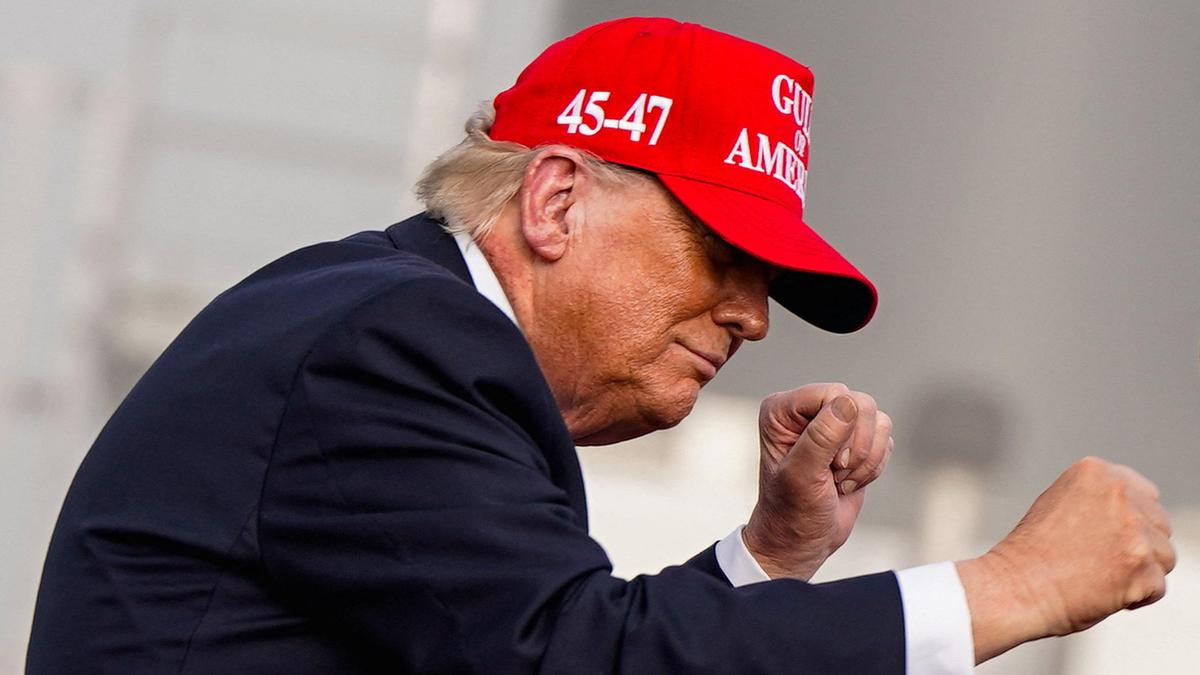
The directive was blunt, issued with the characteristic force of an executive branch determined to decouple American governance from specific Silicon Valley architectures. President Trump’s recent order to "immediately" terminate the use of Anthropic’s AI technology across federal agencies isn't just a procurement shift. It is a calculated strike against a specific philosophy of AI development known as "Constitutional AI." By purging Claude from the federal ecosystem, the administration is signaling that it will no longer tolerate "safety-first" models that it views as ideologically misaligned or structurally throttled by private-sector guardrails.
This move targets the very heart of the AI industry's internal power struggle. For years, Anthropic has positioned itself as the ethical alternative to OpenAI, prioritizing a internal set of "principles" that guide the model's behavior. To the current administration, those principles look like a digital straitjacket. The ban removes a key player from the government’s technological arsenal, forcing a hard pivot toward models that prioritize raw output and "American-first" data processing over the cautious, safety-oriented framework that defined the Anthropic brand.
The Friction Between Safety and Speed
Washington has grown tired of the lecture. For the past eighteen months, federal departments ranging from the Department of Energy to the IRS have been integrating large language models to process massive datasets and automate bureaucratic workflows. However, internal reports suggest a growing frustration with Anthropic’s Claude. The model’s tendency to decline certain prompts based on its internal "Constitution"—a set of rules designed to prevent bias and harm—has been interpreted by some officials as a form of soft censorship that hinders government efficiency.
Anthropic’s model isn't just a tool. It is a reflection of a specific worldview. When a federal analyst asks for a blunt assessment of geopolitical risk or a breakdown of demographic data, a model that pauses to consider the ethical implications of its answer is seen as a liability. The administration’s argument is simple: the government’s AI should have no master other than the U.S. Constitution, not a private company’s ethical committee.
Constitutional AI as a Political Lightning Rod
To understand why the White House took such drastic action, you have to look at the mechanics of how Claude is built. Unlike models that rely solely on human feedback to learn right from wrong, Anthropic uses a second AI to supervise the first. This is "Constitutional AI." It allows the developers to bake specific values into the software's DNA.
While this was sold to investors as a way to build a "responsible" AI, it has become a massive target for political critics. They argue that these "constitutions" are essentially programmed biases. If the AI is trained to be "helpful, honest, and harmless" based on the definitions of a few hundred engineers in San Francisco, it will inevitably reflect the social and political leanings of that bubble. For a White House that has built its brand on dismantling the "administrative state" and fighting perceived Silicon Valley overreach, Anthropic was the perfect avatar for everything they want to eliminate.
The Market Vacuum and the Rise of Open Source
The immediate consequence of the ban is a massive opening for competitors. With Anthropic out of the federal picture, the scramble for government contracts is intensifying. But it isn't just OpenAI or Google looking to fill the void. The administration has expressed a distinct preference for open-source models or models that can be "fine-tuned" on private government servers without external oversight.
By pushing out a company that insists on maintaining a "walled garden" of safety protocols, the government is incentivizing a shift toward more permissive, customizable AI. This is a win for companies that are willing to strip away the "woke" filters—as the administration’s allies call them—and provide a raw, high-performance engine.
- Customization: Agencies want to train models on classified data without the model phoning home.
- Performance: There is a belief that safety layers act as a "tax" on reasoning capabilities.
- Sovereignty: The U.S. government wants to own the weights of the models it uses, a demand that conflicts with Anthropic’s managed-service business model.
National Security and the China Factor
The subtext of this ban is the ongoing tech cold war with Beijing. There is a faction within the National Security Council that believes "safety-aligned" AI is a handicap. They argue that while American companies are busy teaching their AI not to offend anyone, Chinese engineers are building models focused purely on biological research, cyber warfare, and cryptographic cracking.
In this view, Anthropic’s caution is a national security risk. If the AI of the future is the primary engine of economic and military power, then the most "dangerous" thing an AI can be is slow. The administration wants a race car; Anthropic sold them a sedan with an advanced braking system. They decided to fire the driver and junk the car.
The Financial Fallout for the AI Safety Movement
This executive action is a body blow to the "Effective Altruism" and "AI Safety" movements that have funneled billions into companies like Anthropic. For years, the narrative was that the first company to build a truly "safe" AGI (Artificial General Intelligence) would win the world. The U.S. government just signaled that "safety" is a secondary concern to "utility" and "alignment with national interest."
Investors are already taking note. If the largest purchaser of technology in the world—the U.S. federal government—blacklists your tech because it’s "too safe," your valuation takes a hit. We are likely to see a quiet retreat from "safety" branding across the industry as other startups realize that being the "ethical" choice might mean being the "unemployed" choice in the new Washington.
Operational Chaos in the Beltway
Behind the headlines, federal IT managers are panicking. Claude was deeply integrated into several pilot programs at the Department of Justice and the Department of Veterans Affairs. This isn't as simple as deleting an app. Entire workflows, custom API connections, and data pipelines have to be ripped out and replaced.
The cost of this "immediate" transition will be measured in the hundreds of millions. Contractors who specialized in Anthropic deployments are seeing their agreements evaporated overnight. The replacement cycle will favor those who can move fast and ask fewer questions about the ethical "alignment" of their code.
A New Era of Algorithmic Darwinism
We have entered a period where the government is no longer a passive consumer of AI; it is an active shaper of the market through exclusion. By picking a fight with Anthropic, the White House is defining the boundaries of what is "acceptable" American technology. It is a move away from the "move fast and break things" era and into an era of "move fast and win at any cost."
The fallout will force every other AI lab to make a choice. Do they continue down the path of internal "constitutions" and self-imposed restrictions, or do they pivot to satisfy a client that demands raw power and ideological compliance? The era of the "safe" AI startup is over, replaced by a brutal competition for a government that has made its preferences clear.
The industry should stop looking at its internal benchmarks and start looking at the shifting political winds of the West Wing. The next generation of federal AI will not be programmed to be "harmless." It will be programmed to be effective.
Auditors and agency heads should begin a comprehensive review of all third-party AI dependencies to identify "alignment-heavy" architectures that may be the next targets for executive scrutiny.