The sea does not care about borders. It only cares about weight.
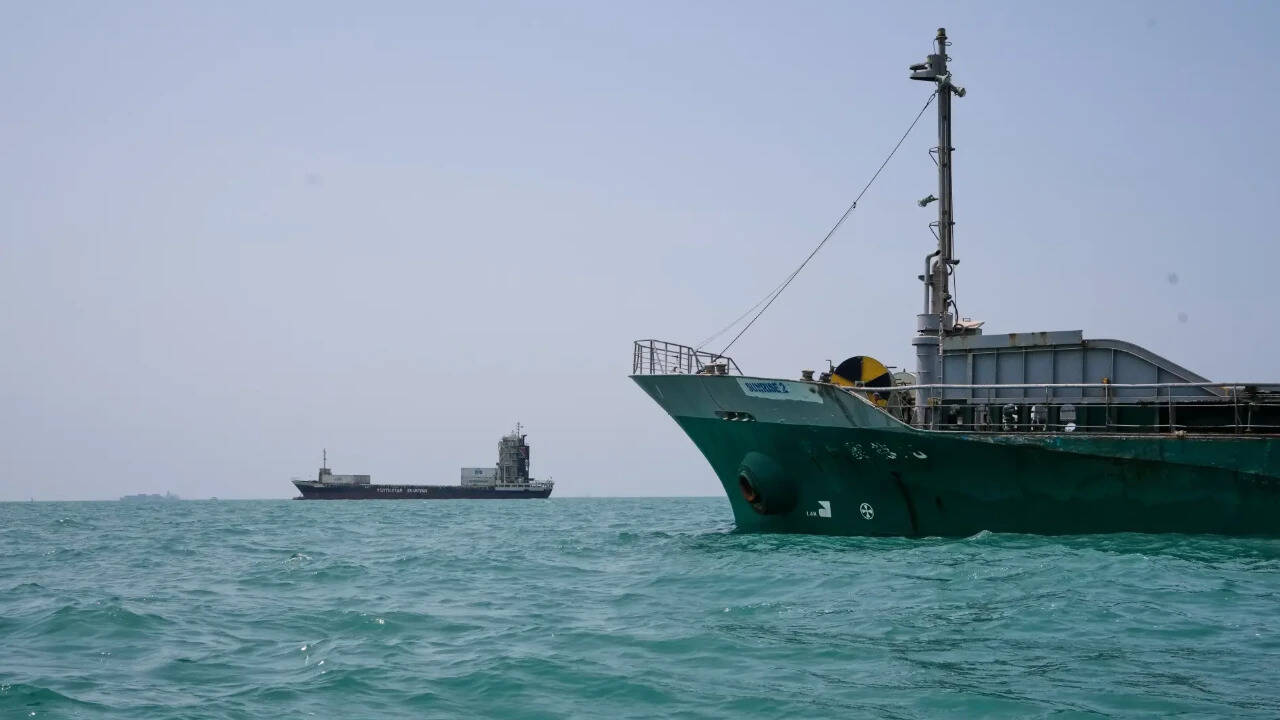
Stand on the volcanic shoreline of Obock, Djibouti, where the Gulf of Tadjourah meets the Red Sea, and you will hear it. It is not the gentle lap of a tourist brochure. It is a heavy, rhythmic thud against black basalt rock, sounding remarkably like a distant drumbeat or a locked door being struck from the inside. Across that narrow stretch of water lies Yemen. Or rather, what remains of it after years of a grinding, forgotten war that has chewed through generations. For a closer look into this area, we suggest: this related article.
For the people stepping off the wooden skiffs onto the Djiboutian coast, the sound of the sea is both an escape and a sentence. They arrive with salt-crusted clothes, hollow eyes, and a silence that feels heavier than any luggage.
Consider Fatima. She is a hypothetical composite of the dozens of mothers arriving on these shores, yet her reality is drawn straight from the unyielding logs of the United Nations High Commissioner for Refugees and the Red Crescent. Fatima left Hodeidah with three children and a single plastic bag containing birth certificates wrapped in foil. She did not flee because she wanted a new life. She fled because the old one was burning to ash around her ankles. The roof of her kitchen had collapsed during an airstrike two winters ago. By last autumn, the neighborhood market was a crater, and flour cost more than gold. For broader context on this topic, detailed analysis is available on TIME.
When the boat hit the Djiboutian sand, she did not cry. She simply knelt and touched the ground, checking to ensure all three children were still breathing.
That is the human core of the Djibouti humanitarian crisis. We read the cold dispatch notes in newsrooms thousands of miles away. Refugee inflows strain local infrastructure. Funding shortfalls threaten food rations. The dry vocabulary of international aid administration sanitizes a profound human catastrophe. It turns suffering into a spreadsheet.
Let us tear the spreadsheet apart.
Djibouti is a small, arid nation. It is roughly the size of New Jersey, punched through with jagged volcanic peaks and vast, white salt flats where temperatures routinely hover near suffocating extremes. It is a country of scarce water and limited pasture, yet it has maintained an open-door policy for those fleeing the inferno of the Arabian Peninsula. For decades, Djibouti has acted as a quiet anchor in a region adrift. But anchors have limits. When the rope is pulled too tight, something snaps.
The numbers tell a stark story, even if they fail to capture the salt in Fatima's hair. Tens of thousands of Yemenis have crossed the Bab-el-Mandeb strait—one of the busiest and most dangerous shipping lanes in the world—seeking sanctuary in a country that is already grappling with its own internal strains of food insecurity, climate-driven droughts, and rising commodity prices.
To understand why this matters, you have to look at the math of survival in the Horn of Africa.
Imagine trying to fill a bucket with a hole in the bottom. Every time international donors pledge emergency aid, global inflation and supply chain bottlenecks widen the leak. The World Food Programme cuts rations. Local health clinics, built to serve pastoralist communities that have roamed the desert for centuries, suddenly find their waiting rooms overflowing with malnourished children from Taiz and Sanaa.
It is a slow-motion emergency. There are no sudden, cinematic tidal waves. Instead, there is the quiet erosion of resilience.
Walk through the Markazi camp near Obock, and you will feel it in the air. The shelter tents, pitched on gravel that radiates heat like an oven plate, ripple constantly in the fierce desert wind known locally as the khamaseen. Inside one of these canvas homes, an elderly man named Ahmed sits cross-legged on a woven mat. Before the war in Yemen, he ran a small hardware store in Aden. He knew the price of iron, the weight of timber, the exact grade of nails needed to build a house that could withstand a coastal gale.
Today, Ahmed measures his life in liters of potable water and the bi-weekly distribution of dry lentils.
"In Aden, I was a man of business," he tells visitors, his voice dry as the sand outside. "Here, I am a receiver of charity. It is a very small box to live in."
That is the invisible tax of displacement. It is not just the loss of a home or a livelihood. It is the systematic dismantling of dignity. When people are reduced to recipients of emergency parcels, something essential inside them starts to starve alongside their bodies.
Yet, resilience is remarkably stubborn.
Down the dusty lanes of the camp, young Yemeni refugees have set up makeshift coffee stalls, brewing dark, cardamom-spiced qahwa in battered aluminum pots, serving it to Djiboutian locals and fellow exiles alike. They share stories of home over small ceramic cups. They trade news of relatives trapped behind frontline checkpoints. In the evenings, children chase a deflated football across the dust, their laughter kicking up tiny clouds that catch the dying orange light of the desert sun.
This juxtaposition—desperation and stubborn vitality—defines the current reality in Djibouti.
The crisis is compounded by a bitter geopolitical irony. While the world's attention fixes repeatedly on conflicts in Europe and the Middle East, the crisis in Yemen has settled into a gray purgatory. It is a war that has dropped out of prime-time bulletins, replaced by newer horrors. But wars do not end simply because the cameras pack up and leave. They smolder. They rot the foundations of society until families like Fatima’s are forced onto wooden skiffs in the dead of night, gambling their lives against a stretch of dark water just for the right to breathe un-terrorized air.
Djibouti’s government and local host communities have absorbed the shock remarkably well, considering their own structural limitations. But goodwill is not a renewable resource when cupboards are bare. The international community’s response has frequently been reactive rather than strategic—patching holes in the dike just as the water crests the top.
What happens when the aid dries up completely? What happens when the host country’s infrastructure can no longer bend without breaking?
These are not abstract questions for economists to debate over conference coffee. They are existential thresholds for human beings whose names we will never know, living in tents that flap ceaselessly against the desert wind.
The sun dips below the horizon in Obock, plunging the landscape from glaring white into deep, bruised indigo. The stars come out over the Red Sea, sharp and indifferent. Across the water, the lights of Yemen remain hidden behind the curve of the earth, obscured by distance and darkness.
Fatima puts her youngest child to sleep on the mat, smoothing down a blanket that has seen too many washes. Outside, the waves continue their relentless, heavy thud against the black basalt rocks, keeping time for a world that looks away, and a humanity that refuses to stop surviving.