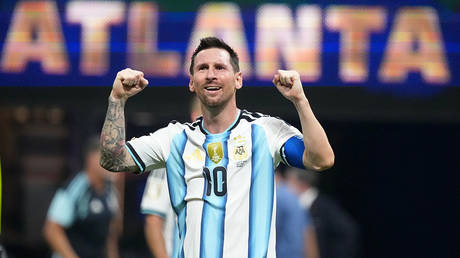
The Flawed Narrative of the Touchline Smile
The international football media loves a simple story. When Spain wins, it is a triumph of joy, attacking intent, and tactical enlightenment. When Didier Deschamps loses, it is a tragic, stubborn failure of pragmatism. Following the recent spectacles involving Luis de la Fuente’s side and the French national team, the match reports practically wrote themselves. Pedro Porro and De la Fuente are hoisted up as symbols of a new, vibrant era. Deschamps is painted as a miserable dinosaur watching the game pass him by.
This narrative is completely wrong.
It mistakes short-term execution for long-term systemic stability. It values the aesthetic of a celebration over the cold, hard reality of international tournament cycles. The media looks at the smile on Pedro Porro's face and assumes Spain has solved international football, while ignoring the massive structural fragile points that De la Fuente is papering over. Meanwhile, the funeral being held for Deschamps’ tactical approach ignores the fact that France remains the most terrifyingly sustainable blueprint in global football.
The Pedro Porro Illusion
Let us start with the current media darling. Pedro Porro’s inclusion and performance have been heralded as a masterstroke of modern full-back integration. The mainstream press raves about his energy, his high-pressing positioning, and his freedom to occupy central spaces.
I have watched national teams cycle through in-form full-backs for two decades, and this hype cycle always ends the same way.
Porro is an excellent asset when Spain dominates possession and dictates the tempo against teams unwilling to test the space behind him. His attacking output hides his defensive vulnerabilities. In possession-heavy systems, full-backs who play like wingers look brilliant right up until they meet a winger who forces them to actually defend inside their own box.
De la Fuente is not deploying a revolutionary tactic here. He is gambling. He is betting that Spain’s midfield can retain the ball long enough to prevent opponents from exposing the massive structural gaps left by an advancing right-back. When it works, you get beautiful television and glowing match ratings. When it fails against an elite counter-attacking unit, your right-back is caught seventy yards out of position, and your central defenders are left isolated in wide channels. Calling this a tactical triumph is lazy. It is high-variance football that happens to be on a hot streak.
De la Fuente and the Myth of the New Era
Luis de la Fuente deserves credit for moving Spain away from the sterile, thousand-pass possession obsession of the late Luis Enrique era. Spain now attacks with more verticality and directness. But the idea that he has built a flawless, enduring machine is a fantasy.
International football is inherently chaotic. Managers get mere weeks out of the year to work with players. Because of this limitation, the most successful international managers do not try to build complex, highly fluid club-style systems. They build simple, defensively rigid structures that rely on individual brilliance to win matches in the final third.
De la Fuente is trying to run a high-intensity, fluid system at the international level. Right now, individual players are executing at their absolute limits. But what happens when the squad hits a dip in form, or when injuries strike the core midfield? Spain's current system lacks the structural safety net that previous tournament-winning sides possessed. They are playing without a handbrake. It is thrilling to watch, but it is structurally brittle. The celebration we see on the touchline is not the start of a decade-long dynasty; it is the frantic enjoyment of a temporary peak.
Why Deschamps Is Laughing Last
Now look at the other side of the pitch. Didier Deschamps sits in the dugout, stone-faced, enduring the predictable onslaught from pundits who claim his pragmatic approach has ruined French football. The critics want flair. They want Mbappe, Dembele, and Griezmann playing free-flowing, expansive football that tears opponents apart.
They do not understand tournament football.
Deschamps understands that international tournaments are won by minimizing errors, not by maximizing aesthetic beauty. His sadness or frustration on the touchline is not a sign of a broken system; it is the irritation of a perfectionist whose highly calibrated defensive machine suffered a rare hiccup.
Consider the data of the last eight years. France has reached three major tournament finals under Deschamps. They do this by remaining completely unbothered by who owns the ball. They constrict space, force the opposition into low-probability shots from distance, and strike with lethal efficiency on the break. It is ugly, it is boring, and it is the most successful international football strategy of the modern era.
To suggest that a single loss or a bad run of form means Deschamps is finished is an absurd overreaction. His system is built to survive the chaotic nature of international football because it does not rely on perfect attacking synchronization. It relies on defensive positioning and physical dominance. If you give me the choice between Spain’s high-wire act and France’s industrial pragmatism over a seven-game tournament, I am picking France every single time.
The Flawed Questions Everyone Is Asking
If you read the mainstream sports pages, the questions are always the same:
- How can France unlock their attacking potential?
- Is Spain the new blueprint for international football?
These questions miss the entire point of the sport at this level. France should not unlock their attacking potential if it means sacrificing the defensive stability that gets them to finals. Spain is not a blueprint because ninety percent of international squads do not possess the technical midfield quality required to pull off De la Fuente’s system.
Imagine a scenario where a mid-tier international team tries to replicate Spain’s current tactical setup. They would be relegated or eliminated in the group stages of any major tournament. Spain’s success is an anomaly born of a specific generation of technical midfielders hitting their prime at the exact same moment. It is an unreplicable luxury, not a tactical trend.
The Reality Check
The media celebrates the winners and buries the losers based on ninety-minute windows. They confuse the joy of a victory with the validity of a philosophy.
Pedro Porro and Luis de la Fuente are riding a wave of positive variance. Their football is fun, their energy is infectious, and their current accolades are earned. But do not confuse a hot streak with a structural shift in how international football is won.
Didier Deschamps knows exactly what he is doing. He knows that the same pundits calling for his head today will be praising his tactical genius the next time France grinds out a 1-0 win in a semi-final while holding thirty percent possession. The sadness on his face is temporary. The structural superiority of his football philosophy is permanent.
Stop looking at the smiles on the touchline and start looking at the structural foundations of the teams. One is built on a fragile peak of form and high-risk tactics; the other is a concrete monolith designed to withstand the worst storms international football can throw at it. The party in Madrid will end long before the French machine stops rolling.