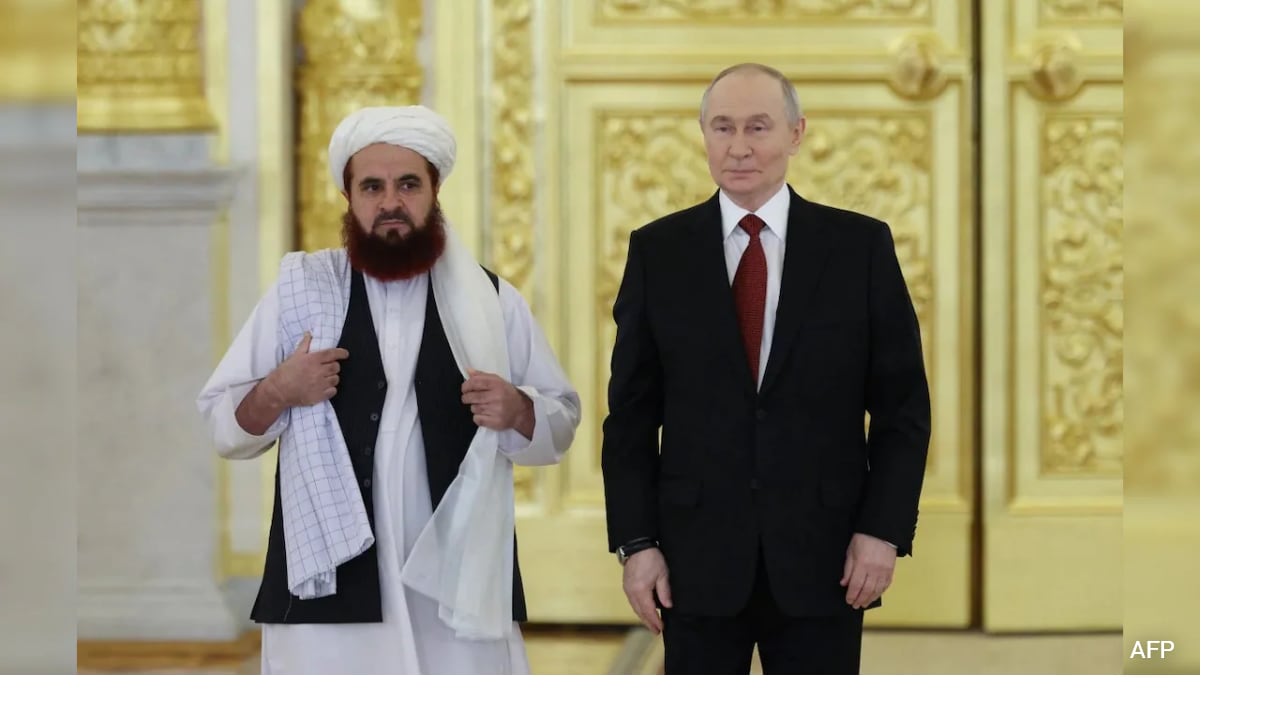
Geopolitical analysts love a good marriage of convenience. When mainstream outlets caught wind of Moscow shifting its posture toward Kabul, the headlines wrote themselves: "From Enemies to Friends," "A Dangerous New Military Pact," "The New Axis of Terror." It is a neat, terrifying narrative. It fits perfectly into a Cold War sequel script.
It is also completely wrong.
The breathless commentary surrounding Russia’s diplomatic engagement with the Taliban betrays a profound misunderstanding of Eurasian security. There is no military pact. There is no grand alliance born of shared hatred for the West. What we are witnessing is not a strategic marriage; it is a transactional, deeply paranoid rooming arrangement where both parties sleep with one eye open and a hand on their holster.
To view the Moscow-Kabul dynamic as a budding friendship is to miss the entire mechanics of Central Asian survival. The reality is far more cynical, far more fragile, and infinitely more interesting than the lazy consensus suggests.
The Illusion of the Pact
Let us dismantle the core premise immediately. Mainstream analysis points to high-level meetings in Moscow, trade delegations, and the official removal of the Taliban from Russia’s list of terrorist organizations as definitive proof of a military alliance.
This is a classic misinterpretation of diplomatic theater for strategic reality.
Russia did not remove the Taliban from its terror list because of a sudden burst of camaraderie. They did it because you cannot conduct basic border security diplomacy with a government that your own legal system requires you to arrest on sight. For years, I have watched analysts mistake tactical flexibility for ideological alignment. It is a fatal error in judgment.
The Kremlin operates on cold, hard realism. In 1999, Vladimir Putin vowed to "wipe out in the outhouse" Islamic extremists. He has not suddenly developed a soft spot for the theological framework of the Islamic Emirate of Afghanistan. What he has developed is a massive, bleeding land border problem to his south.
With the American exit from Afghanistan, Russia faced a choice: maintain a principled, useless stance of total isolation, or deal with the de facto rulers of Kabul to secure its soft underbelly in Central Asia. They chose the latter. That is not an alliance. That is damage control.
What the "Experts" Get Wrong About PAA Queries
If you look at the standard queries dominating search engines regarding this topic, the flawed premises become glaringly obvious. People are asking the wrong questions because they are reading the wrong analysis.
"Will Russia supply heavy weapons to the Taliban?"
This question assumes Moscow has lost its collective mind. Russia is currently burning through its own armor, artillery, and ammunition stockpiles at an unprecedented rate in Ukraine. The idea that the Kremlin is going to ship modern T-90 tanks or Su-35 fighter jets to Kabul is laughably absurd on a purely logistical level.
More importantly, it ignores the historical trauma embedded in the Russian military psyche. The Soviet-Afghan War remains a defining scar for the Russian officer corps. Moscow knows exactly what happens when you pour advanced weaponry into the Hindu Kush. They have no intention of arming a regime that could, in a flip of a political coin, decide that Russia’s Central Asian allies—Tajikistan and Uzbekistan—are its next targets.
Any military cooperation between the two is strictly limited to intelligence sharing regarding a mutual enemy: Islamic State Khorasan Province (ISKP).
"Does this pact mean a new front against NATO?"
The short answer is no. The long answer is absolutely not. The Taliban is a localized, nationalist movement. Their primary objective is the total consolidation of control within the borders of Afghanistan and the enforcement of their domestic agenda. They are not interested in fighting Russia's proxy wars against NATO in Europe, nor does Russia want an unpredictable religious militia dictating its broader geopolitical positioning.
The relationship is entirely inward-looking. Russia wants Afghanistan to stop exporting terrorism, heroin, and instability into the post-Soviet republics. The Taliban wants international legitimacy, economic investment, and a counterweight to Chinese economic dominance. It is a transactional ledger, not a brotherhood of arms.
The Real Enemy in the Room: The ISKP Factor
To understand why Moscow and Kabul are talking, you have to look at the entity they both despise. The driving force behind this diplomatic dance is not anti-Western sentiment; it is the terrifying rise of ISKP.
For the Taliban, ISKP is a direct threat to their sovereignty. They view them as heretical upstarts trying to undermine their rule. For Russia, ISKP is an existential security nightmare that proved its lethality on Russian soil during the horrific Crocus City Hall attack in Moscow.
Consider the mechanics of this dynamic:
- The Taliban possesses the boots on the ground but lacks advanced surveillance, signals intelligence, and electronic warfare capabilities.
- Russia possesses deep intelligence networks across Central Asia and satellite capabilities, but zero desire to put boots back on Afghan soil.
What the mainstream media calls a "military pact" is actually just an intelligence clearinghouse. Russia feeds the Taliban actionable data on ISKP cells; the Taliban goes into the mountains and eliminates them. It is brutal, transactional, and entirely self-serving for both sides.
The Price of Realism: The Inherent Flaws in Russia's Strategy
While the mainstream narrative overstates the strength of this relationship, it would be equally foolish to ignore the massive risks Russia is taking. This contrarian approach has severe downsides that Moscow is actively trying to manage.
First, by legitimizing the Taliban, Russia is alienating its most loyal ally in the region: Tajikistan. The Tajik government in Dushanbe is fiercely anti-Taliban, largely due to concerns over the treatment of the massive ethnic Tajik minority inside Afghanistan. Every time Moscow rolls out the red carpet for a Taliban delegation, it strains its relationship with Dushanbe, potentially destabilizing the Collective Security Treaty Organization (CSTO).
Second, the Taliban is not a monolith. The movement is deeply fractured between the pragmatists in Kabul, who want international trade, and the hardline ideologues in Kandahar, who reject any compromise with foreign infidels. Russia is betting its regional security on the hope that the pragmatists maintain control. If the Kandahar faction gains the upper hand, Moscow’s entire diplomatic investment evaporates overnight, leaving them exposed to an even more radicalized neighbor.
Stop Looking for Alliances where There Are Only Transactions
The biggest mistake Western observers make is projecting their own institutional frameworks onto non-Western actors. The West thinks in terms of treaties, mutual defense pacts, and integrated command structures like NATO.
Eurasian powers do not operate this way.
China, Russia, Iran, and the Taliban operate in a shifting matrix of tactical alignments. They can cooperate on border security in the morning, compete for oil pipelines in the afternoon, and fund opposing factions in a third-party country by the evening.
If you want to understand the future of Central Asian security, stop looking for signed pieces of paper and start looking at the immediate, unvarnished self-interest of the actors involved. Russia needs a buffer zone. The Taliban needs cash and recognition. Anything beyond that is pure fiction designed to sell clicks to a panicked public.
The West should not fear a Russo-Taliban alliance. They should fear the collapse of the fragile, paranoid understanding that currently keeps them from tearing each other apart. Because if this transaction fails, the resulting power vacuum will make the last twenty years look like a prelude.