Lists are for groceries, not for measuring the tectonic shifts of global power. When you see a "Most Powerful Women" ranking featuring names like Ursula von der Leyen or Julie Sweet, you aren't looking at a map of influence. You are looking at a yearbook for the administrative class.
We have spent decades conflating "high-ranking" with "powerful." They are not the same thing. Power is the ability to move the needle regardless of the title on your door. Influence is the ability to say "no" to a trillion-dollar industry and have them actually stop. Most names on these glossy annual lists are merely stewards of existing momentum. They are caretakers of legacies they didn't build and can't fundamentally change.
The Administrative Trap
The common consensus assumes that heading a massive bureaucracy like the European Commission or a consulting behemoth like Accenture equates to raw power. It doesn’t. It equates to high-level maintenance.
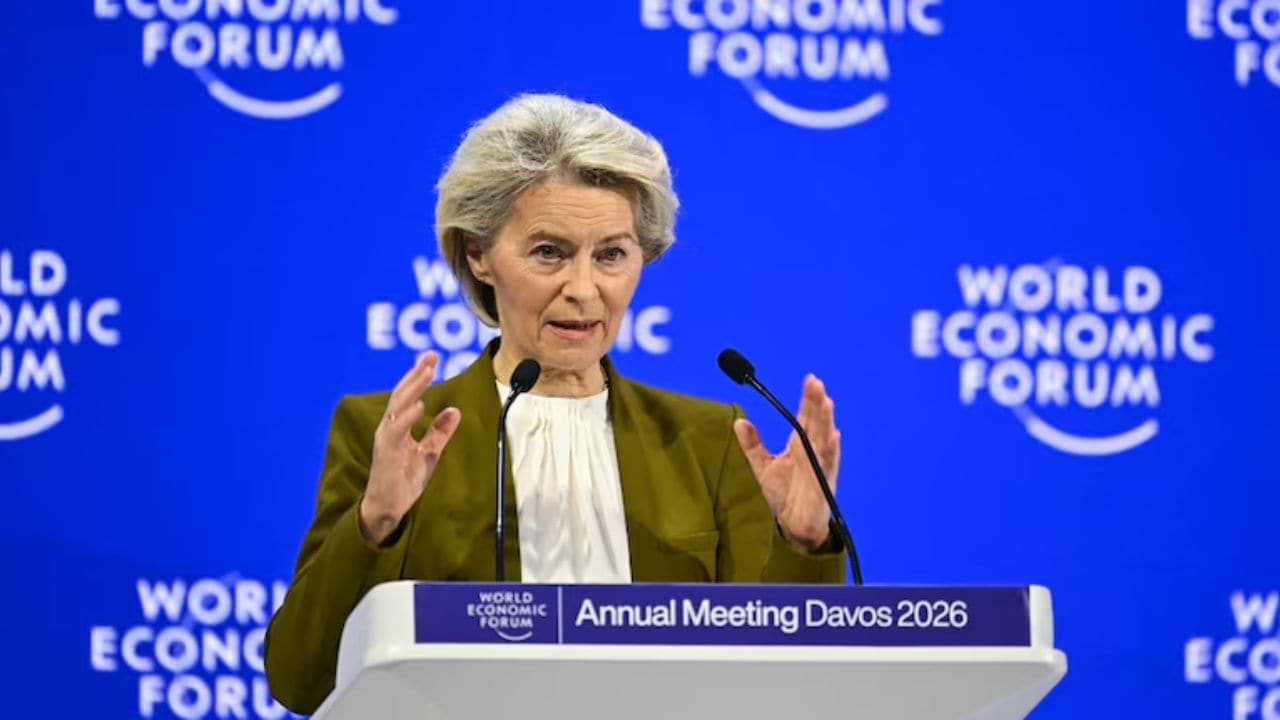
Take Ursula von der Leyen. As President of the European Commission, she sits atop one of the most complex regulatory bodies on earth. But does she wield power, or does the bureaucracy wield her? True power is the ability to act with agility. Von der Leyen is bound by the consensus of 27 member states, thousands of lobbyists, and a legislative process that moves with the speed of continental drift.
When you lead by committee, you aren't a leader; you're a facilitator. You are the human face of a collective "maybe." Contrast this with the founder of a mid-sized, disruptive tech firm who can pivot an entire industry's supply chain with a single memo. The world looks at the title. The industry insider looks at the constraints.
The Myth of the Corporate Ladder
Then we have the corporate titans like Julie Sweet. Being the CEO of Accenture is an incredible feat of endurance and political navigation. But let’s be honest about what that role actually is. Professional services firms are reactive by nature. They exist to serve the needs of other companies.
If your "power" is entirely dependent on the budgets and whims of Fortune 500 clients, you are a vendor. A very successful, highly-paid vendor, but a vendor nonetheless.
Real power in business isn't found in the person managing 700,000 employees; it’s found in the person who makes those 700,000 employees obsolete. We celebrate the scale of the headcount while ignoring the lack of agency. I have seen CEOs of multi-billion dollar firms spend three years trying to change a single internal culture metric only to fail. That isn't power. That's being trapped in a gold-plated cage.
Why We Ask the Wrong Questions
People often ask, "How do I get on these lists?" or "What makes these women so influential?"
The premise is flawed. You shouldn't want to be on a list that measures how well you fit into a pre-existing box. You should be asking who is building the box.
We focus on visibility because visibility is easy to rank. It’s easy to count Twitter followers, keynote invitations, and magazine covers. It is much harder to track the woman who owns the proprietary code that runs 40% of the world's high-frequency trading. She won't be on the list. She doesn't want to be. She has actual leverage.
The Difference Between Status and Leverage
Status is what your neighbors think of you. Leverage is what the market is forced to give you.
- Status: Being invited to Davos to speak on a panel about "The Future of Work."
- Leverage: Owning the patent for the lithium-sulfur battery tech that makes current EVs look like toys.
The "Most Powerful" lists are 90% status and 10% leverage. They prioritize those who represent institutions. But institutions are designed to dilute individual power. They are built for stability, not for the kind of radical, singular will that actually changes the course of history.
Imagine a scenario where a prominent "powerful" woman on these lists tries to make a decision that goes against the short-term interests of her board or her political backers. She is replaced within a quarter. That is "borrowed power." It belongs to the chair, not the person sitting in it.
The Institutional Inertia
The dirty secret of global leadership is that the larger the organization, the less power the person at the top actually has to innovate.
- Risk Mitigation: At the level of von der Leyen or Sweet, your primary job is not to win; it's to not lose.
- Stakeholder Management: You spend 80% of your day managing the egos of people who can fire you.
- Optics over Outcome: Every move is filtered through a PR lens, stripping it of its original intent.
This is why "power" lists feel so stagnant. They feature the same archetypes every year because they are measuring the health of the institutions, not the impact of the individuals.
Where the Real Power Lives
If you want to find the most powerful women in the world, stop looking at the C-suite of legacy companies. Look at the edges.
Look at the women in bio-tech who are rewriting the human genome. Look at the engineers in decentralized finance who are building systems that make traditional central banking look like a horse and buggy. Look at the founders who refuse to go public because they don't want to trade their vision for a quarterly earnings call.
These women don't have PR teams pitching them to "Most Powerful" lists. They don't have time for the circuit. They are too busy building the tools that will eventually make the current "powerful" leaders irrelevant.
The Cult of Mentorship
We are told that "power" is about "fostering" (a word I hate) the next generation. We are told it’s about "synergy" and "giving back."
That’s a distraction.
True power is about competence. It’s about being so good at a specific, difficult thing that the world has no choice but to come to you. Everything else—the networking, the lists, the panels—is just noise. I’ve seen executives spend more time on their personal branding than on their product's unit economics. They end up on the lists, and three years later, their companies are shells of their former selves.
Stop Validating the Consensus
By celebrating these lists, we validate a version of "power" that is safe, corporate, and ultimately toothless. We encourage young leaders to seek titles instead of skills. We teach them that the goal is to be recognized by the establishment rather than to disrupt it.
The status quo loves these lists because they suggest that the system is working. Look, they say, we have diverse leaders at the top of these massive structures. But if the structures themselves are broken, it doesn't matter who is at the top.
If you want to be powerful, stop trying to be the most powerful woman "in the world" according to some magazine. Try to be the most powerful person in a room of people who actually build things.
Find a problem that is too hard for a committee to solve. Solve it alone. Then you won't need a list to tell you who you are. The market will do that for you.
Power isn't granted by a ranking; it's taken by those who don't care about the ranking in the first place.
Go build something that makes the current power structure look like a relic. That is the only list worth being on.