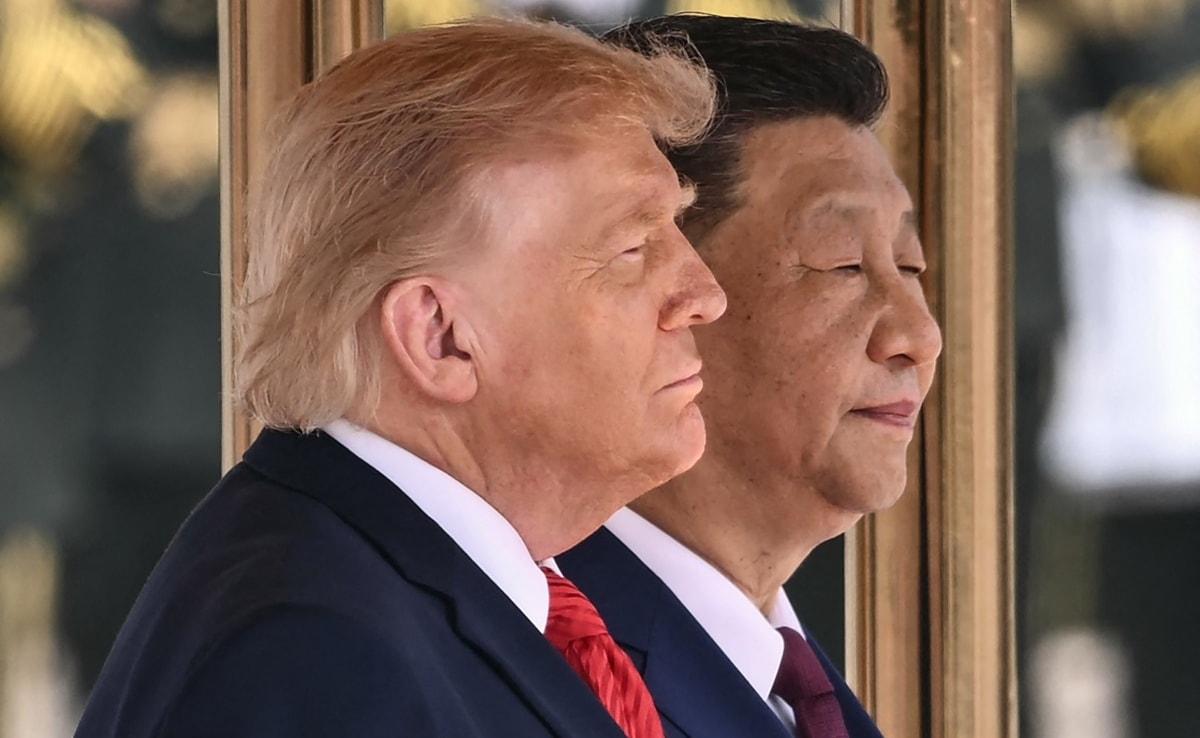
Geopolitical commentators are trapped in a time capsule. Every time Washington and Beijing exchange a icy glance, standard foreign policy analysts dust off their favorite historical screenplay: the 1971 opening to China. They point to General Yahya Khan’s secret channel, whisper about General Asim Munir’s backchannel diplomacy, and spin a cozy narrative that Pakistan is the indispensable bridge between two warring superpowers.
It is a comforting bedtime story. It is also entirely wrong.
The belief that Islamabad can replicate its cold war matchmaking magic in the 2020s relies on a fundamental misunderstanding of history, a delusion about Pakistan's current leverage, and an ignorance of how global trade and technology actually operate today. Pakistan is no longer the bridge. It is a nation caught in the crossfire, possessing neither the diplomatic capital nor the economic independence to arbitrate between the world’s two largest economies.
The 1971 Delusion: History Is Not Repeating Itself
The core of the "Pak factor" argument hinges on Henry Kissinger’s secret trip to Beijing, facilitated by Islamabad. Foreign policy romanticists view this as a permanent template for Pakistani diplomacy.
Let us inject some reality into this historical nostalgia. In 1971, both Washington and Beijing desperately wanted to talk. President Richard Nixon needed an exit strategy from Vietnam and a counterweight to the Soviet Union. Chairman Mao Zedong faced a hostile Soviet military on his northern border. The strategic intent was entirely aligned. Pakistan did not engineer a breakthrough; it acted as a secure mailbox. It provided a physical plane and a quiet airstrip because the world lacked the instant communications we take for granted today.
Today, the structural reality is the polar opposite.
1971 Geopolitics: USA/China aligned against USSR -> Pakistan as a passive facilitator.
2026 Geopolitics: USA/China in direct peer competition -> Pakistan as a pressured proxy.
Washington and Beijing do not need a mailbox. They have direct, high-level hotlines. Their commerce departments, military leaders, and intelligence chiefs communicate through established channels from Zurich to Bali. When US and Chinese officials need to negotiate tariff rollbacks or AI safety protocols, they do not need an invitation from Islamabad. They book a conference room in a European capital or meet on the sidelines of a multilateral summit. The premise that a third-party matchmaker is required to break the ice ignores the reality of modern statecraft.
The Asymmetry of Leverage
To understand why this matchmaker narrative fails, we must look at the hard numbers. In 1971, China was an impoverished agrarian state isolated from global markets. Pakistan was, relatively speaking, an economic and military powerhouse in South Asia, backed by Western aid and institutional strength.
Now look at the current balance sheet. China's GDP towers over $18 trillion. Pakistan’s economy is propped up by recurring cycles of International Monetary Fund bailouts and short-term loan rollovers from friendly gulf nations and Beijing itself.
I have watched diplomatic missions attempt to leverage historical goodwill to secure economic concessions, and the results are always the same. Goodwill does not service debt. When a country owes tens of billions of dollars to Chinese state banks through the China-Pakistan Economic Corridor, it loses its status as an independent arbitrator. You cannot be an honest broker between two giants when one of those giants holds the mortgage to your deep-sea ports and energy infrastructure.
+------------------------------+---------------------------------+
| 1971 Dynamics                | 2026 Realities                  |
+------------------------------+---------------------------------+
| Ideological alignment        | Zero-sum technological rivalry  |
| Simple communication barrier  | Intertwined, fragile supply chains|
| Pakistan: Strategic asset    | Pakistan: Economic supplicant   |
+------------------------------+---------------------------------+
Furthermore, the United States has fundamentally shifted its regional priorities. Washington's pivot to the Indo-Pacific means its strategic anchor in South Asia is New Delhi, not Islamabad. The bilateral relationship between the US and India—focused on defense co-production, technology transfers, and containing Chinese expansion—has rendered the old cold war arrangements obsolete. The Pentagon does not view Islamabad as a bridge to Beijing; it views Islamabad’s military dependency on China with deep suspicion.
The Broken Premise of "People Also Ask"
Look at the standard questions driving the public discourse on this topic. They are built on flawed foundations that deserve to be dismantled.
Can Pakistan balance its relations with both the US and China?
This question assumes balancing is an active choice. It is not. It is a desperate survival strategy. True balancing requires a position of strength—an economic engine that both sides covet. For instance, countries like Singapore or the UAE can balance because they offer massive sovereign wealth, critical maritime chokepoints, or high-tech manufacturing hubs. Pakistan offers a market plagued by chronic inflation, energy shortages, and political instability. Instead of balancing, Islamabad is forced to walk a razor-thin tightrope where a single misstep risks alienating its primary security guarantor (China) or its primary export market and IMF gatekeeper (the United States).
Will the China-Pakistan Economic Corridor (CPEC) force the US out of the region?
This is a classic zero-sum misunderstanding. CPEC has not pushed the US out; it has locked China in. Beijing has realized that building infrastructure in high-risk zones yields diminishing returns. The projects have stalled, security costs for Chinese workers have skyrocketed, and the financial returns are abysmal. Washington is not trying to match China’s infrastructure spending dollar-for-dollar in Pakistan. Instead, the US uses its leverage within the international financial architecture to ensure that Western taxpayer money via the IMF does not go toward paying off Chinese predatory infrastructure loans.
The Real Cost of Neutrality
There is a glaring downside to criticizing the "bridge" theory. Admitting that Pakistan cannot act as a mediator means accepting a harsher truth: the country is highly vulnerable to the weaponization of global supply chains.
If the US-China rivalry escalates into outright economic decoupling, neutral nations will not be allowed to sit on the fence and collect tolls. They will be forced to choose standards.
- Technology Standards: Will your 5G infrastructure be built on Huawei architecture or Western-aligned Open RAN systems? You cannot choose both; the systems do not play nice together, and Washington will restrict intelligence sharing with any capital using Chinese telecommunications equipment.
- Financial Networks: If Washington expands sanctions on Chinese firms over dual-use technology transfers, Pakistani banks will face an existential choice. Comply with the US Treasury and alienate Beijing, or ignore the sanctions and get cut off from the SWIFT international payment system.
This is the nuance the romanticists miss. The modern conflict is not about lines drawn on a map; it is about code, semiconductors, and financial clearinghouses. Pakistan lacks the domestic technological base to build its own sovereign alternatives. It is a consumer of these technologies, making it entirely dependent on the rules set by the combatants.
Stop Looking for Grand Bargains
The industry consensus that General Munir or any future Pakistani leadership can engineer a grand bargain between Washington and Beijing is a dangerous distraction. It encourages a passive foreign policy based on the hope of a geopolitical rescue package.
The era of the strategic rentier state is dead. Washington is not going to write blank checks just to keep Islamabad from drifting too far into Beijing's orbit. Beijing is not going to write off billions in debt out of historical solidarity.
If Pakistan wants to matter in the global arena, it must stop trying to solve the problems of two superpowers who are perfectly capable of fighting—and communicating—on their own. It needs to stop looking for a seat at the high-stakes table of global mediation and focus entirely on fixing its own domestic balance sheet. Build an export-driven economy. Stabilize the domestic energy grid. Modernize the educational system to compete in a world driven by automation and software.
Superpowers do not respect matchmakers; they respect capabilities. Until the structural economic crisis at home is resolved, any attempt by Islamabad to play the global arbitrator is not sophisticated diplomacy—it is theater.