Lionel Messi does not live in Rosario anymore, but his shadow dictates the economic survival of Argentina's third-largest city. Municipal leaders have spent the last few years frantically packaging the football icon's humble beginnings into an official tourist pilgrimage, mapping out brick-and-mortar waypoints like his childhood home in La Bajada and School Number 66. This aggressive branding exercise attempts a difficult magic trick. It asks international travelers to look past the blood-soaked headlines of recent years and view a troubled port city through the sentimental lens of a fairy-tale upbringing.
To understand why this tourism push is happening with such frantic urgency, one must look at what Rosario was known for before the municipal marketing campaigns took over. Positioned strategically along the Paraná River, the city grew into a powerhouse for agricultural exports, moving massive quantities of grain and beef from the Pampas out to the global market. That exact geographic advantage turned the municipality into a primary transit hub for drug cartels moving cocaine downriver. By the early 2020s, a turf war between heavily armed factions erupted across the neighborhoods, driving homicide rates far past the national average and turning parts of the city into ghost towns after dark.
The violence struck directly at the city's most famous association when gunmen fired a dozen shots at a supermarket owned by the family of Messi's wife, leaving behind an explicit threat directed at both the local mayor and the football star. That incident exposed the raw vulnerability of municipal authorities facing organized crime networks that realized attacking anything associated with Messi was the fastest way to get international media attention. Tourism plummeted. Investors pulled back. The local economy stalled as residents locked themselves indoors during waves of transit strikes and syndicate-led violence.
Out of options, federal and provincial governments launched a massive crackdown. Authorities tightened control over maximum-security prisons, severed communications for incarcerated cartel bosses, and flooded the streets with federal police. Homicide rates began to drop, creating a fragile window of relative calm. With the immediate warfare suppressed, city hall faced the enormous task of economic rehabilitation. They needed an image scrub. They needed to replace the mental picture of burning barricades and crime scene tape with something clean, bright, and universally adored.
They chose the boy from Grandoli FC.
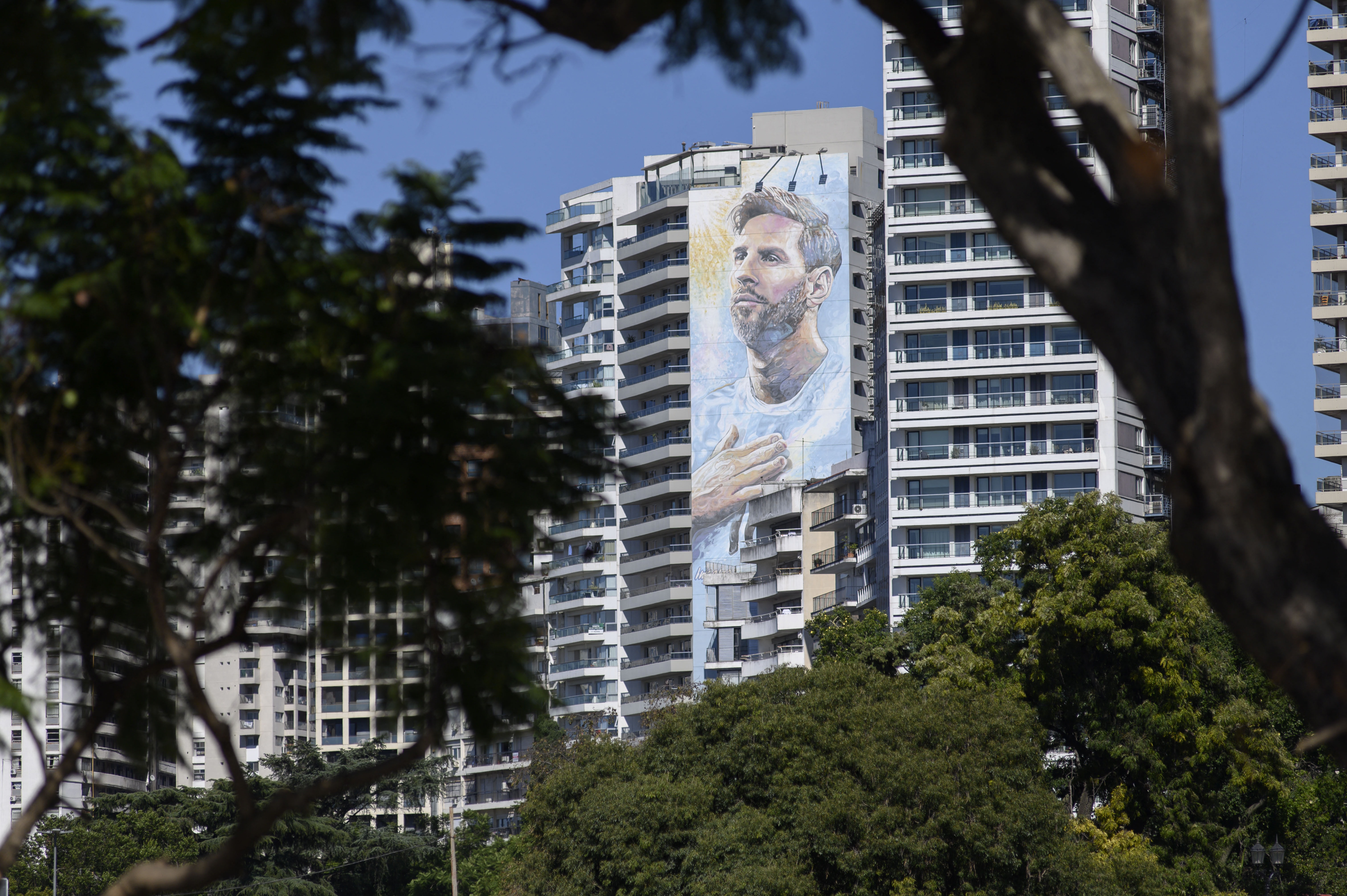
The official tourist route through Rosario is meticulously curated to avoid the harsher urban realities while leaning entirely into romantic nostalgia. Visitors can download a municipal app that guides them to the modest stucco house where Messi kicked tennis balls against a wall, the local club where his grandmother Celia allegedly convinced a reluctant coach to put a tiny child on the pitch, and a massive mural titled De Otro Galaxia that towers over the neighborhood. Local businesses have leaned into the gold rush with varying degrees of corporate polish, from dedicated exhibits at the Santa Fe Province Sports Museum down to neighborhood ice cream shops inventing custom flavors named after the player's preferred drinks.
Yet this strategy exposes a profound economic contradiction. Tourism can provide a psychological lifeline and a vital influx of foreign currency, but it cannot structurally repair a regional economy hollowed out by inflation and institutional corruption. The Messi trail draws curious pilgrims who stay for a couple of days, snap photos outside his old school, and move on to Buenos Aires or Mendoza. They do not inject the kind of sustained capital required to fix crumbling infrastructure or lift marginalized neighborhoods out of the poverty that fuels cartel recruitment.
The cartels understand the power of optics just as well as the city planners. When criminal syndicates want to paralyze the municipality, they do not target shipping terminals; they target public transport workers and leave chilling notes on storefronts. The underlying socio-economic drivers of the violence remain deeply entrenched. Impoverished youths in the southern zones still face limited legitimate employment prospects, making criminal networks an attractive alternative despite aggressive policing. Painting murals of a billionaire athlete on a crumbling wall does little to alter the material conditions of the streets behind it.
City officials argue that cultural pride is a necessary first step toward urban renewal. By reclaiming the narrative of their most famous son, they hope to instill a sense of civic identity that crowds out the criminal mythology built by local kingpins. There is empirical logic to this approach. Every tourist who walks through La Bajada represents a small vote of confidence in the city's future safety. Hotels near the riverfront report higher occupancy rates during school breaks, and downtown restaurants see steady weekend traffic from regional travelers seeking out football heritage.
Still, branding a metropolis around a single living person creates a fragile economic ecosystem. Messi's career on the pitch is finite, and the day he steps away from professional football entirely will shift the emotional gravity of global sports tourism. More importantly, relying on a global icon to mask systemic governance failures is a temporary fix for a permanent problem. A tourist map cannot substitute for an effective judiciary, reliable social services, and long-term economic diversification that extends beyond agricultural commodities and sports nostalgia.
The transformation of Rosario remains an ongoing experiment in urban resilience. The police checkpoints on street corners are a stark reminder that the peace is negotiated daily rather than permanently secured. Until the economic foundations of the city match the glossy presentation of its tourist brochures, the legend of Lionel Messi will carry an unfair burden. It is being asked to do the heavy lifting for a city trying desperately to outrun its recent past, one mural at a time.
This video explores the urban history, economic foundations, and cultural complexities of Rosario, providing essential context on the environment that shaped Lionel Messi.