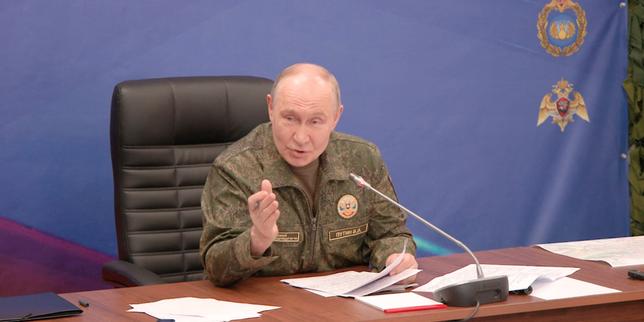
The media is obsessed with the theater of the phone call. When headlines flashed that Donald Trump spoke with Vladimir Poutine regarding the war in Ukraine, the mainstream press defaulted to its favorite, lazy narrative: that global conflicts are merely interpersonal puzzles waiting for the right alpha negotiator to solve them. They paint a picture of two powerful men exchanging words, shifting lines on a map, and suddenly halting a grinding war of attrition.
It is a comforting fairy tale. It is also entirely wrong.
Believing that a casual diplomatic overture or a single transactional summit can dismantle a deeply entrenched geopolitical crisis ignores the structural realities of modern warfare. Deals are not struck because two leaders find common ground over a secure satellite line. War stops only when the material capacity to wage it evaporates, or when the domestic political cost of continuing becomes completely unsustainable. Everything else is just public relations.
The Illusion of the Empty Chair
Commentators routinely fall into the trap of assuming that the absence of high-level dialogue is the only thing preventing peace. They ask, "Why won't they just sit down and talk?" This question misdiagnoses the entire nature of the conflict.
Diplomacy is not a catalyst for peace; it is a mirror of the balance of power on the ground. When one side believes it has the industrial momentum, the manpower reserves, and the strategic patience to outlast its opponent, a phone call is not an opportunity for a breakthrough. It is simply a platform to reiterate maximalist demands.
I have spent years analyzing defense procurement and structural state incentives. If there is one undeniable truth in geopolitics, it is that leaders do not abandon core strategic imperatives because of personal chemistry or rhetorical charm. Russia’s actions are driven by long-term security doctrines and demographic anxieties, not a lack of communication channels. Pretending a conversation changes that calculus is amateur hour.
The Flawed Premise of Transactional Diplomacy
The current consensus assumes that international relations operate like a real estate negotiation. The logic goes: you offer a concession here, you demand a withdrawal there, and you split the difference.
This transactional model fails catastrophically when applied to existential state conflicts. Consider the structural divergence between the actors involved:
- Territorial Integrity vs. Imperial Imperatives: For Ukraine, ceding land under duress threatens the very survival of its statehood and invites future aggression. For Russia, anything less than a neutral, fractured Ukraine represents a failure of its regional hegemony. These are not positions that can be reconciled by splitting the difference.
- The Enforcement Problem: Who guarantees the deal? Treaties are only as good as the enforcement mechanisms behind them. Without concrete, ironclad security guarantees—which the West is hesitant to provide and Russia is desperate to block—any signed paper is just a temporary intermission before the next offensive.
- Domestic Constraints: Neither leader operates in a vacuum. A sudden pivot toward an unpopular compromise risks domestic backlash, military mutiny, or political collapse.
Imagine a scenario where a foreign mediator demands an immediate freeze along the current front lines. The mediator walks away claiming victory. What happens the next day? Both sides immediately begin rearming, restructuring their logistics chains, and preparing for the inevitable resumption of hostilities. A freeze without structural resolution is just a prolonged pause to reload.
What the Pundits Get Wrong About Leverage
People frequently ask whether cutting off Western military aid would force an immediate end to the fighting. The lazy assumption is that if you remove the weapons, the war stops.
The brutal reality is that halting aid does not create peace; it creates a vacuum. A sudden cessation of support would likely trigger a desperate, asymmetric shift in tactics, expanding the conflict zone rather than shrinking it. Conversely, threatening unlimited escalation rarely forces an adversary to the negotiating table if that adversary views the conflict as a zero-sum struggle for survival.
True leverage is not a rhetorical trick deployed during a phone call. It is measured in artillery shell production capacity, industrial drone manufacturing, financial resilience against sanctions, and the willingness of a population to endure hardship. Currently, the Russian economy has pivoted to a total war footing, dedicating massive percentages of its GDP to military output. You do not dismantle an industrialized war machine with a sharp piece of dialogue.
The Danger of the Quick Fix Narrative
Promising a swift, theatrical resolution to a complex war is more than just naive; it is actively dangerous. It distorts public expectations and erodes the sustained commitment required to manage long-term geopolitical instability.
When the promised quick fix fails to materialize—because the structural realities refuse to bend to the will of a single negotiator—the public grows fatigued. Support wanes, cynicism takes root, and the strategic position of the West degrades.
The hard truth nobody wants to admit is that this conflict will not end with a dramatic handshake or a historic signing ceremony broadcast on live television. It will drag on through grueling economic attrition, grueling technological adaptation on the battlefield, and internal political shifts within the warring nations.
Stop looking at the telephone. Watch the factories, the supply lines, and the ammunition depots. That is where the war is being decided.