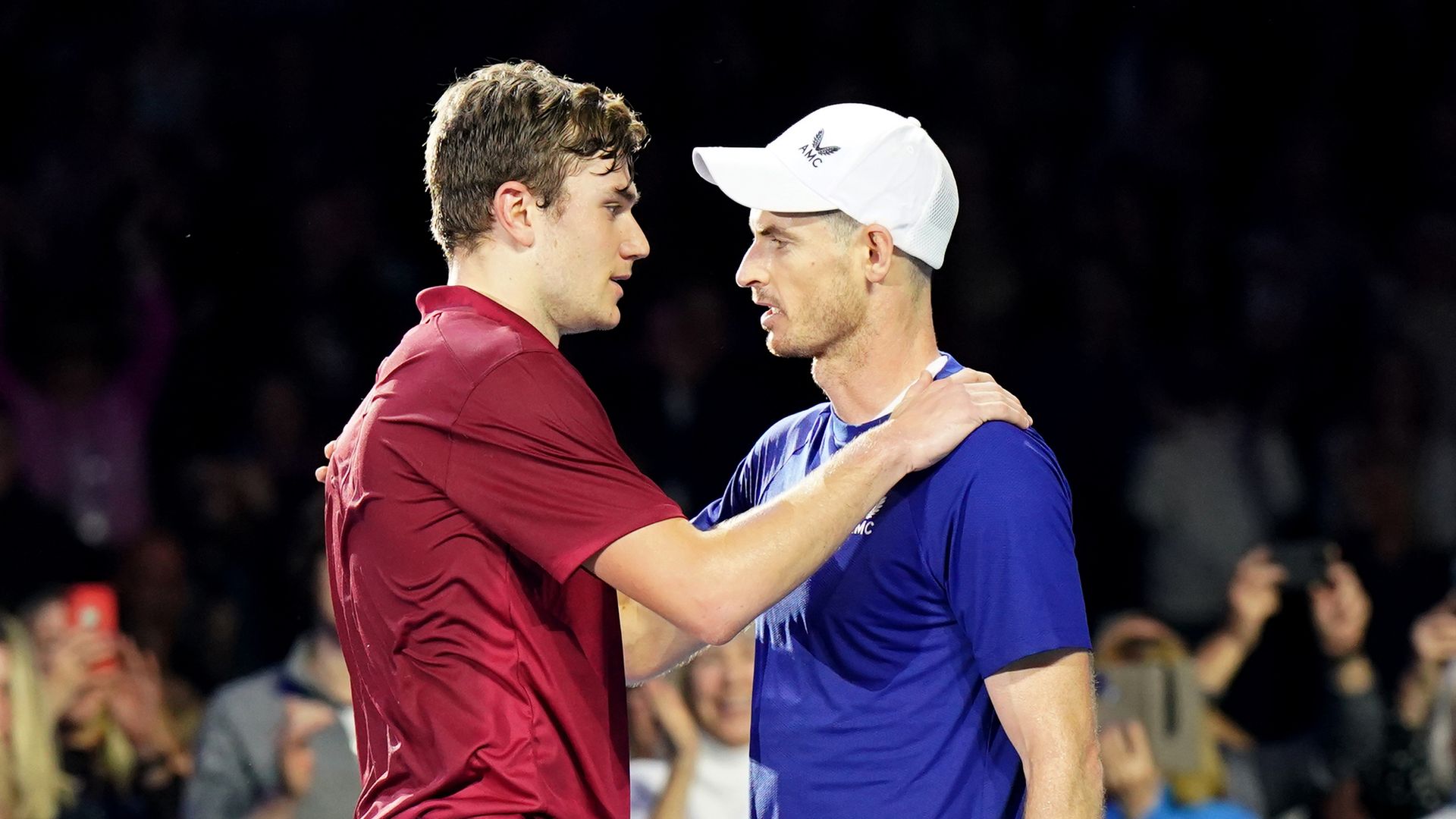
The British sporting press is currently suffering from a collective fever dream. They see Andy Murray standing on a practice court with Jack Draper and immediately start printing the coronation programs. The narrative is as predictable as it is lazy: the grizzled veteran passes the torch, the tactical genius fixes the protégé, and a new Grand Slam champion is born in a laboratory of Scottish grit.
It sounds perfect. It also ignores the messy, often destructive reality of elite coaching transitions.
Adding Andy Murray to a player’s box isn't a "pivotal" moment—it’s a massive psychological experiment with a high probability of backfiring. We are watching the collision of two diametrically opposed tennis identities. To assume this results in a trophy is to ignore how tennis development actually works.
The Shadow of the Icon
The first mistake everyone makes is assuming a great player makes a great coach. History is littered with the remains of "Super Coach" experiments that imploded because the legend couldn't understand why the student couldn't do what they did naturally.
Murray was defined by a specific, almost pathological brand of suffering. He won by being the hardest man to kill on a tennis court. He turned matches into marathons of misery. Jack Draper is a different animal. He is a high-output, aggressive ball-striker whose biggest hurdle hasn't been tactical—it’s been physical durability.
When you put a "grinder" icon in the ear of a "glass cannon" talent, you don't always get a more resilient player. Sometimes, you just get a confused one. If Murray tries to mold Draper into a defensive wall, he will break the very weapons that make Draper dangerous. You cannot coach a Ferrari to drive like a Land Rover and expect it to win a rally.
The Oxygen Problem
In the vacuum of British tennis, Andy Murray is the sun. Everything orbits him. For years, every young British player has lived in the shade of his three Slams and two Olympic golds.
By bringing Murray into his inner circle, Draper isn't just getting a coach; he’s inviting the ultimate distraction. Every post-match press conference will revolve around Murray. Every camera cut between points will focus on Murray’s reactions in the box. For a young player trying to establish his own identity and find his own "clutch" gene, this is suffocating.
True greatness requires a certain level of ego-driven independence. Look at the current crop of world-beaters. Jannik Sinner and Carlos Alcaraz didn't hire legends to be their shadows; they hired specialists to build their systems. Draper needs to own the court. He can't do that if he’s constantly looking to the sidelines for approval from the greatest player his country has ever produced.
The Technical Fallacy of Tactical Genius
The "People Also Ask" sections of the internet are currently obsessed with one question: "What can Murray teach Draper?"
The common answer is "ringcraft" or "tactics." This is a fundamental misunderstanding of the modern game. At the top 20 level, everyone knows where to hit the ball. The game isn't a chess match anymore; it’s a physics problem. It’s about average ball speed, contact points, and recovery times.
Murray’s tactical brilliance was predicated on his movement. He could take those risks because his defensive coverage was world-class. Draper does not move like 2013 Murray. He likely never will, given his frame. If Murray’s advice is based on a blueprint that requires Murray’s legs, that advice is effectively useless—or worse, dangerous.
We’ve seen this before. When legends try to impart "feel" or "anticipation," they often struggle to articulate the subconscious cues they used for two decades. It’s the "curse of knowledge." You can't teach someone how to see the ball half a second faster than everyone else. You either see it or you don't.
The Physicality Paradox
Let’s talk about the elephant in the room: injury history.
Murray is the patron saint of playing through pain. He pushed his body until the bone hit the metal. Draper has struggled with consistency because his body has frequently betrayed him during the transition to the grueling ATP schedule.
There is a very real risk that Murray’s legendary work ethic becomes a liability here. The "don't quit, work harder" mentality is what made Murray a knight, but it’s exactly what could end Draper’s career prematurely if misapplied. Draper doesn't need to learn how to suffer more; he needs to learn how to play less tennis by ending points faster.
If this partnership results in Draper staying on court for an extra 40 minutes per match because he’s "grinding" like his coach, his hamstrings won't make it to the second week of a Major.
The Economics of Pressure
In my years watching the circuit, I’ve seen millions of dollars thrown at "dream team" coaching setups that lasted less than a season. Why? Because the pressure of the brand outweighs the progression of the player.
This isn't just a coaching hire; it's a commercial merger. The expectations are now sky-high. If Draper loses in the second round of a warm-up tournament, it’s no longer "Jack having a bad day." It’s "Is the Murray magic failing?"
That is a heavy backpack to carry onto a court when you’re facing a hungry qualifier who has nothing to lose. The most successful coaching relationships are often the most boring ones. They are the ones where the coach is a steady, quiet presence—not a headline-grabbing icon whose presence triples the ticket price of a practice session.
What Actually Matters Now
If Draper wants to move from "promising" to "champion," he doesn't need a mentor to tell him how to win Wimbledon. He needs:
- Biomechanical Optimization: His serve needs to be a free point machine to protect his body.
- Short-Point Dominance: He needs to keep his average rally length under four shots.
- Emotional Autonomy: He needs to be the loudest voice in his own head.
Having Murray in the box might help with the first two if Murray can check his ego at the gate and focus on the math of the game rather than the "heart" of it. But that third point? That becomes infinitely harder the moment a legend sits in your corner.
We love the story of the master and the apprentice. It makes for great TV and even better newspapers. But tennis is a lonely sport for a reason. You win it alone. By bringing in the biggest personality in British tennis history, Jack Draper might have just made his side of the net feel a lot more crowded.
Stop celebrating the partnership and start watching the rally length. If those rallies get longer, the experiment is failing, no matter how many times the commentators talk about "grit."