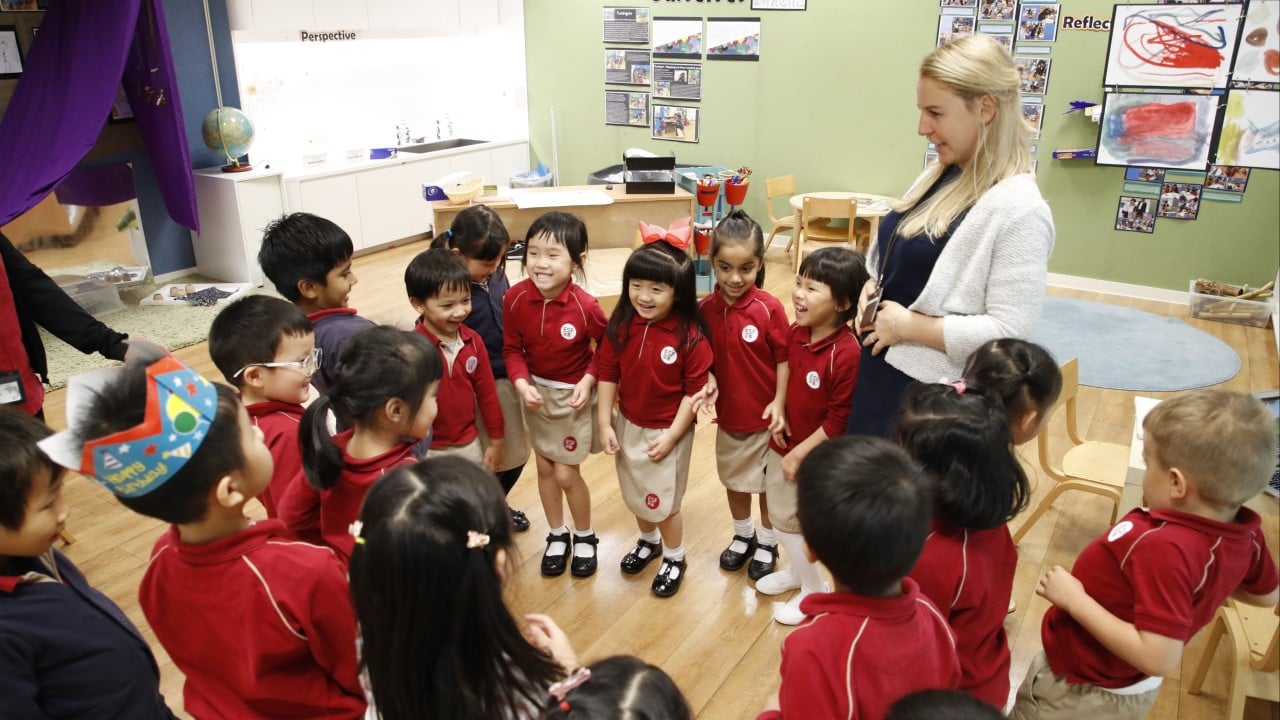
Getting a three-year-old into the right nursery school in Hong Kong used to be a stressful prelude to a decade of high-stakes academic testing. The English Schools Foundation changed that by tightening its structural pipeline, offering families a guaranteed pathway from the first year of kindergarten straight through to high school graduation at Year 13. By removing the primary school interview hurdle for its kindergarten pupils, the city’s largest international school operator did more than streamline admissions. It effectively institutionalized a fifteen-year educational monopoly, locking in tuition revenue early and transforming the elite schooling market into a race that finishes before a child learns to read.
The Associated School Pipeline
Under the revised early years strategy, the English Schools Foundation has systematically paired its specific kindergarten campuses with designated primary and secondary institutions across Hong Kong. A student entering a facility like the West Kowloon Kindergarten is granted a direct line into Kennedy School, which later funnels into West Island School. This arrangement effectively eliminates the traditional, hyper-competitive primary school interview process that has long fueled an aggressive tutoring industry for toddlers. Don't miss our recent coverage on this related article.
[ESF Kindergarten] ──(Guaranteed Place)──> [Linked Primary School] ──> [Linked Secondary School]
The corporate strategy behind this structural shift is clear. By capturing consumer loyalty at age three, the foundation eliminates the risk of student attrition during the critical transition to primary school. International schools in Hong Kong face constant competition from traditional local schools, private independent schools, and newer proprietary international campuses. Securing a family for a fifteen-year life cycle ensures long-term operational predictability and financial stability.
The True Cost of Admission
While the promise of an educational pathway appeals to anxious parents, entry into this closed ecosystem is heavily financialized. Demand outstrips supply, leading to a parallel tracking system where capital buys priority access. If you want more about the background of this, The Motley Fool provides an excellent breakdown.
- The Kindergarten Debenture: The foundation issues a limited number of corporate debentures priced at HK$500,000 each. This financial instrument bypasses standard waiting lists to secure a priority interview slot for early childhood entry.
- The Mainstream Caveat: The guaranteed progression depends entirely on a child’s ability to access a mainstream, English-medium curriculum. Pupils requiring extensive special educational needs tracking are subject to separate, non-guaranteed evaluation frameworks.
- The Capital Compounding Effect: Families who can afford the upfront half-million-dollar debenture effectively secure a spot on a fifteen-year track, while those relying on central allocation face traditional waitlists.
The Competitive Displacement of Local Families
The operational shift toward an all-through model creates a structural barrier for families trying to enter the system at later stages. Historically, families could enroll their children in local local nurseries and apply for international primary school entry at Year 1. Under the linked campus framework, the vast majority of Year 1 seats are automatically claimed by internal kindergarten graduates.
This mechanism shrinks the pool of open-market seats available to late applicants, corporate relocations, or families moving from the local public system. The entry window has shifted permanently downward. If a family does not secure an early childhood slot, their statistical probability of entering a primary campus drops significantly, forcing parents to make definitive, high-cost educational decisions before their child’s cognitive profile is fully formed.
Curricular Continuity and Creative Risk
The primary academic rationale for this integration is the alignment of the International Baccalaureate Primary Years Programme across both early childhood and primary campuses. Teachers across these linked institutions collaborate on social scaffolding and shared specialist resources. Proponents argue this minimizes transition anxiety and prevents learning gaps.
However, educational analysts note that a uniform pedagogical environment from age three to eighteen can limit a student's exposure to different learning styles. The complete removal of academic friction early in life may insulate students from the structural adaptations required in higher education. When institutional progression is entirely guaranteed, the healthy competitive pressure that drives academic independence can be replaced by systemic complacency.
Market Realities Behind the Peace of Mind
The marketing narrative around these all-through pathways emphasizes parental peace of mind and the elimination of childhood stress. This positioning addresses the acute anxiety of Hong Kong's middle and upper classes, who view school selection as a defining factor in long-term socioeconomic status. Yet, this peace of mind comes with a binding financial commitment.
Tuition fees rise significantly at each progressive phase of the journey. By committing to an all-through track, parents accept a long-term financial obligation that can exceed several million Hong Kong dollars per child over fifteen years, excluding non-refundable building levies, technology fees, and mandatory capital certificates. The school group secures an enduring revenue stream, while the family surrenders its consumer mobility, disincentivized from exploring alternative educational options by the fear of losing their guaranteed spot.
The structural lock-in also functions as a protective shield against expatriate demographic shifts. When corporate relocation trends fluctuate, the institution remains insulated from sudden enrollment drops because its primary and secondary pipelines are anchored by an early-entry domestic customer base. The modern international school ecosystem is no longer just about pedagogy. It is a highly optimized corporate retention model designed to secure institutional market share long before a student ever sits for their first public examination.