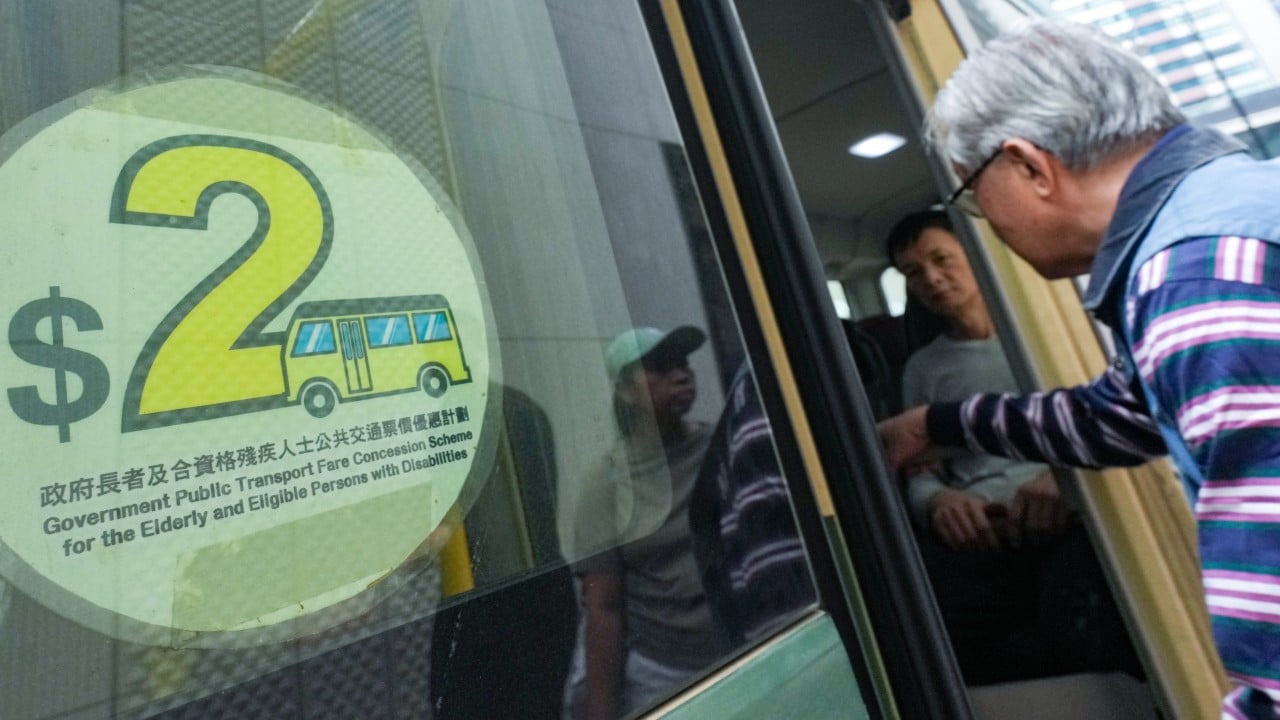
The Hong Kong government is footing the bill for a massive overhaul of its most popular social welfare initiative. Recent disclosures reveal that taxpayers are covering roughly two-thirds of a HK$90 million administrative tab to upgrade the HK$2 transport subsidy scheme. This expenditure isn't for the rides themselves, but for the bureaucratic machinery required to stop rampant abuse. It represents a desperate attempt to plug a fiscal leak that has threatened to sink the city's transport budget.
By forcing elderly and disabled commuters to switch to personalized JoyYou cards, the administration is trying to claw back control over a system that grew too big, too fast. The HK$60 million government contribution to this specific transition project highlights a painful reality. When populist policies meet poor oversight, the cost of fixing the mistake often rivals the cost of the program itself.
The Birth of a Fiscal Black Hole
The HK$2 scheme was originally a masterstroke of social engineering. It gave the silver generation the freedom to traverse the city without worrying about the cost of a long-haul bus or a cross-harbor train. But in 2022, the government lowered the eligibility age from 65 to 60. This wasn't just a minor expansion. It was an explosion.
Suddenly, hundreds of thousands of active, working-age people entered the system. The price of this generosity was high. Because the government reimburses transport operators the difference between the HK$2 fare and the full price, the public purse became a blank check for transport giants. Operators had no incentive to police the system because they received their full fare regardless of who was tapping the card.
Tracking the HK$90 Million Paper Trail
The recent HK$90 million expenditure focuses on the technical migration to JoyYou cards. For years, anyone could walk into a convenience store, buy an anonymous "Elder" Octopus card, and enjoy subsidized travel. No photo ID was required. No verification took place at the turnstile.
The government finally realized that the honor system is not a financial strategy. The HK$90 million breakdown includes:
- System Integration: Reconfiguring thousands of card readers across buses, ferries, and trains to reject anonymous cards for the subsidy.
- Card Issuance: Processing millions of applications and printing personalized cards with photographs.
- Public Relations: A massive campaign to ensure the "silent generation" actually made the switch before the deadline.
Government officials confirmed that the transport operators are covering the remaining HK$30 million. While this might look like a public-private partnership, it is more of a mandatory fine for the operators. They are paying to fix a system that, until now, allowed them to collect maximum revenue with minimum friction.
The Abuse Crisis That Forced the Hand
The scale of the problem is staggering. In 2023 alone, transport staff and government inspectors caught thousands of ineligible passengers using the discount. But those caught are likely a fraction of the total.
Consider the "shadow commuter." This is a middle-aged professional using an anonymous elder card to shave HK$20 off a daily commute. Over a year, that single individual drains thousands from the treasury. Multiply that by a city of seven million, and the math becomes terrifying. The government's decision to spend HK$60 million of public money to mandate personalized cards is a late-stage admission that the original "anonymous" system was a gift to fraudsters.
The Collateral Damage of Long Haul Routes
One of the most significant oversights in the original scheme is the "short-hopping" phenomenon. On many Hong Kong bus routes, fares are tiered. A passenger traveling two stops on a bus destined for the border might technically be charged a HK$25 fare. Under the subsidy, the passenger pays HK$2. The government pays the bus company HK$23.
If that passenger had waited for a local bus, the total fare might have only been HK$5, costing the government only HK$3. By failing to implement "tap-out" requirements or more sophisticated fare structures, the government effectively subsidized the most expensive possible travel habits. The HK$90 million revamp touches on card technology, but it still fails to address this fundamental structural flaw. We are paying millions to verify the person, but we are still doing nothing to optimize the path.
Why the Tech Fix is Only a Bandage
Switching to JoyYou cards solves the identity problem, but it ignores the demographic time bomb. Hong Kong is aging faster than almost any other developed city. By 2034, nearly one-third of the population will be eligible for the HK$2 rate.
The annual cost of the scheme is projected to soar toward HK$10 billion in the coming years. Spending HK$90 million now to stop a few fraudsters is like bailing water out of a boat with a thimble while a giant hole remains in the hull. The transport operators, meanwhile, continue to apply for fare hikes. They argue that rising fuel and labor costs necessitate higher prices. Each time a fare hike is approved, the gap between the HK$2 passenger payment and the full fare grows. The government, and by extension the taxpayer, picks up the difference.
The Efficiency Paradox
There is a bitter irony in the HK$60 million government payout. The civil service is currently under immense pressure to trim fat and find efficiencies. Yet, here we see a massive injection of funds to fix a loophole that was predicted by analysts a decade ago.
The administration has been slow to demand that transport companies implement "two-way section fares." This technology would allow passengers to tap their card when getting off a bus to receive a partial refund, ensuring the government only subsidizes the actual distance traveled. Instead of investing the HK$90 million into this type of systemic efficiency, the money has been spent on basic identity verification. It is a maintenance cost masquerading as an upgrade.
The Ghost of Populism Past
Every political leader wants to be the one who gave the elderly free travel. No political leader wants to be the one who took it away or made it harder to use. This political cowardice is what led to the delayed rollout of the JoyYou card mandate.
For years, the government watched the "anonymous card" numbers climb, knowing they far exceeded the actual number of elderly residents in the city. They hesitated because the optics of "tracking" the movements of the elderly were sensitive. Now, with a mounting deficit and a shrinking tax base, the luxury of hesitation has vanished. The HK$90 million tab is the price of that delay.
A System Still Ripe for Exploitation
Even with personalized cards, the system remains vulnerable. There is nothing stopping a family member from using an elderly relative's JoyYou card for a quick trip to the grocery store. Unless transport staff perform physical ID checks—a move that would cause chaos at peak hours—the fraud will simply shift from the "anonymous" to the "borrowed."
The government's insistence that this HK$90 million spend will "ensure the sustainability" of the scheme is optimistic at best. Sustainability requires more than just knowing who tapped the card; it requires a fundamental rethink of how transport subsidies are calculated.
The Missing Debate on Means Testing
Why does a wealthy retiree living in a Peak mansion receive the same transport subsidy as a pensioner struggling in a subdivided flat? This is the question the Hong Kong government refuses to touch. By treating the HK$2 fare as a universal right rather than a targeted welfare tool, the administration has locked itself into an escalating financial commitment.
The HK$90 million revamp was an opportunity to introduce more nuanced controls. It could have been used to implement monthly caps or off-peak incentives. Instead, the money was spent on the most basic form of gatekeeping. It is a reactive measure, not a proactive one.
The Transport Giant's Winning Hand
MTR Corporation and the major bus franchises are the quiet winners in this saga. They have received a steady, guaranteed stream of income from the government for years. While they are contributing HK$30 million to the current card migration, that figure is a pittance compared to the billions they have received in subsidies since the scheme’s inception.
They have successfully offloaded the primary cost of social welfare onto the public sector while maintaining their private-sector profit motives. When the government spends HK$60 million to "clean up" the system, it is effectively protecting the revenue streams of these corporations by ensuring the program doesn't collapse under the weight of its own scandals.
Lessons from the Fiscal Ledger
The HK$90 million transition is a case study in the hidden costs of simple solutions. "Everyone pays HK$2" is a simple slogan. It is also an administrative nightmare. The true cost of any policy is not the headline figure, but the secondary and tertiary expenses required to keep that policy from being abused.
As the June deadline for the mandatory switch to JoyYou cards passes, the government will likely tout a decrease in suspicious transactions. They will call it a success. But the ledger tells a different story. It tells a story of a government that spent tens of millions to fix a problem they created by choosing convenience over accountability.
The next time a major social program is announced with "minimal barriers to entry," remember the HK$90 million card. Remember that in the world of public policy, "simple" is often just another word for "expensive to fix later." The burden of proof has shifted. The taxpayer is no longer just paying for the ride; they are paying for the privilege of making sure no one else is stealing one.