The rain in the high Himalayas does not fall as drops. It arrives as weight. It hits the slate roofs of Mustang and the prayer-flagged ridges of Tibet with the rhythmic, concussive force of a drum line, swelling day after day until the earth forgets how to hold itself together.
I remember the smell of wet mud and crushed juniper before the electricity cuts out. Up there, altitude strips the air of moisture, but when the monsoon breaks its banks, the air turns heavy enough to drown in. You listen to the slope. You learn to recognize the low, subterranean groan that precedes a slide—a sound like a freight train rolling through a tunnel carved of stone and ice. You might also find this connected article useful: The Hour Glass Shatters In Jerusalem And Tehran.
Last autumn, that sound swallowed the valleys.
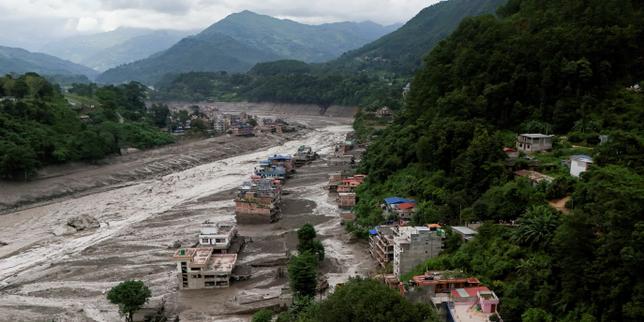
At least one hundred and sixty people are dead. Hundreds more remain missing. Behind those cold figures, drawn from official dispatches issued across Nepal and the Tibetan plateau, lie stories cut terribly short. Among them are the travelers. People who came chasing the quiet majesty of the roof of the world, carrying light jackets and cameras, finding instead a sudden, roaring transformation where rivers turned into walls of gray concrete and debris. As discussed in latest reports by NPR, the effects are significant.
Water does not negotiate. It accelerates.
Consider what happens when days of relentless downpours meet fragile, high-altitude geography. Glacial lakes, swollen by melting ice and unprecedented precipitation, act like ticking time bombs held back by moraine walls of loose gravel and old ice. When those natural dams fail, the release is catastrophic. A torrent rushes down gorges with terrifying speed, sweeping away footbridges, centuries-old stone tea houses, and trekking routes that have served as the arteries of local commerce for generations.
Entire villages vanish in minutes.
For the families waiting thousands of miles away, the waiting is a special kind of torture. The phone lines go silent. The tracking apps show a last known ping near a gorge that is now a churning soup of boulders and uprooted pine trees. Statistics tell us about the scale of the destruction—the washed-out highways, the stranded tour groups airlifted by desperate military helicopters, the disrupted supply lines. But statistics are a poor shield against grief.
(Note: Figures regarding the death toll and missing persons are drawn from verified regional rescue reports and civil protection updates.)
Why do we keep going back to these edges?
It is a question worth asking as the climate shifts, turning once-predictable weather patterns into chaotic gambles. The Himalayas are young mountains, constantly rising, constantly eroding. They are alive in the most terrifying sense of the word. Every trekker who signs a permit at the checkpoint in Pokhara or Lhasa knows this intellectually. Yet the pull of the thin air, the jagged horizons, and the profound silence of the high passes is too strong to resist.
We romanticize isolation until isolation becomes a trap.
Local guides, many of them Sherpas and Tamangs whose families have farmed or packed these trails for centuries, bear the brunt of the immediate crisis. They are the first to dig through the slurry with bare hands, risking their lives to pull strangers from the mud. Their local knowledge is vast, yet even they admit that the modern storms defy historical precedent. The monsoon is no longer playing by the old rules.
When the rescue choppers finally land on the mud-slicked helipads, kicking up a hurricane of grit and diesel fumes, they bring out the survivors. Blankets wrapped tight around shivering shoulders. Stare lines etched deep into sunburned faces. They look back at the mountains, which have already resumed their impassive, snow-crowned vigil, indifferent to the lives rearranged at their feet.
The rain stops eventually. The mud dries into a fine, choking dust that coats everything. But the rivers carve new channels, forever altering the maps we carry in our pockets.