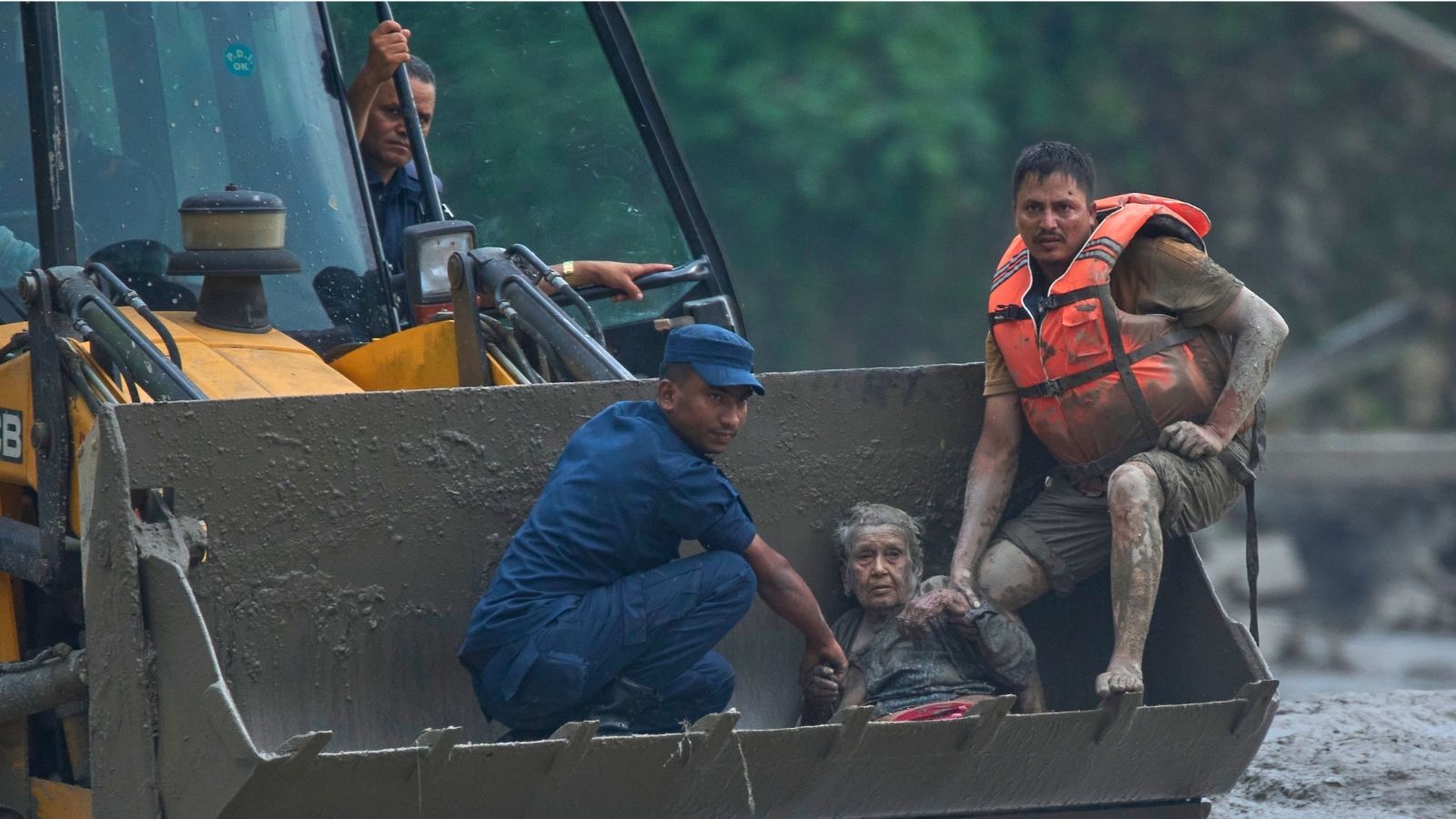
Catastrophic flash floods along the rugged border region of Nepal and China have left more than 600 people dead and over 2,400 missing following a massive glacial collapse. An estimated six-hundred-meter section of a glacier broke free from an altitude of roughly 17,000 feet, plunging into a valley and triggering a cascading torrent of mud, rock, and water that traveled nearly 200 kilometers within hours. The resulting wall of water obliterated settlements, bridges, and critical energy infrastructure, catching local residents, hydropower workers, and international tourists completely unawares.
Emergency responders and disaster management authorities are struggling to manage an unfolding humanitarian emergency that spans continents. Citizens from over 30 countries, including the United States, India, the United Kingdom, and Canada, are among the missing, complicating identification efforts as bodies are recovered hundreds of kilometers downstream. Don't miss our previous post on this related article.
The Anatomy of a Himalayan Catastrophe
The disaster began with a high-altitude structural failure of rock and ice. Scientists studying preliminary seismic data noted that the bedrock beneath the glacier collapsed with such force that it registered a magnitude 5.2 on local sensors. This sudden displacement of mass sent a slurry of liquefied debris careening down into the Bhotekoshi and Poiqu river basins.
Unlike seasonal monsoon flooding, which typically gives communities hours or days of rising water levels to evacuate, this event functioned as an inland tsunami. Survivors in border hamlets like Timure reported having mere seconds to scramble up adjacent hillsides before their offices and homes were flattened by mud. To read more about the context of this, The Washington Post offers an in-depth summary.
Infrastructure projects built to harness the steep gradients of Himalayan rivers bore the brunt of the kinetic force. Hydropower facilities at Mailung and surrounding project sites were severely impacted, with hundreds of construction and operational personnel added directly to official missing person registries.
A Geopolitical and Logistical Quagmire
The remote terrain of the Rasuwa district and Tibet's Gyirong County creates formidable barriers to search and rescue operations. Arterial roads have been washed away, and collapsed suspension bridges have left entire valleys isolated.
Local morgues in Nepal, built to handle baseline capacities, are overwhelmed. Facilities nationwide possess storage space for roughly 350 bodies, forcing authorities to confront gruesome logistics as hundreds of recovered remains await identification.
Foreign ministries across the globe are scrambling to account for their citizens. The disaster zone is a major transit route for international trekkers and pilgrims traveling toward Mount Kailash in Tibet. Consequently, hundreds of foreign nationals registered as tourists or working on regional development projects remain uncontactable, straining consular services from Washington to Kyiv.
The Secondary Threat
Compounding the grief of search operations, disaster management agencies in both Nepal and China have issued urgent warnings regarding secondary flooding. The initial wall of debris created massive natural dam barriers across mountain rivers, forming unstable artificial lakes.
Satellite imagery indicates that these debris-clogged water bodies are rapidly swelling. If these makeshift barriers fail under hydrostatic pressure, a secondary wave could sweep through valleys where recovery teams and displaced residents are currently operating. Evacuation orders remain active, and rescue personnel have been forced to temporarily halt operations in vulnerable sectors as water levels fluctuate.
As foreign aid trickles in and neighboring governments dispatch emergency supplies, the immediate focus remains on locating survivors trapped in mud-filled tunnels and stabilizing the volatile river basins. The fragile geography of the high Himalayas has once again demonstrated its capacity to alter landscapes and human lives in a matter of seconds.