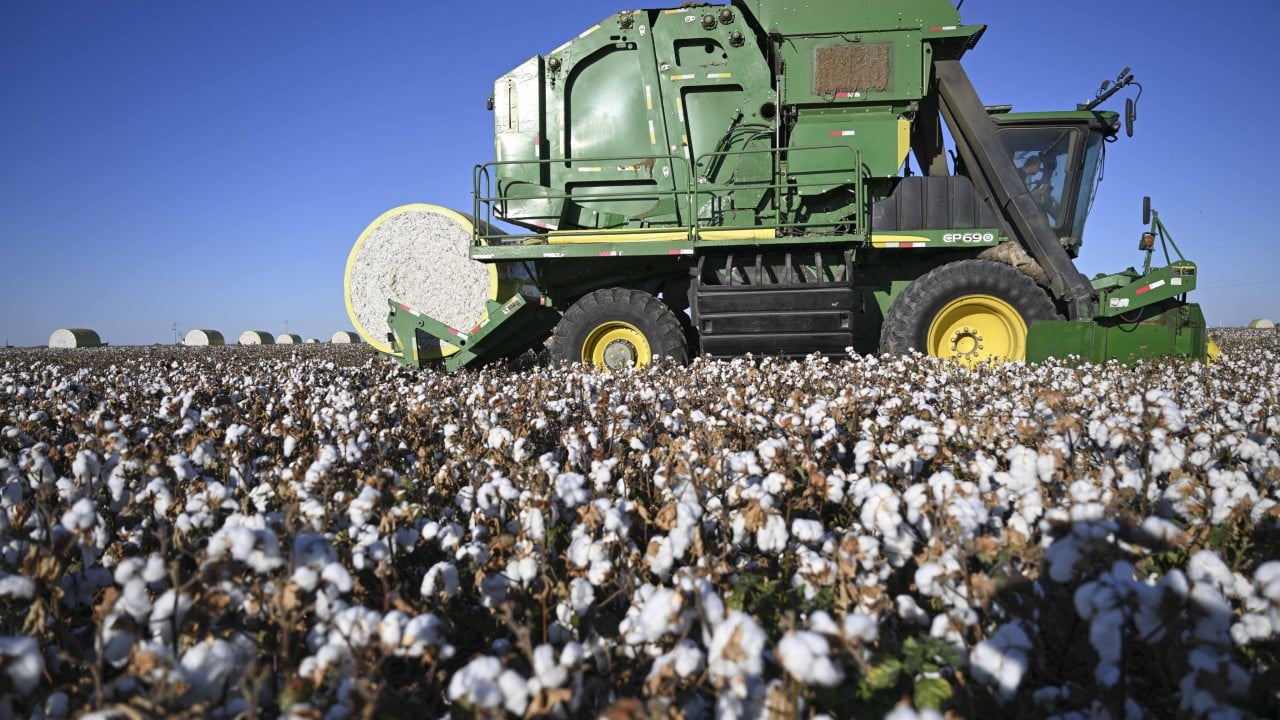
The dirt in the Tarim Basin does not behave like regular soil. It is gray, crusted with salt, and so dry that when the wind kicks up, the dust tastes like copper. For generations, the farmers in this pocket of Xinjiang have struck a fragile bargain with the desert. They channel the snowmelt from the distant Tian Shan mountains, flood their ditches, and force the silt to grow cotton. It is grueling work. If you stand in the fields in late August, the heat feels heavy, pressing down on your shoulders like a physical weight.
But heat isn't what keeps a farmer awake at night. The real terror is invisible.
It starts with a single leaf turning a dull, sickly yellow. Within days, the discoloration climbs the stalk, choking the plant from the inside out. When you snap the stem open, the clean white fibers that should be transport lines for nutrients are instead stained a dark, oily brown. This is Verticillium wilt. Farmers call it the "cotton cancer." It is a soil-borne fungus that can lie dormant in the freezing mud for years, waiting for a seed to sprout so it can invade the roots and strangle the crop before the bolls even open. Once it takes hold of a field, the harvest is ruined, and the dirt becomes toxic to cotton for a decade.
For years, the options were bleak. You could drench the earth in heavy chemicals, which poisoned the water table, or you could abandon the land entirely to the advancing sands.
Then, a group of scientists looked away from the green oases and turned their eyes toward the absolute worst terrain on the planet.
The Plant That Refused to Die
Deep in the Gurbantunggut Desert, where temperatures swing from a blistering 50 degrees Celsius in July to a bone-cracking minus 30 in January, almost nothing survives. It is a landscape of shifting dunes and exposed rock. Yet, if you look closely at the gravel crust, you will find Syntrichia caninervis. It is a tiny, unassuming desert moss. It looks like a patch of scorched, black velvet.
This moss possesses a biological superpower. It can lose more than 90 percent of its cellular water content, shrivel into a dead-looking husk, and survive for years in a state of suspended animation. When a single drop of rain finally hits it, the moss rehydrates in seconds, turning vibrant green and resuming its life as if nothing happened.
Researchers at the Chinese Academy of Sciences wondered if this extreme resilience could be borrowed. They weren't just looking for drought resistance; they discovered that the specific genetic pathways allowing the moss to survive severe dehydration also created an incredibly hostile environment for fungal pathogens.
Consider how a plant fights a disease. When a fungus attacks, it secretes enzymes to break down the plant’s cell walls. Most domestic crops, bred for high yields rather than tough armor, panic. They lack the cellular tools to repair the damage quickly enough. The desert moss, however, produces specific proteins that stabilize its cellular structure under intense stress, effectively locking the doors against invaders.
The team isolated a key gene from the moss—known to geneticists as ScALDH21—and successfully inserted it into the genome of local Xinjiang upland cotton.
The result was a biological hybrid designed to thrive where life should be impossible.
Inside the Cleanroom
To understand how monumental this shift is, you have to leave the dust of the fields and enter the sterile, white-lit labs of Urumqi. Here, the air smells of rubbing alcohol and filtered oxygen. This is where the abstract concept of genetic engineering becomes a physical reality.
Imagine looking through a microscope at a single cotton cell. It is a fragile, translucent bubble. The process of introducing the moss gene doesn't involve a syringe; it requires a specialized bacterium that acts like a microscopic Trojan horse, carrying the ScALDH21 blueprint across the cell wall. Once inside, the cotton cell adopts the instruction manual of the desert moss.
It sounds like science fiction. It feels like playing God.
But for the researchers checking the petri dishes at three o’clock in the morning, the motivation isn't theological—it is survival. The early trials were brutal. Thousands of modified cells failed to replicate. Some grew into deformed shoots that couldn't handle the light. Others simply withered. The breakthrough came when the team realized the moss gene needed a specific molecular "switch" to activate only when the plant felt stress, rather than running constantly and exhausting the seedling.
When they finally moved the successful hybrids from the climate-controlled incubators into real, fungus-infested soil, the difference was stark. The standard cotton stalks collapsed into mush within two weeks. The modified plants, carrying the ancient code of the desert moss, stood straight. Their roots grew deeper, their leaves stayed green, and when the fungus tried to choke the stems, the plants simply bypassed the blocked pathways, using the moss-derived proteins to keep their internal systems running.
The Weight of the Yield
The implications of this success ripple far beyond the borders of Xinjiang. Cotton is the economic spine of the region, providing a livelihood for millions of families who know no other trade. When a harvest fails, the economic shockwaves hit everything from local grocery stores to international textile supply chains.
But the true victory isn't just about preserving profit margins. It is about environmental reclamation.
Every year, millions of tons of chemical fungicides are pumped into agricultural soils worldwide to combat Verticillium wilt. These chemicals don't stay in the dirt. They wash into irrigation canals, migrate into the milk of local livestock, and slowly degrade the biodiversity of the surrounding ecosystem. By engineering a plant that possesses its own internal shield, the need for these chemical interventions drops dramatically. The soil has a chance to heal.
Furthermore, this technology opens up areas of land previously deemed completely unusable. Marginally salty, arid zones on the very edges of the desert—where traditional cotton would wither in days—can now become productive green belts. This isn't just about boosting output numbers on a government spreadsheet. It is about pushing back the desert line.
Changing the Code of the Future
There is an understandable nervousness when we talk about altering the genetic makeup of the things we grow. We worry about unintended consequences, about altered genes escaping into the wild, about creating monsters we cannot control. The scientists involved acknowledge these fears. They track the pollen of the modified cotton, ensuring it doesn't cross-pollinate with wild species, and they run multi-generational studies to ensure the mutation remains stable.
But when you talk to the people who actually work the land, those anxieties feel distant compared to the immediate reality of a ruined crop. They see a tool. They see a chance to farm without the constant, looming threat of ruin.
The tiny, black moss in the northern desert didn't evolve to save human agriculture. It evolved simply to endure the sun. Yet, by lifting a single strand of its genetic code, humans have found a way to stitch that endurance into the fabric of our own survival.
On a late afternoon in Xinjiang, as the sun dips below the horizon and turns the dust storms into ribbons of gold, a farmer walks down a row of these new plants. He reaches out, runs his fingers over a heavy, unburst boll, and feels the solid, compact weight of the fiber inside. The stalk is firm. The leaves are crisp. Deep within its cells, a secret code written by the desert centuries ago is quietly doing its work, keeping the plant alive in the heat, waiting for the harvest to come.