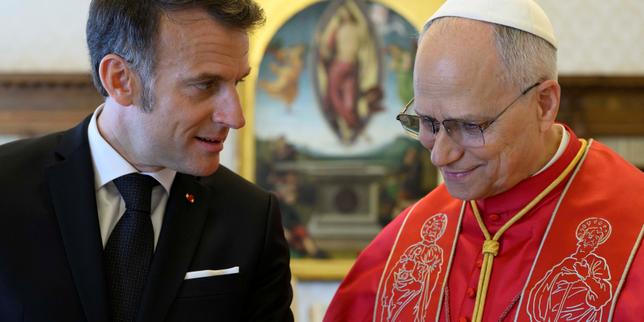
Emmanuel Macron and Pope Francis are currently engaged in a masterclass of geopolitical theater. They call peace a duty. They call it a requirement. They wrap their rhetoric in the velvet of moral necessity while ignoring the cold, jagged steel of reality. The consensus view—the one being spoon-fed to the public—is that high-level dialogues and joint declarations are the primary drivers of global stability.
They aren't. They are the leftovers.
True stability isn't born in a gilded palace through the signing of a parchment. It is forged in the grueling trade-offs of the real world: supply chains, energy independence, and the credible threat of force. When leaders lean on "moral requirements" to justify their actions, they aren't leading. They are retreating into abstraction because they lack the stomach for the transactional grit that actually prevents war.
The Peace Industrial Complex
We have entered an era where "peace" has become a commodity for political branding. The competitor article treats the meeting between a President and a Pope as a seismic event. In reality, it’s a press release masquerading as progress. This is the Peace Industrial Complex at work.
The logic is flawed from the jump. The premise suggests that if we just align our moral compasses, the tanks will stop rolling. This ignores the last five thousand years of human history. Conflict doesn't happen because people forget that peace is "good." It happens because of resource scarcity, perceived insecurity, or the pursuit of power.
Macron’s obsession with being the world’s mediator is less about resolving conflict and more about maintaining a French relevance that the current economic data doesn't support. France's debt-to-GDP ratio sits at roughly 110%. Its influence in Africa is cratering. When you can't project power through your economy or your military, you project it through "values." It's the cheapest currency available.
The Danger of Moral Absolutism
When the Pope and the President declare peace a "duty," they create a dangerous binary. They suggest that anyone not currently pursuing their specific brand of ceasefire is acting immorally. This is a strategic catastrophe.
In the real world, a premature peace is often more violent than a sustained conflict. Ask any historian about the "peace" achieved at Munich in 1938. It was a moral requirement for the leaders of that day to avoid war at all costs. That "moral" decision led to the most destructive slaughter in human history.
By framing peace as a duty rather than a strategic outcome, you strip away the ability to negotiate from a position of strength. If peace is a requirement, then the cost of achieving it doesn't matter. This signals to every aggressor on the planet that you are willing to pay any price—including the surrender of your allies' territory—just to stop the shooting. That isn't morality. It's cowardice dressed in a cassock.
Hard Power is the Only Soft Power That Works
The "lazy consensus" argues that diplomacy is the alternative to force. This is a lie. Diplomacy is the management of force. Without the threat of credible violence, Macron’s words are just vibrations in the air.
I have seen diplomats spend years on "confidence-building measures" that evaporate the moment a dictator decides he wants a warm-water port or a lithium mine. The reality is that the most peaceful period in modern history—the Pax Americana—wasn't built on papal encyclicals. It was built on the back of the US Navy, the dominance of the dollar, and the clear understanding that breaking the peace would result in total economic and physical annihilation.
We are moving away from that unipolar world. As we transition to a multipolar mess, the vacuum is being filled by "moral exigency" talk. This is fluff.
If Macron truly wanted to act for peace, he wouldn't be meeting the Pope to discuss "duties." He would be:
- Hardening European energy grids to ensure they can't be held hostage by Russian gas.
- Building a massive, unified European defense industrial base that doesn't rely on 40-year-old supply chains.
- Forcing the hands of financial institutions to decouple from economies that fund proxy wars.
But those things are hard. They require political capital. They make people angry. It is much easier to stand in front of a tapestry and talk about the soul of humanity.
The Myth of the "Great Mediator"
People ask: "Isn't it better that they're talking than not talking?"
Not necessarily. Bad talk creates a false sense of security. It gives the public the impression that the adults are in the room, fixing the problem. This leads to apathy. If the "Great Leaders" are handling the peace duty, the citizenry doesn't feel the need to pressure for the structural changes required to actually prevent war.
The "Great Mediator" trope is a vanity project. For Macron, it's a way to distract from domestic unrest and a fractured parliament. For the Vatican, it's a way to maintain a seat at a table that is increasingly secular and indifferent to religious authority.
The Actionable Truth for the C-Suite and the Citizen
If you are a business leader or an engaged citizen, stop looking at these summits for signals of stability. They are lagging indicators. By the time two leaders get together to talk about the "requirement of peace," the window for meaningful preventative action has usually closed.
Instead, watch the "Dry Bulk Index." Watch the movement of semiconductors. Watch where the sovereign wealth funds of the Middle East are moving their capital. That is where the "duty of peace" is actually being negotiated.
Peace isn't a feeling. It’s an equilibrium.
When the cost of war exceeds the potential gains, you get peace. When the cost of war is lowered because leaders are too busy talking about "morality" to maintain their defenses, you get a bloodbath.
The most "moral" thing a leader can do is ensure their nation is too expensive to attack and too essential to ignore. Everything else is just a photo op for a dying media cycle.
Stop asking how we can "foster" peace. Start asking how we can make war a logistical impossibility for our enemies. The former is a wish; the latter is a strategy.
The meeting in Rome wasn't a step toward a safer world. It was a high-budget funeral for the idea of pragmatic statecraft. While they discuss the "exigency" of peace, the rest of the world is rearming. You should be too.
Don’t buy the PR. Buy the ammunition.